


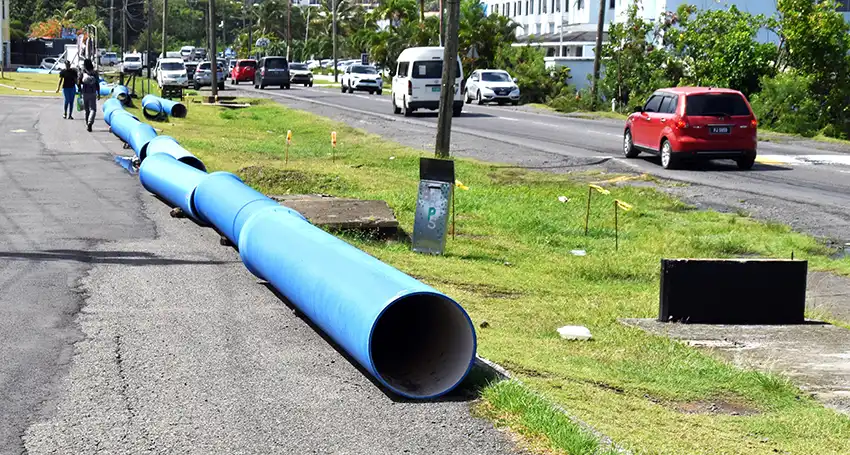
Saint Lucia is poised for a significant enhancement in water security with the launch of the Northern Water Project, which will receive an investment of over $22 million.
On Wednesday, key stakeholders in the island’s water sector, including representatives from the Water and Sewerage Company (WASCO), government officials, and the Caribbean Development Bank (CDB)—the principal funding partner—gathered at the Harbor Club for a comprehensive overview of the upcoming works.
Featured speakers highlighted the importance of this national initiative, which extends beyond merely laying pipelines.
WASCO’s technical unit is set to implement the Ninth Water Project: the John Compton Dam Raw Water Pipeline Replacement Project. This initiative involves replacing at least 5 kilometers of damaged pipelines that have surpassed their functional lifespan, providing distribution for over 40 years to key areas within the northern belt.
“The Government of Saint Lucia, in collaboration with WASCO, has pursued several strategic interventions to ensure that our citizens not only have access to quality water but also benefit from a reliable and consistent supply,” declared Charlin Louisy-Regis, Chief Economist in the Ministry of Economic Development and Youth Economy.She emphasized the importance of providing citizens with an efficient water resource.
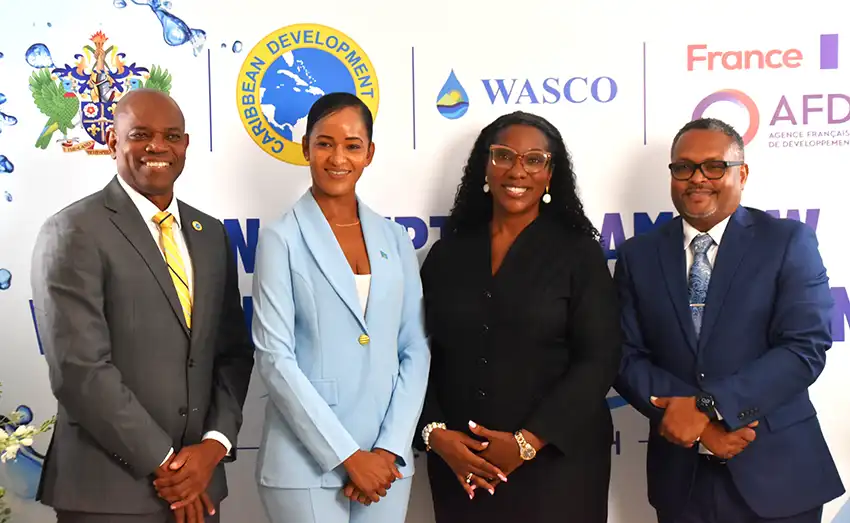
Louisy-Regis noted that the water resource supports a significant portion of the lives and livelihoods of Saint Lucians.
Emphasizing the project’s significance, she stated that it aims to ensure adequate water supply for communities, including farmers, households, businesses, government departments, airport terminals, healthcare services, and other consumers. She further explained that the project encompasses more than just infrastructure; it is “woven into the fabric of our society.”
The John Compton Dam supplies approximately 50% of the island’s total potable water. However, she highlighted that about 28% of households lack access to affordable water. Authorities are determined to ensure that this project addresses the needs of the entire community.
Zilta George-Leslie referred to the urgency of this initiative as “a ticking time bomb in the middle of Millet,” calling it a significant milestone in the development of Saint Lucia’s water industry. She commented, “This project will replace a pipeline laid in the late 1980s. That single raw water pipeline has carried water far longer than intended.”
George-Leslie said that the Northern Networks represent the largest water system in Saint Lucia, running from Millet to Gros Islet. This network serves 58% of consumers and delivers approximately half of the potable water consumed on the island.
She described the project as a “robust and long-awaited response” to the challenges posed by the water crisis. Funding for the $22.8 million project comes from a collaboration between the Caribbean Development Bank (CDB) , the Government of Saint Lucia, and the governments of France and Italy.
Cavon White, CDB’s Portfolio Manager, Economic Infrastructure Division, emphasized that the project reflects the long-standing partnership among the government, CDB, and private sector agencies.
“Water security is development security; it underpins tourism, agriculture, manufacturing, and the daily functions of households,” he asserted.
He acknowledged that Climate Change and other climatic phenomena have compounded the water supply situation, adding stress to the island’s water intake.
Utility companies are increasingly faced with financial constraints in managing these vital resources. This project marks a crucial step towards a more sustainable and reliable water supply for all Saint Lucians.