


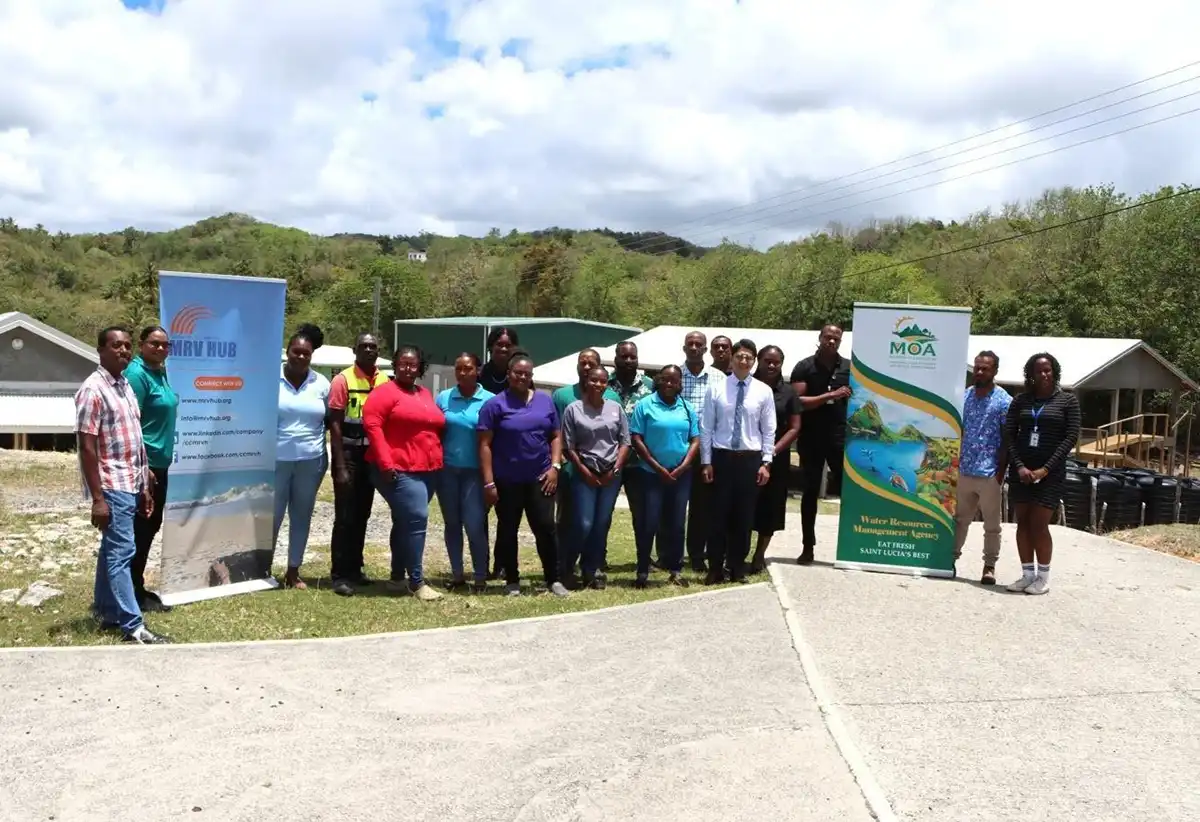
Having been a partner of the Caribbean Cooperative Measurement, Reporting & Verification Hub (CCMRVH) Hub for the past two years, the Taiwan Technical Mission (TTM) in Saint Lucia remains committed to this collaboration. Through their partnership on the “Climate Impact and Data Enhancement Project”, great focus has been placed on analyzing greenhouse gas (GHG) emissions data from crop production.
Recently, the Taiwan Technical Mission was invited to and attended a National Greenhouse Gas Inventory Validation Workshop, which was organized by the national agriculture experts participating in the Caribbean Agriculture Work Crew implemented through CCMRVH. This project is funded through the New Zealand Government’s Climate Smart Agriculture Initiative, as part of its contribution to the Global Research Alliance on Agricultural Greenhouse Gases (GRA). The TTM also supported the workshop by sponsoring catering for the participants. The workshop was held on Friday, May 22, 2026, at the Volet Agricultural Station in Micoud, where nearly 20 experts, policymakers, extension officers, agriculture students, and other stakeholders from Saint Lucia shared information on analyzing greenhouse gas (GHG) emissions data in the local livestock sector.
In her first presentation, Ms. Elisha Leon, Agricultural Officer in the Veterinary and Livestock Division of the Ministry of Agriculture, Fisheries, Food Security and Climate Change, shared a summary of Tier 1 findings based on her review of “Saint Lucia’s National Livestock Data Set (2023-2023), and Enteric Fermentation (Simplified Tier 2)”. In her second presentation, entitled “Manure Management (Simplified Tier 2)”, she explained how manure can be used in a myriad of ways, including as biofuel and fertilizer.
Another presenter, Mr. Winston Jr. Du Boulay, IT Officer in the Veterinary and Livestock Division of the Ministry of Agriculture, Fisheries, Food Security and Climate Change, shared an “Improvement Plan and the Way Forward” for strengthening Saint Lucia’s Agriculture GHG Inventory. The Improvement Plan records what must be improved, who owns the action, when it must be done, and what evidence will prove that the improvement was completed.
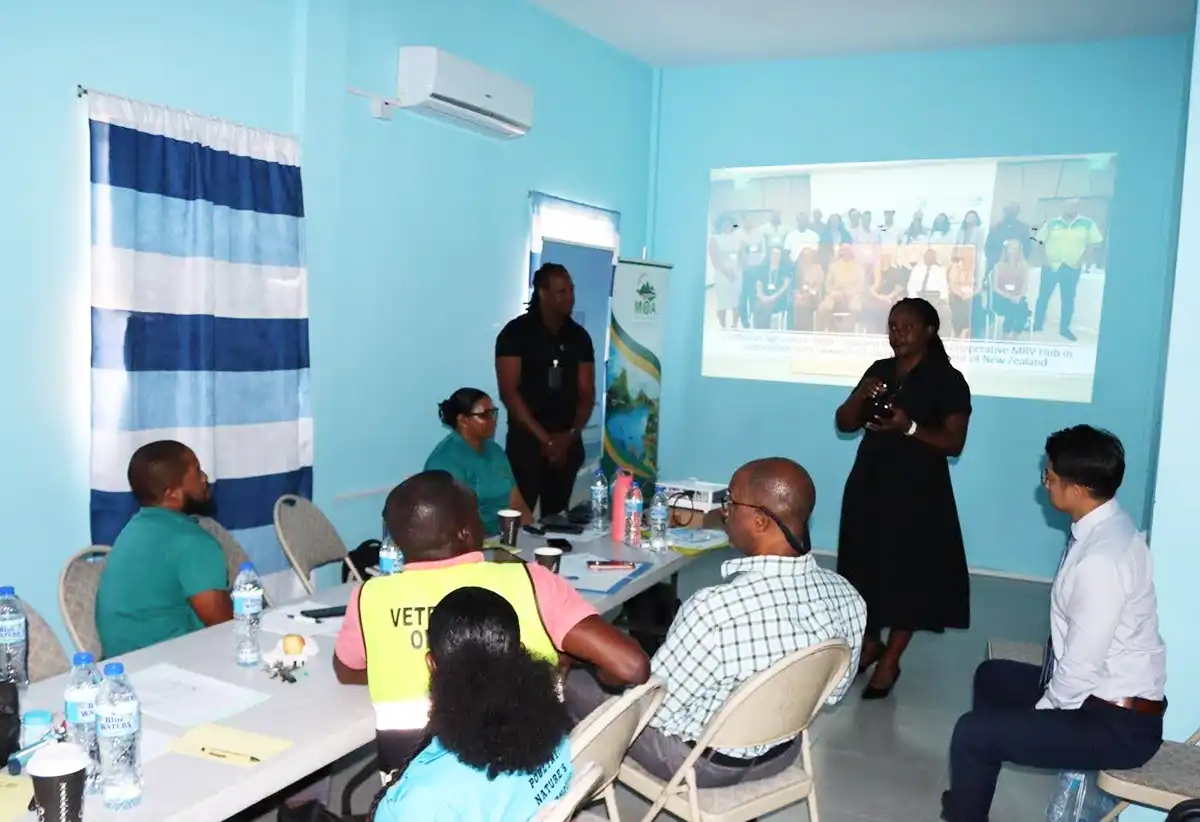
Prior to the validation workshop, both Ms. Leon and Mr. Du Boulay were tasked with compiling data locally and attended four capacity-building workshops in Grenada and a study tour in New Zealand to gain more knowledge in the respective areas in which they presented.
In his opening remarks at the workshop, Mr. Daniel Lee, Chief of the Taiwan Technical Mission (TTM) in Saint Lucia, noted that accurate, high-quality data remains the fundamental bedrock of effective climate action.
“This validation workshop, which focuses on reviewing Saint Lucia’s livestock data and greenhouse gas emissions from 2013 to 2023, is a monumental step forward,” he said. “Perfecting the national greenhouse gas inventory system is crucial – not only for tracking national climate policy progress, but also for updating Saint Lucia’s Nationally Determined Contributions (NDCs) and unlocking future international climate finance. The importance of this workshop cannot be overstated.”
Mr. Lee said the Taiwan Technical Mission has long been deeply committed to promoting sustainable agriculture and environmental resilience in Saint Lucia. He noted that the TTM remains proud of its close partnership with the CCMRVH through the “Climate Impact and Data Enhancement Project”.
“Supported by our joint project funding and collaborative efforts, we have worked hand-in- hand to strengthen data collection methodologies, build analyzes modules, and host training workshops,” Mr. Lee stated. “This partnership has significantly enhanced local capacities in agricultural data tracking, providing reliable, science-based evidence for climate reporting and policy-making.”
With climate change being a global challenge that requires deep institutional synergy and international cooperation, Mr. Lee said that the TTM looks forward to continuing and expanding its partnership with the CCMRVH, capitalizing on the solid foundation that has been established. Moreover, he said the TTM hopes to collaborate with the NZC-SA.
“We are highly eager to collaborate closely with the New Zealand (NZC-SA) project in the future. By combining our multilateral expertise, resources, and shared vision, we can collectively build a more climate-resilient and sustainable agricultural future for Saint Lucia,” Mr. Lee explained.
Meanwhile, Ms. Benise Joseph, Deputy Director of the Caribbean Cooperative Measurement, Reporting & Verification Hub (CCMRVH), said the CCMRVH’s primary goal is to build capacity in the Region. She noted that the workshop was not simply a technical exercise, but an important opportunity to strengthen capacity, institutions, systems, and partnerships throughout the Region.
“By working together to improve the quality and reliability of our agricultural GHG data, we are also strengthening our collective ability to respond to climate challenges while supporting sustainable agricultural development,” Ms. Joseph explained.