


Even with a population of over 23,000,000, Taiwan is still considered a small country particularly compared to the United States of America, China, India and some of its neighbours. Actually, to put things into perspective, Taiwan’s population is approximately half of the population of the Caribbean, yet that has not hindered them from punching above their weight. The documented truth is that they are, not only serious competitors in the global technology arena, they are recognized world leaders in many respects.
Technology is at the heart of Taiwan’s remarkable development and, impressively, in a relatively short space of time. That, coupled with the resilience and visible discipline of its people, is the driving force behind the success of a country that is quickly becoming the envy of global economies.
Taiwan’s advancements in the technological world and the way it touches and affects the working world is a matter that propels this discussion into a much closer look at the organizations and institutions that form the foundation of this fledgling economy.
A closer look at that will come in part 2.
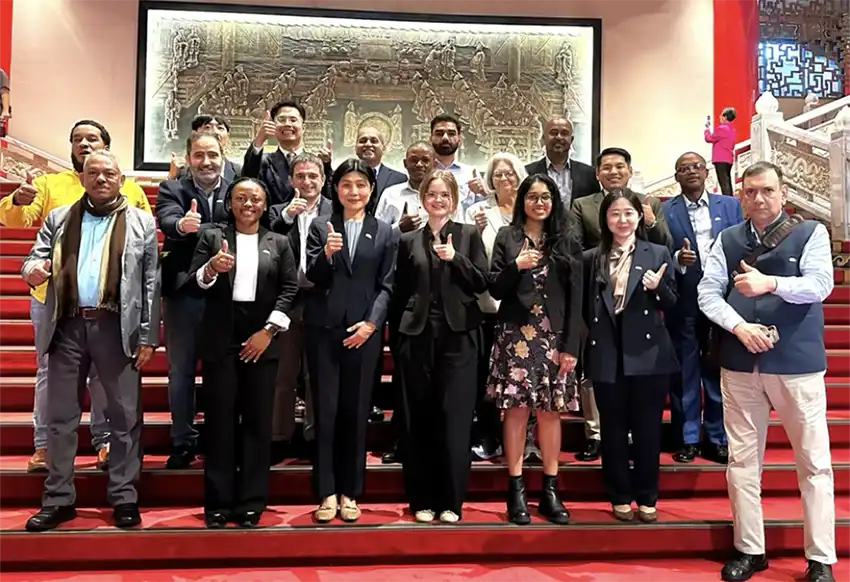
Next year, Taiwan and Saint Lucia will mark the 20th anniversary of diplomatic relations, a fact that Taiwan’s Foreign Minister Dr. Chia-Lung LIN openly recognized last week. The foreign minister was speaking to an international contingent comprising delegates from St. Lucia, St. Kitts, Belize, Haiti, USA, Eswatini, India, Saudi Arabia, Mongolia, Italy, Jordan, Australia, Japan, Oman, Kuwait and Germany, ahead of Taiwan’s national day celebrations on October 10, 2026. Speaking about the St. Lucia/Taiwan relationship specifically, the foreign minister saw more cooperation on the horizon, saying, “the two countries have maintained stable and friendly ties and enjoy ongoing cooperation in such areas as education, healthcare, agriculture, digital transformation, climate change adaptation, and talent development.
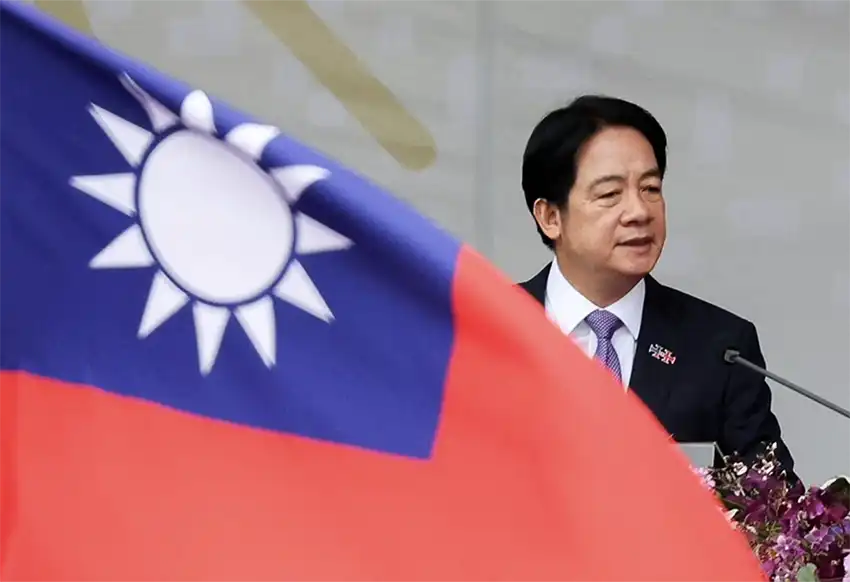
Looking ahead, Taiwan will continue to build on the foundation that has been laid and further expand exchanges in trade and investment, technology, talent development, and industry. The two countries will also forge closer people-to- people connections through education, with the goal of building a long-lasting, resilient, and mutually beneficial partnership.”
Dr. Chai-Lung LIN was also adamant that the air needed to be cleared on a number of misconceptions about his country and the work that is undertaken globally. St. Lucia, like a number of other Caribbean islands, benefits immensely from an extremely active Taiwan Technical Mission {TTM} under the stewardship of Ambassador Nicole Su. The assistance in agriculture and education particularly being the most noteworthy. The Taiwan foreign minister was clear about the importance of Taiwan’s partners in the region. “One of the biggest misconceptions about Taiwan in Latin America and the Caribbean is that Taiwan is simply a provider of aid and a high-tech manufacturing hub. This overlooks Taiwan’s staunch democratic values, diverse society, and cross-domain expertise in sustainable development.
We hope that countries in the region will recognize that Taiwan is more than just a global semiconductor leader. Taiwan is also a resilient democracy that has continued to adapt in the face of geopolitical challenges. Beyond technology and trade, Taiwan has extensive experience in areas such as smart agriculture, public health, digital governance, and green energy transition. Moreover, Taiwan is committed to building equal partnerships based on shared values. Through technology transfers, talent development, and support for local industries, Taiwan
strives to create mutual benefit. He continued, “Looking ahead, Taiwan hopes to enhance exchanges with nations across Latin America and the Caribbean, including diplomatic allies and friendly countries. Through deeper exchanges, we aim to showcase a multifaceted, open, and trustworthy Taiwan that can serve as a valuable cooperation partner in the region.”
Taiwan’s economy grew by a reported 11%, a monumental feat compared to struggling economies around the world and a clear indication of the prowess of the architects of its system. Yet, this fledgling economy is not equipped with a seat at the table.
Taiwan is not a recognized member of the United Nations (UN) and has been excluded from full participation since 1971 via UN Resolution 2758 which recognizes the People’s Republic of China (PRC) as the only legitimate representative of China to the UN. Taiwan contends that Resolution 2758 only determined who represents China but does not mention Taiwan or its 23 million people and therefore does not grant the PRC the right to represent Taiwan at the UN level.
Taiwan consequently does not have access to the World Health Organization (WHO), the International Civil Aviation Organization (ICAO) and the UN Framework Convention on Climate Change (UNFCCC). It is also widely reported and confirmed by the Ministry of Foreign Affairs (MOFA) that holders of Taiwanese passports and Taiwanese journalists face systematic entry denials when trying to visit or cover events at the UN headquarters.
It is unacceptable, at least to some, that after over 40 years without a seat at the table, growing an economy that is obviously the envy of other nations, while significantly lending a hand to diplomatic partners, that this situation has not found normalcy. What is worse is that the Taiwan/China debate could escalate into full military conflict, which, if allowed to happen, would mean untold damage to established regional relationships, damage to the vast contribution to the technological world, and devastation to the hopes and aspirations of 23 million people.
Taiwan’s President Lai Ching-te, who hosted King Mswati III of the Kingdom of Eswatini for the October 10 Independence celebration, went straight into establishing Taiwan’s position after the pleasantries of the first two paragraphs.
President Lai Ching-te recognized the effects of the wars across the world, he lauded the accomplishments of Taiwan’s athletes at the recent Asian games. He spoke of his country’s efforts with regards to climate change, care for the young and elderly, drugs and criminal activity including fraud, health care and social welfare, a script that read much like what obtains in Caribbean states including St. Lucia.
He revealed that there was an amendment to the Act for the Recruitment and Employment of Foreign Professionals, which expanded the opportunity “for international talent and foreign students to come to and stay in Taiwan.” He was exceedingly clear about what the future should look like. “We welcome the United States and China managing their competition through dialogue and reducing the risk of conflict and war. But we must also point out that maintaining regional security, peace, and stability requires a correct understanding of how history has unfolded. There must be no tolerance for distorting the history of World War II. There must be respect for the right of the people of Taiwan to exist. And above all, democracies in the Indo-Pacific must join forces to ensure the status quo of peace and stability in the region is not changed.”
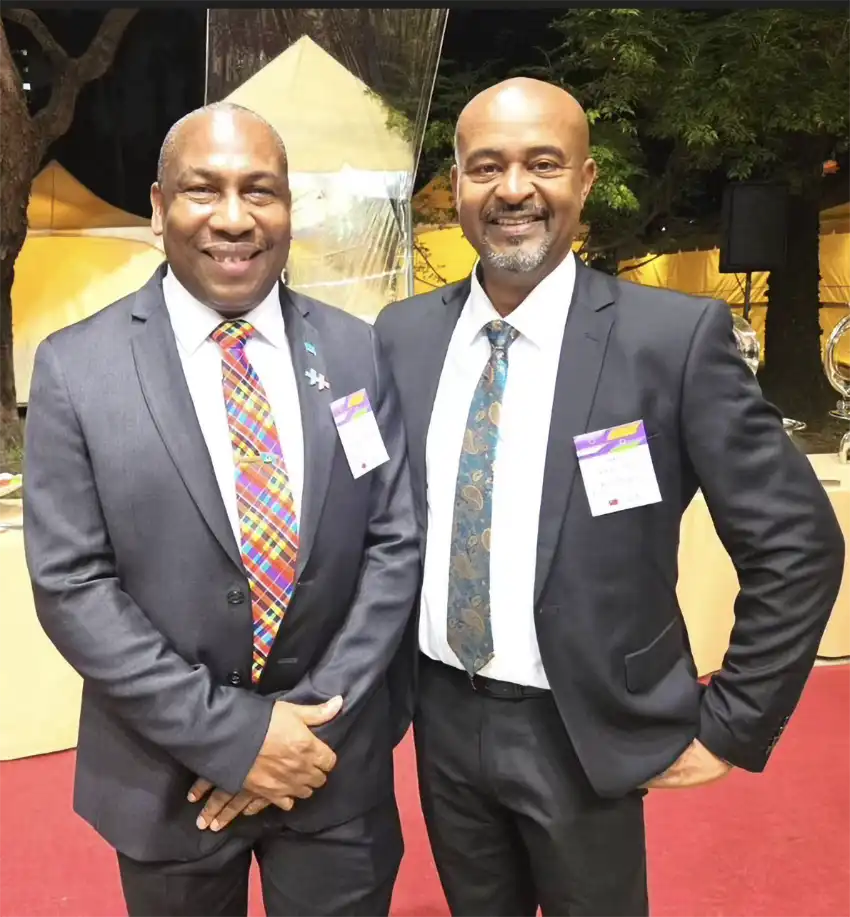
The occasion marked the 30th anniversary of Taiwan’s first direct presidential elections, during which time a bustling economy and a full-fledged democracy was built. St. Lucia’s Ambassador to Taiwan Dr. Robert Lewis was part of the celebration and took the opportunity to congratulate the president, his guests and Taiwanese nationals based in St. Lucia. He reiterated that St. Lucia was well represented, not only through the diplomatic office, but as well as through the number of St. Lucian students seeking higher education there.