


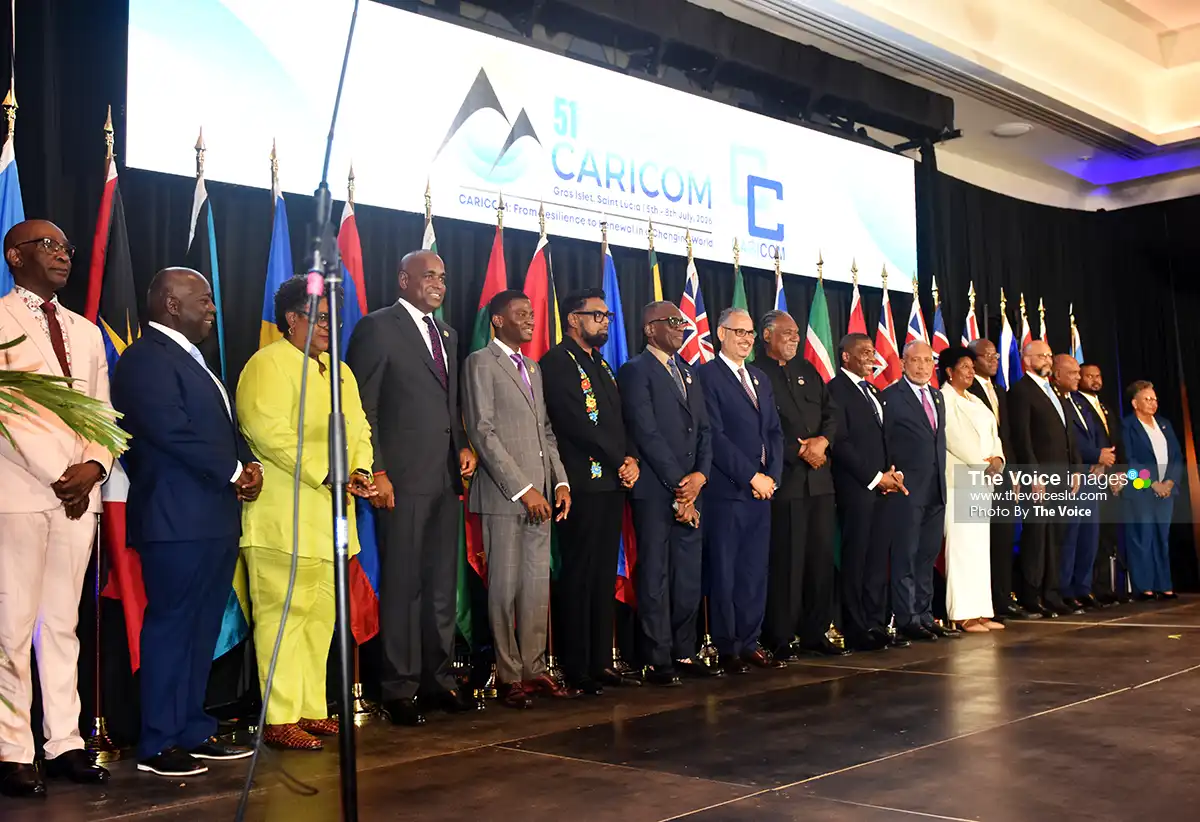
As regional leaders look ahead with optimism to chart a safe, conducive, and productive path for Caribbean citizens, the underlying theme remains: unification and the provision of tangible benefits for the people on the journey ahead.
Chair of CARICOM, Prime Minister Philip J. Pierre, has emphasized the critical importance of harnessing economic gains for the common citizen of the region. From July 1 to 8, Saint Lucia hosted the CARICOM Heads of Government for the 51st Regular Meeting.
This event witnessed the participation of senior government officials, representatives from regional and international institutions, members of the diplomatic corps, development partners, and delegates from across the Caribbean Community. This four-day meeting gathered the nation’s highest decision-makers to deliberate on matters vital to the future of the Caribbean Community.
During the CARICOM Breakfast Forum held on Monday, leaders convened at the 51st Regular Session to tackle pressing challenges such as climate resilience, regional security, economic integration, food and water security, migration, rising living costs, crime, and geopolitical tensions. The emphasis was on strengthening unity amid divisions to enhance collective action.

Gordon Charles, President of the OECS Business Council and Executive Member of the CARICOM Private Sector Organisation, addressed the theme: “Meeting the Affordable Challenge.” He pointed out that regional stakeholders from both the private and public sectors convened to initiate dialogue on the common challenges the region faces.
Charles stressed the urgency of building resilience to sustain the livelihoods and well-being of the citizens, focusing on regional integration.
“Affordability is no longer a theoretical concept; it is a stark reality felt at our supermarkets, fuel stations, and kitchen tables. For OECS member states, this challenge is existential,” he stated. He further explained that small, open islands rely heavily on imported food, meaning when local food chains falter, the people experience immediate and significant hardship.
The forum highlighted the need for coordinated strategies to promote sustainable development and regional cohesion across the Caribbean.

In this context, Charles asserted, “We must urgently build resilience to address these agricultural and industrial woes for our nutritional security.”
With a sub-theme entitled “Toward a Productive Agent for Public and Private Sector,” he referenced CPSO research indicating the need to reduce the region’s dependence on imports.
Key issues on the agenda will include regional security, climate change and climate financing, food and nutrition security, the CARICOM Single Market and Economy, community enlargement, foreign and community relations, reparations, and other priorities affecting the sustainable development of the region.
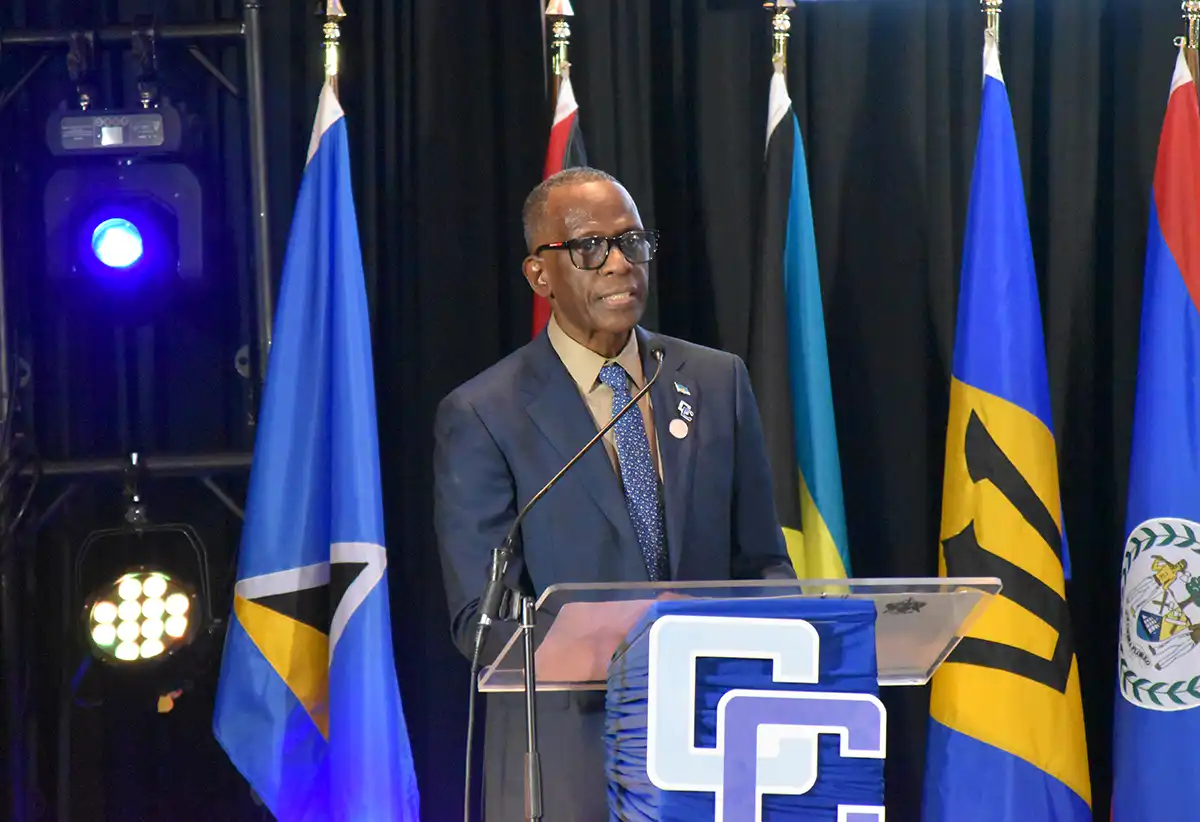
Prime Minister Pierre, who officially assumed the rotating chairmanship of the Caribbean Community on July 1 under the timely theme “CARICOM: From Resilience to Renewal in a Changing World,” aims to implement concrete actions to address pressing economic, social, and structural hurdles. He highlighted the importance of “timely and meaningful engagement,” positioning the private sector as a key partner in regional development, investment, job creation, innovation, personnel training, and enterprise initiatives within the CARICOM Single Market.

“You understand the challenges our citizens face, and you recognize the opportunities that exist if we collaborate effectively to address these issues,” the Prime Minister noted. He identified several key challenges, including: increasing food production, ensuring job security, addressing the cost of living, and enhancing safety and security for citizens and communities.
“If our private sector is to grow, then we must facilitate the movement of goods and services throughout the region,” he emphasized.
Key Challenges on the Agenda:
According to updates from the CARICOM Secretariat, leaders face a robust regional agenda:
– CSME Implementation: CARICOM Secretary-General Dr. Carla Barnett has challenged leaders to accelerate the CARICOM Single Market and Economy (CSME) by closing existing gaps in the free movement of skilled workers and strengthening trade rules.
– Regional Security & Haiti: Addressing rising crime rates and political transitions in Haiti, where a UN-backed force is currently operational.
– Climate Resilience: Developing collective diplomatic and financial strategies ahead of upcoming international environmental negotiations.
– Food & Water Security: Countering the increasing global and domestic inflation rates that are affecting the Caribbean’s cost of living.
Concurrent Margins & Governance:
– Youth Solutions Forum: In tandem with the main heads-of-government discussions, a hybrid CARICOM Youth Forum has commenced, themed “Youth Solutions for a Sustainable Future.”
This meeting presents a pivotal opportunity for regional leaders to collaborate on pressing issues and work toward a unified approach for the development and prosperity of the Caribbean community.