


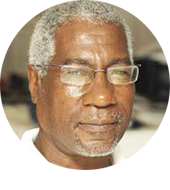
Three at the top in Geneva: Reparations History Professor Dr Verene Shepherd (Jamaica), UN Permanent Forum for People of African Descent Chair Gaynel Curry (The Bahamas) and Ambassador Dr June Soomer (Saint Lucia), the Forum’s second Chairperson.
Every now and then, the Caribbean makes quiet (even silent) contributions to international diplomacy that largely go un-noticed and this week was another 21st Century Moment for the region’s continuing quest for Reparations from Europe for Slavery and Native Genocide and deepening the new Caribbean connection with the continent.
On Tuesday (April 14, 2026), Ms. Gaynel Curry of The Bahamas became the new Chair of the United Nations (UN) Permanent Forum for People of African Descent (PFPAD).
Those aware of the significance of the event at the UN’s European headquarters in Geneva took pride in the fact that she’s the second CARICOM national and the third from Latin America and Caribbean to serve in the top post.
The Forum’s first Chair was Ms. Epsy Campbell Barr of Costa Rica, followed by Dr June Soomer of Saint Lucia, with Mr Martin Kimani of Kenya as the third and – and now, Ms Curry.
The Forum is the foremost global body behind the Second Decade for People of African Descent and promotes annual observations of International Day for People of African Descent (IDPAD) every August 31st.
The First Decade was designated by the UN for 2015 to 2024, to recognize the historic and continuing contributions of People of African Descent to Humanity and Civilization.
However, most nations led by and home to people of African descent failed to mobilize around the cause.
The Latin America, the Caribbean and Africa had successfully agitated for the Second Decade that was declared on December 17, 2024, to run from January 1, 2025 to December 31, 2034.
From its inception on August 2, 2021, The Forum has continued building the foundation laid by the First Decade’s groundwork and leading the global push for recognition, justice and development for its constituents everywhere.
The Caribbean Community (CARICOM) and the African Union (AU) share deep historical ties that span centuries.
Earlier Caribbean-African solidarity and cooperation exchanges in the colonial period saw several early progressive Caribbean political thinkers contribute to struggles for African nationhood, starting with Ghana’s independence in March 1957.
The Forum’s Geneva meeting again confirmed the quiet but significant Latin American and Caribbean contributions to its leadership and the flowering of brighter cooperation between the two continental and island regions, especially following the new CARICOM-AU partnership that’s already resulted in two summits (in 2021 and 2025).
The summits sealed new links in the continuing chain of African-Caribbean reconnection, rooting from earlier 20th Century times when Saint Lucia’s W. Arthur Lewis was assigned by the United Nations as the first economic advisor (1957-58) to Ghana’s first President, Kwame Nkrumah.
Recruited for his expertise in development economics, Ghana provided Lewis with a practical testing ground for implementation of his theories, like those on Structural Transformation and Industrialization also later adopted in China, India and Singapore.
Lewis is credited with having advised Nkrumah on renaming the new nation’s fleet of cargo ships as ‘The Black Star Line’ — in quiet tribute to Marcus Garvey’s shipping line established for repatriation of people of African descent to their Motherland.
The future Nobel Laureate also served as an influential economic advisor to Nigeria, particularly around its independence, providing strategic advice on development planning.
He analyzed Nigeria’s economic growth, emphasizing industrialization, infrastructure, and agricultural productivity in his work, including a notable 1967 study on the country’s development.
Likewise, Dominica’s Justice Telford Georges was the first Chief Justice of Tanzania (1965-71) and Saint Lucia’s Darnley Alexander was the first non-national Chief Justice of Nigeria (1975-79).
Before and after them, Caribbean intellectuals, writers and historians — from Trinidad & Tobago’s George Padmore to Guyana’s Dr Walter Rodney — helped stamp the Caribbean’s seals of support for Africa’s struggles against colonialism.
The writings of Martinique’s Frantz Fanon (author of ‘The Wretched of the Earth’) was written while he served as a doctor in Algeria and it influenced progressive movements across France’s African and Caribbean colonies, as well as in Europe.
Caribbean delegates in The Forum and other related UN agencies represent the member-states of the CARICOM Reparations Commission (CRC), led by University of the West Indies (UWI) Vice Chancellor Sir Hilary Beckles.
Ambassador Dr Soomer represents the Permanent Forum and the Sixth Region on the Executive of the AU’s Committee of Experts on Reparations, to help strengthen understanding of the genesis of CARICOM’s Ten-Point Plan (TPP) for Reparatory Justice — and African representation in the growing global movement for Reparations started by 14 Caribbean nations in 2013.
Today, Reparations is the Number-One global human rights issue of the 21st Century, after reaching a milestone zenith worldwide – including Africa and Europe — after the killing of George Floyd in Minneapolis, Minnesota on May 25, 2020.
The AU is also continually updated on the contemporary historicity of CARICOM’s TPP, originally adopted in 2013 — and which earlier influenced establishment of a US National Commission for Reparations and adoption of Reparations-related legislation in many US states since 2020.
Caribbean Reparations advocates also helped flesh the bone of the recent resolution presented at the UN in March 2026, aptly declaring Trans-Atlantic Slavery in Enslaved Africans as ‘The Gravest Crime Against Humanity’.
Supported by an overwhelming majority of member-states, the resolution was strongly opposed by the usual suspects, but was successfully adopted.
Africa acknowledges and appreciates the Caribbean’s continuing solidarity and support on the shared Reparations frontline.
The new Caribbean-Africa relationship has seen September 7 designated as annual AU-CARICOM Day.
Caribbean contributions to this new dynamic also include the pioneering role of Professor Verene Shepherd, a founding member of Jamaica’s National Reparations Council (NRC) and the CRC.
She was also the founding Director of the UWI’s Centre for Reparations Research (CRR) and is a long-serving member of the UN’s Geneva-based Committee on Racial Equality (CERD).
An honoured history lecturer and author, Professor Shepherd contributed to the successful UN resolution by Ghana opposed by the rich nations that built empires off the blood, sweat and tears of enslaved Africans.
Ambassador Dr Soomer is a former Saint Lucia Ambassador to CARICOM who also served as Secretary General of the Association of Caribbean States (ACS) and is current Chair of the UWI Global Campus.
Mesdames Shepherd, Soomer and Curry are among the strong women in the leadership of the Caribbean’s Reparations Movement, with Barbados Prime Minister Mia Mottley having Prime Ministerial Responsibility for Reparations in CARICOM’s Quasi Cabinet.
Jamaica’s Dr Hilary Brown is the Program Manager for Culture and Community Relations at the CARICOM Secretariat in Guyana and the leading administrator in the CRC.
The CRR is now headed by another woman, Professor Sonjah Stanley Niaah and the NRCs of The Bahamas, Jamaica and St. Kitts and Nevis are also led by women.
Caribbean women are indeed helping lead the fight to globalize the global movement for reparations, as more people and nations worldwide hear the call and take-up the reparations flag waved by CARICOM in St. Vincent & The Grenadines in November 2013.
That’s when the CRC was born — and from whence cometh CARICOM’s now-revised TPP, loudly trumpeting the welcome Reparations Message to People of African Descent and all genuine citizens of today’s shared planet.
The Permanent Forum is also among the ever-bearing fruits of the growing 21st Century global consciousness that People of African and Caribbean Descent emerged from nurseries of global civilization and do still play a great part in keeping the world turning today, for tomorrow – and for ever!