


“International police cooperation is vital. By working together across borders, law enforcement agencies can better support survivors, apprehend perpetrators, disrupt criminal networks, and advance safety for all.” UN Secretary-General Antonio Guterres
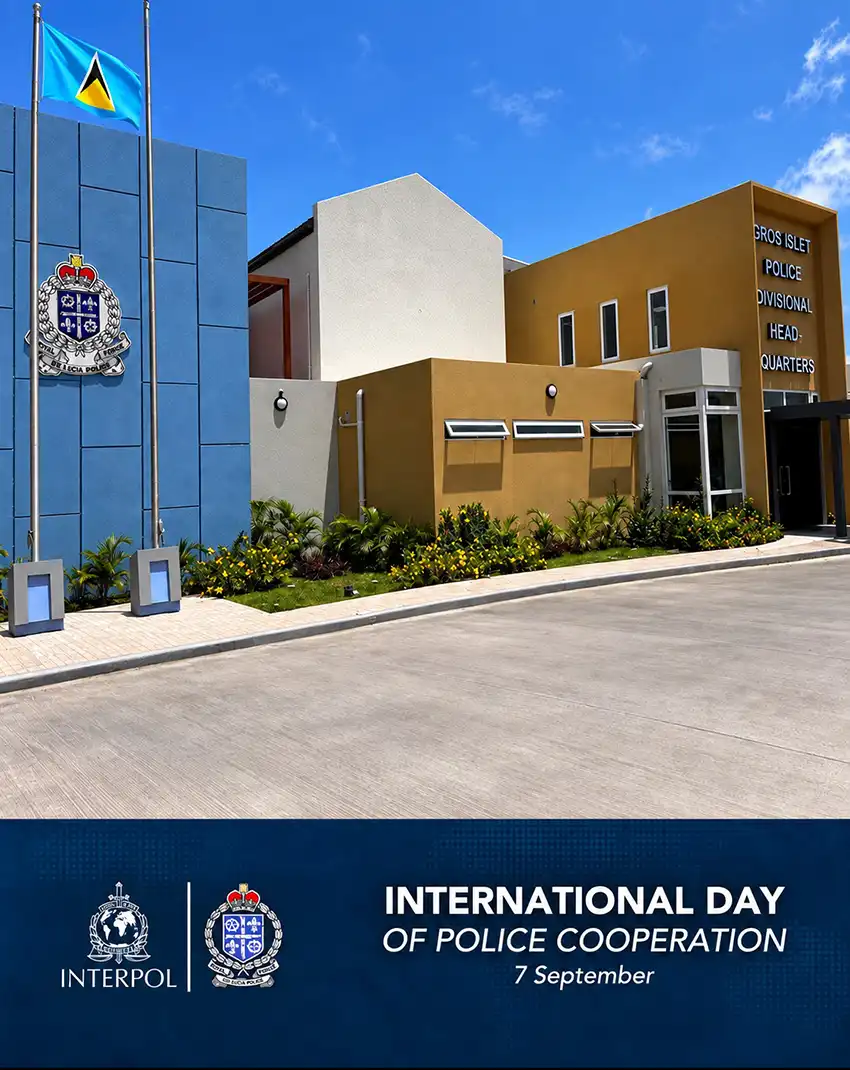
International Day of Police Cooperation is observed annually, on 7th September.
Every day, crime crosses borders. Online fraudsters can target victims from anywhere in the world. Criminal networks move people, money and illicit goods across regions. Fugitives attempt to evade justice by moving between countries.
Responding to these threats requires police cooperation that extends beyond national borders.
On Monday, the Royal Saint Lucia Police Force [RSLPF] joined police agencies around the world in marking the United Nations International Day of Police Cooperation, highlighting how international collaboration helps protect communities, support victims and keep the public safe.
This year’s observance focuses on protecting the vulnerable and strengthening public trust and legitimacy in policing, while reinforcing a shared commitment to working together against crime.
RSLPF spokesperson noted, “For people in Saint Lucia, international police cooperation delivers practical results. It helps identify and locate victims, reunite missing persons with their families, track fugitives, disrupt organized crime networks, recover stolen property, and combat cyber-enabled crime. These outcomes are made possible through the daily work of police officers and specialists who share information, coordinate investigations, and support operations with trusted partners across borders.”
International police cooperation is a vital part of modern policing. It helps ensure that borders do not become barriers to justice and that law enforcement agencies can work together to address threats that affect communities everywhere.
As police organizations worldwide mark this year’s International Day of Police Cooperation, the Royal Saint Lucia Police Force reaffirms its commitment to working with partners at home and abroad to build safer communities and stand together against crime.
Additionally, a United Nations (UN) statement noted that aligning with the theme of the 2026 International Day of Police Cooperation, “Protecting against Vulnerability – Building Trust and Legitimacy in Policing,” highlights the need to protect those most vulnerable to crime while strengthening the trust and legitimacy that underpin effective policing.
The theme is especially relevant amid rising conflict, displacement, and other global challenges that heighten vulnerability and fuel transnational crime. Those most at risk are often disproportionately affected by cross-border threats, reinforcing the need for stronger international police cooperation to protect victims and combat criminal networks.
Addressing these challenges requires effective international police cooperation. Partnerships among the United Nations, INTERPOL and regional policing organizations are essential to protecting victims, disrupting criminal networks, sharing critical information and strengthening policing capacities across borders.
Effective policing depends not only on operational capacity, but also on public trust. In a rapidly evolving security environment, sustaining legitimacy and trust is essential. Building and maintaining trust with vulnerable groups is therefore not only a normative imperative, but also a practical necessity for effective policing.