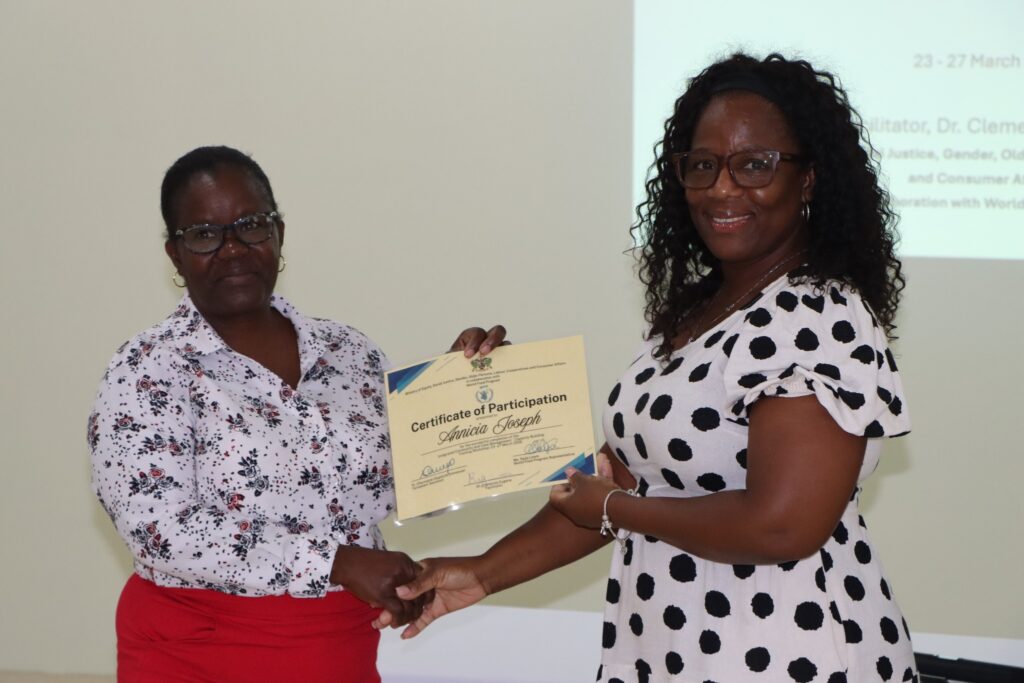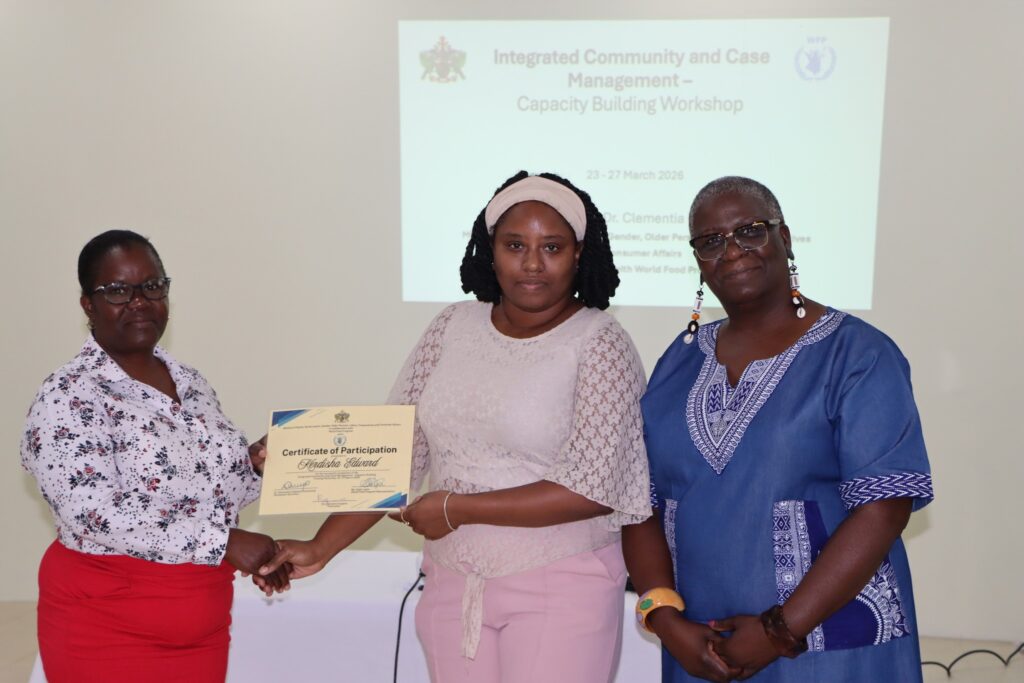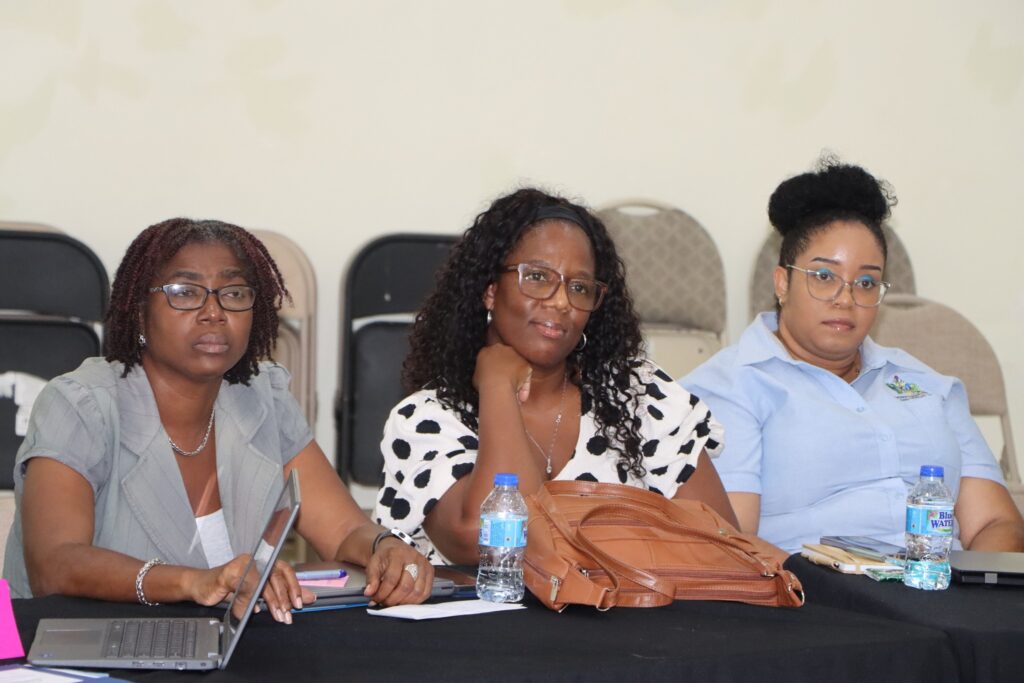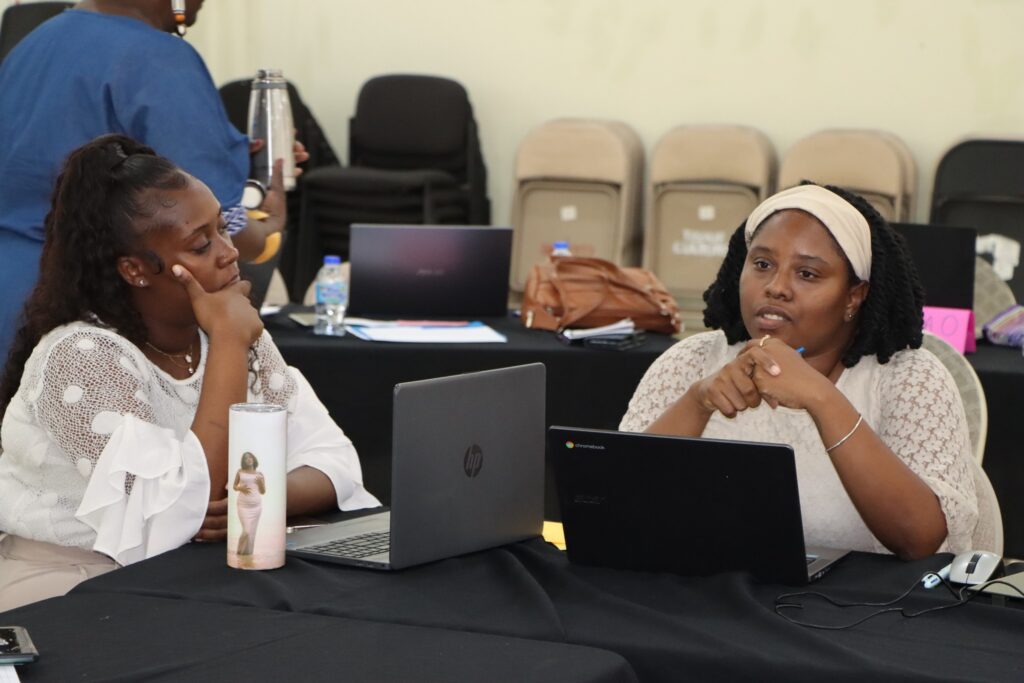


Social workers across Saint Lucia are now better equipped to deliver effective, empathetic, and professional services following a World Food Program (WFP) led comprehensive training initiative aimed at strengthening case management, communication, and self-care practices within the sector.
The five-day workshop focused on enhancing practical skills, improving client engagement, and promoting work-life balance, all of which are critical to sustaining high-quality support for vulnerable individuals and families.
Workshop Facilitator, Dr. Clementia Eugene, highlighted the importance of continuous professional development and self-care. “I would say to other social workers that they need to invest, from time to time, in developing and refining their professional skills. We all learned these skills while studying at university, but once we begin working, caseloads become heavy and the demands on our time increase, causing us to sometimes overlook best practices. As a result, we introduced them to 27 different self-care activities that they can incorporate into their daily lives. One of the most powerful is simply being able to pause and take three to five deep breaths,” she noted.
Deputy Permanent Secretary in the Ministry of Equity, Social Justice, Gender and Older Persons, Karen Dupre, highlighted the broader impact of the training on service delivery. “I am confident that the knowledge and skills gained during these five days of training will have a significant impact on the vulnerable persons we serve. Case management does not focus solely on assessment, planning, and coordination, it also encompasses ways of improving communication skills, such as fostering empathy, and emphasizes the importance of self-care when working with vulnerable populations,” Dupre explained.
Participants also reflected on the personal and professional value of the training. “One of the key takeaways for me was the importance of setting boundaries and taking time to replenish yourself, filling your own cup before helping others because you cannot pour from an empty cup. At times, saying no is necessary to preserve the capacity needed to support others effectively,” noted Family Case Worker Marvin James.
Welfare Officer, Kerensa Donnally, further emphasized the importance of maintaining professional boundaries. “For me, one of the key takeaways was professional boundaries. The phone never stops ringing, but work should be confined to specific hours. It is important to set clear boundaries for yourself so that you can have your personal time, while also maintaining dedicated time for work.”
The initiative forms part of ongoing efforts by the World Food Programme to strengthen social protection services and ensure that frontline social workers are equipped with the skills and resilience necessary to continue delivering high-quality support across communities.