


![FAO Consultant Dr. Mohammed Megahed [Photo credit : MOA]](https://thevoiceslu.com/wp-content/uploads/2026/08/FAO-Consultant-Dr-Mohammed-Megahed.webp)
Recently, the Department of Fisheries, in collaboration with the Food and Agriculture Organization of the United Nations (FAO), hosted a workshop focused on Capacity Building for Sustainable Shrimp Hatchery and Seed Production.
The goal of the workshop was to strengthen participants’ understanding of sustainable practices in shrimp hatchery management, seed production, and culture techniques. Led by FAO Consultant Dr. Mohammed Megahed, the workshop delved into sustainable shrimp hatchery management and seed production.
A key focus was on one of the world’s most widely cultured shrimp species, covering its culture potential, production systems, water quality requirements, feeding, husbandry, and management techniques.
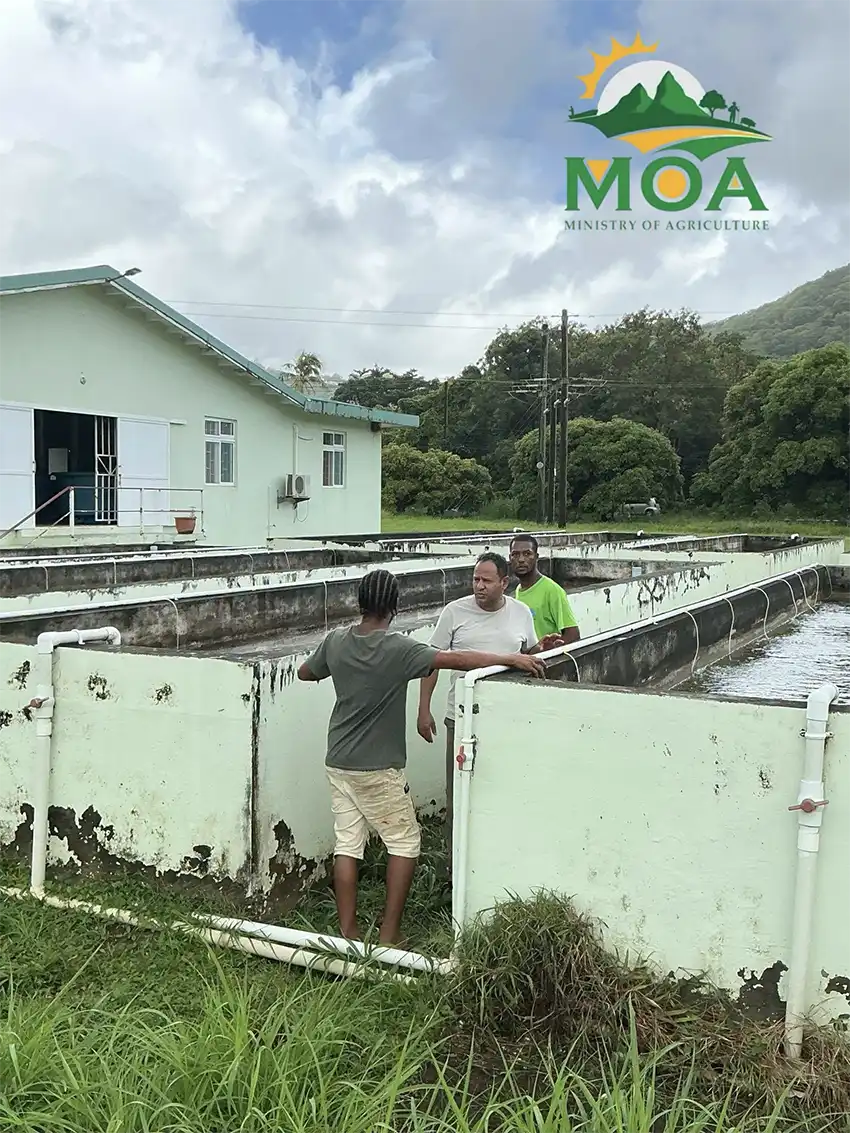
As part of his technical mission, Dr. Megahed visited the Union Aquaculture Hatchery, where he met with technical staff and pond attendants to review operations, discuss production challenges, and identify opportunities to improve shrimp hatchery and seed production processes. This initiative supports ongoing efforts to enhance technical capacity, promote species diversification, and advance the sustainable development of Saint Lucia’s aquaculture sector.
Notably, the FAO emphasizes that aquaculture is recognized globally as one of the fastest-growing sectors in food production, significantly contributing to food and nutrition security, job creation, and the diversification of rural livelihoods. It also plays a vital role in enhancing resilience against climate change.
For Small Island Developing States (SIDS), including Saint Lucia and other Eastern Caribbean nations, sustainable aquaculture presents significant opportunities to reduce reliance on imported seafood, boost domestic fish production, generate income for coastal and rural communities, and foster inclusive economic growth.
Among the viable aquaculture species for tropical and subtropical climates, the Pacific white shrimp (Litopenaeus vannamei) has emerged as the most extensively cultured shrimp species worldwide. This species is favored for its rapid growth, broad environmental tolerance, high survival rates, efficient feed conversion, and strong market demand.
vannamei thrives in various production systems, including ponds, lined ponds, circular tanks, biofloc systems, and recirculating aquaculture systems (RAS), making it particularly well-suited for land-based aquaculture development in the Caribbean.
Its relatively short production cycle and high productivity provide opportunities for both domestic food supply enhancement and the development of competitive value chains.
The successful establishment of a sustainable L. vannamei industry relies on creating an integrated production chain that includes broodstock management, hatchery, nursery, and grow-out phases. Hatcheries form the backbone of this industry by producing healthy, high-quality, disease-free post-larvae through controlled breeding, larval rearing, and stringent biosecurity measures.
Reliable hatchery production minimizes dependence on imported seed, reduces the risk of introducing transboundary aquatic animal diseases, ensures year-round availability of quality stocking materials, and bolsters national and regional biosecurity. Thus, a functional hatchery is a strategic investment that underpins the long-term sustainability and competitiveness of the shrimp sector.