


Pollination services contribute an estimated USD 235–577 billion annually to global agriculture, while the global honey market is valued at approximately USD 8.92 billion. This disparity highlights one of the greatest paradoxes in modern economic systems: the vast majority of the value generated by bees is never reflected in markets, national accounts, or public investment decisions.
The Caribbean now faces an important policy choice. Governments can continue to treat apiculture as a niche agricultural activity centered on honey production, or they can recognize it as an existential component for sustainable food security, biodiversity conservation, climate resilience, sustainable tourism, and rural livelihoods.
When most people think of beekeeping, they think of honey, beeswax, propolis, or perhaps bee venom. These products are important sources of income for beekeepers. However, they represent only a fraction of the true value generated by honeybees. The greatest contribution of bees is pollination, a service that supports agricultural production, forest regeneration, ecosystem health, and biodiversity conservation.
Economists refer to these benefits as positive externalities. Externalities occur when the activities of one individual or enterprise generate costs or benefits for others that are not reflected in market prices. In the case of apiculture, the externalities are overwhelmingly positive. Every healthy colony managed by a beekeeper contributes value far beyond the honey harvested from it.
Farmers producing mangoes, avocados, pumpkins, cucumbers, citrus, coconuts, coffee, and numerous other crops depend directly upon pollination services. Society benefits through increased food production, improved ecosystem resilience, enhanced biodiversity, and strengthened climate adaptation. Yet beekeepers are generally compensated only for the honey and hive products they sell, while the broader ecosystem services they provide remain largely invisible within economic systems.
This challenge is not unique to the Caribbean. The Intergovernmental Science-Policy Platform on Biodiversity and Ecosystem Services (IPBES), in its 2022 Methodological Assessment on the Diverse Values and Valuation of Nature, concluded that biodiversity and ecosystem services are routinely undervalued within policy and economic decision-making systems. The assessment found that fewer than five percent of valuation studies ultimately influence policy decisions, highlighting a persistent knowledge-to-action gap. Pollinator conservation represents a clear example of this global challenge. While the value of pollination is widely recognized by scientists and economists, it remains largely absent from public investment frameworks.
In Saint Lucia and throughout the OECS, where biodiversity represents one of our most valuable assets, apiculture is one of the few agricultural activities that simultaneously generates income while supporting ecosystem restoration, biodiversity conservation, food security, and climate resilience. This relationship is particularly important in tourism-dependent economies.
Saint Lucia’s tourism industry depends heavily upon natural capital. Visitors are attracted by forests, waterfalls, botanical gardens, nature trails, coastal ecosystems, and the rich biodiversity that defines the Caribbean experience. Pollinators play a quiet but essential role in maintaining these ecosystems. Bees support the flowering plants, forests, agricultural systems, and natural landscapes upon which tourism ultimately depends.
Yet the contribution of pollinators to tourism remains almost entirely invisible within economic accounting systems.
This raises an important policy question. If pollinators help sustain the ecosystems upon which Caribbean economies depend, should governments and the private sector not contribute more directly toward supporting pollinator conservation and apiculture development?
There is a strong case for recognizing beekeepers as providers of ecosystem services. If governments are serious about biodiversity conservation, climate resilience, food security, and sustainable economic development, then public investment mechanisms should be developed to support pollinator conservation and the beekeepers who maintain managed pollinator populations.
The Thirty-Year Paradox
The challenges confronting Caribbean apiculture today are not new. One of the most revealing findings of the GEF SGP UNDP commissioned 2022 Baseline Study of Management Practices in the Apiculture Industry was that many of the recommendations being made today are virtually identical to those made more than thirty years ago.
In 1992, the First Regional Training Workshop for Beekeepers hosted by IICA identified the need for stronger beekeeper training, queen rearing programmes, agroforestry integration, improved honey quality standards, and market development initiatives. Nearly twenty years later, a regional review undertaken in 2011 reached many of the same conclusions while adding recommendations for honey traceability systems, bee health monitoring, Varroa management programmes, and stronger regional coordination.
The 2022 Baseline Study arrived at many of the same recommendations and concluded that little had changed within the industry over the previous three decades.
This creates what may be described as the Thirty-Year Paradox of Caribbean Apiculture. The region has not suffered from a lack of studies, workshops, consultations, technical recommendations, or stakeholder engagement. What has been missing is a policy instrument capable of translating knowledge into coordinated action, sustained investment, and measurable outcomes.
For more than thirty years the Caribbean has understood both the importance of pollinators and the actions required to strengthen the apiculture sector. The challenge has never been a lack of knowledge. The challenge has been converting knowledge into policy, policy into investment, and investment into action, feedback and learning (a virtuous cycle) .
The Emerging Biosecurity Threat
The urgency of action is further strengthened by emerging biosecurity threats.
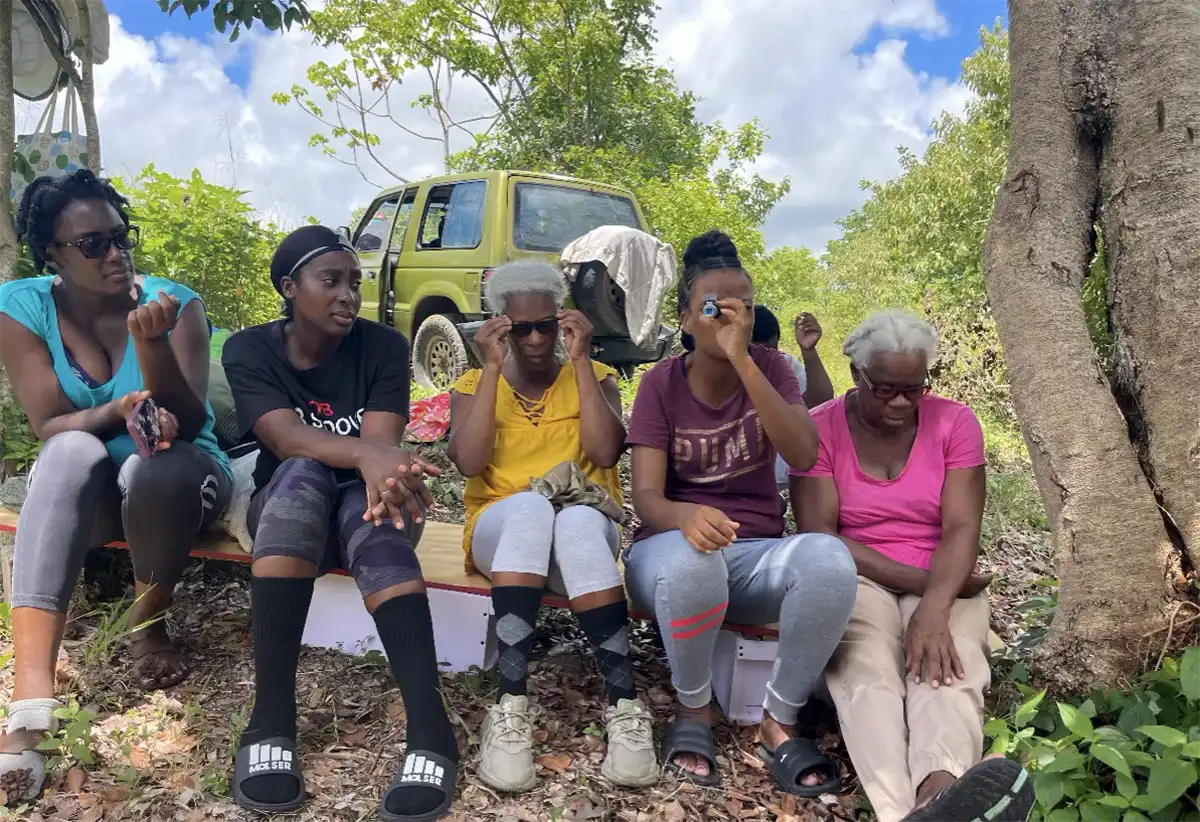
Varroa destructor, widely regarded as the most destructive pest of honeybees globally, has become established in several Caribbean territories. The mite acts as a vector for numerous viral pathogens and can rapidly weaken or destroy colonies if left unmanaged. Recent field observations across the region have demonstrated the importance of surveillance, mite monitoring, viral analysis, and beekeeper training in Integrated Pest Management.
The loss of managed pollinator populations would have consequences extending far beyond honey production. Reduced pollinator populations could negatively impact agricultural productivity, forest regeneration, biodiversity conservation, and ecosystem resilience. Strengthening regional biosecurity systems should therefore be viewed not as support for a niche agricultural activity, but as an investment in food security, environmental protection, and climate resilience.
The OECS Apiculture Policy: From Knowledge to Action
The recent approval of the OECS Apiculture Policy and Work Plan by the OECS Council of Ministers for Sustainable Development represents a historic milestone for the Caribbean apiculture sector. The Policy now awaits ratification by the OECS Council of Ministers for Agriculture.
Its significance extends far beyond beekeeping.
The Policy represents the first regional policy instrument specifically designed to address the structural challenges facing apiculture in the Eastern Caribbean. It provides the mechanism through which governments can finally transform three decades of recommendations into coordinated regional action.
The Policy establishes seven strategic objectives:
- Harmonization of legislation and regulatory frameworks;
- Capacity building for beekeepers and extension services;
- Strengthened biosecurity and biodiversity protection;
- Market development and value-added production;
- Establishment of regional data-systems;
- Harmonization of honey standards and testing infrastructure; and
- Creation of a regional research and development institute.
For the first time, apiculture has been formally recognized at the regional level as a strategic contributor to food security, biodiversity conservation, climate resilience, sustainable livelihoods, and economic development.
Financing the Future of Pollinator Conservation
The approval of the Policy also creates opportunities to address another long-standing challenge: financing.
Not all financing mechanisms are equally feasible, and governments should prioritize those capable of delivering immediate impact.
Immediate Priorities
Payments for Ecosystem Services (PES) should be explored as a mechanism for compensating landowners, farmers, and beekeepers who maintain habitats and ecological services that generate public benefits.
Agri-Environmental Subsidies can support colony establishment, queen breeding programmes, forage development, and integrated pest management systems.
Medium-Term Opportunities
Tourism-Supported Conservation Funds could channel a portion of tourism revenues toward pollinator conservation, habitat restoration, and api-tourism development.
Biodiversity Monitoring Partnerships involving governments, universities, NGOs, and beekeeper organizations can strengthen ecosystem monitoring and data collection.
Long-Term Opportunities
As institutional capacity develops, OECS Member States should position themselves to access:
- Biodiversity finance mechanisms;
- Carbon and nature-based credit systems;
- Green and blue economy financing instruments; and
- Other emerging nature-positive investment frameworks.
For tourism-dependent economies such as Saint Lucia, these mechanisms provide an opportunity to establish a direct relationship between the tourism sector and pollinator conservation. Hotels, cruise operators, nature attractions, and ecotourism businesses all benefit from healthy ecosystems maintained in part by pollinators. Future financing arrangements should therefore include mechanisms that directly support beekeeper organizations and habitat restoration initiatives.
Conclusion
The approval of the OECS Apiculture Policy and Work Plan by Ministers of Sustainable Development represents more than a policy milestone. It represents an opportunity to resolve a thirty-year development paradox.
The region has already completed the studies, identified the constraints, and articulated the solutions. What remains is ACTION, FEEDBACK AND LEARNING (ACTION LEARNING). .
If governments, development partners, the private sector, research institutions, and beekeeper organizations can collectively seize this moment, the Caribbean has an opportunity not only to strengthen its apiculture sector but also to create a model for how biodiversity conservation, food security, tourism, and sustainable economic development can be advanced through a single integrated policy framework.
Without bees there is no food security. Without pollinators there is no biodiversity. Without healthy ecosystems there can be no sustainable tourism economy.
By investing in pollinators today, the Caribbean will strengthen its food security, biodiversity, climate resilience, and economic sustainability for generations to come.