


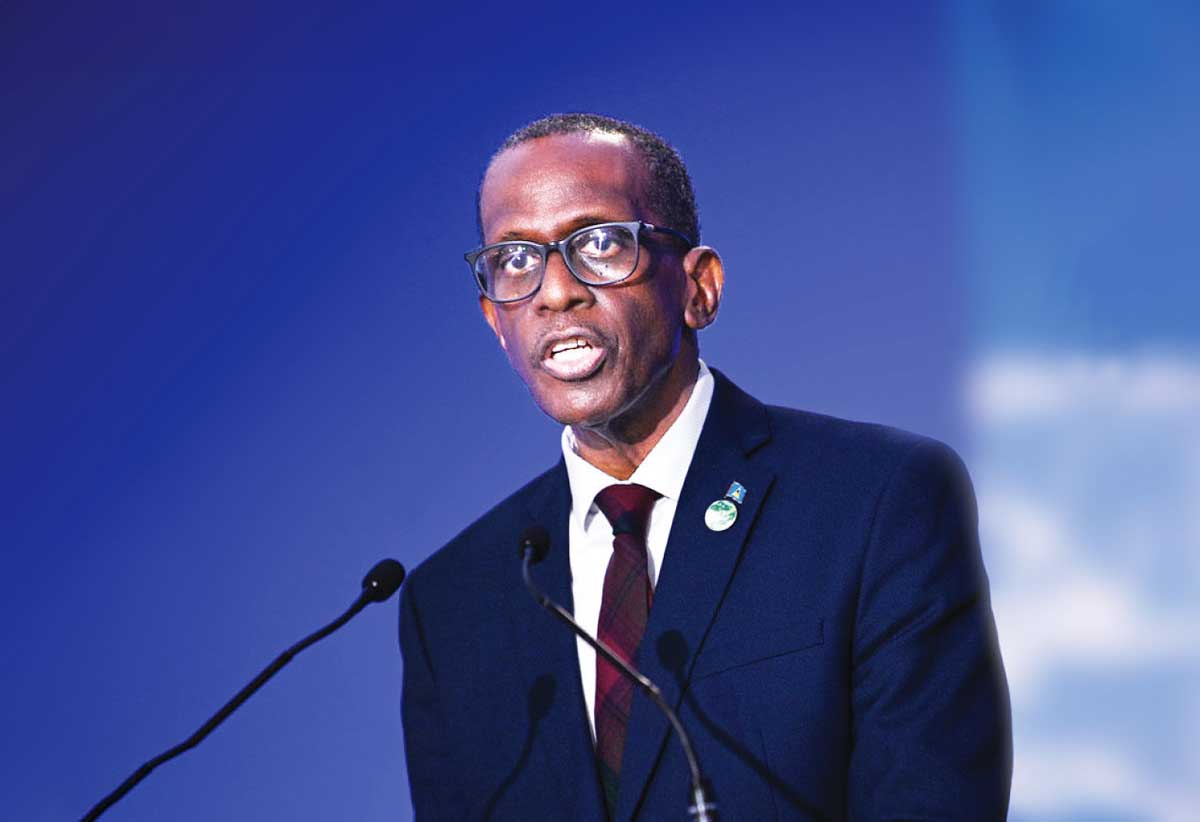
As the head of an Organization of Eastern Caribbean States (OECS) delegation, Prime Minister Philip J. Pierre recently raised important concerns affecting the sub-regional countries, expressing a commitment to resolving these issues amicably with the U.S. Department of State.
He specifically addressed trade relations between the OECS and the United States, as well as key issues related to medical support from Cuba.
PM Pierre highlighted that the OECS Heads of Government meeting with US Secretary of State Marco Rubio, where they conveyed urgent concerns, focusing on the implications of US tariffs on regional economies, the necessity for Cuban medical personnel to bolster OECS public health systems, and the demand for a balanced security and trade approach that does not continue to disadvantage small island economies.
“In 2023, the US exported $2.3 billion to the OECS compared to only $67.5 million in OECS exports to the USA,” he stressed, noting that the US enjoys an overwhelmingly favorable balance of trade with the OECS.
The Prime Minister explicitly stated that the 10% tariffs placed on all imports, including those from the OECS, threaten to impose serious economic hardship, particularly in sectors reliant on US products such as health, education, and food security.
PM Pierre affirmed, “The OECS stands ready to engage in constructive dialogue on Fair Trade and Development, urging a reevaluation of tariffs considering the region’s vulnerabilities and its deep interdependence with US markets.”
On the Cuban medical issue, he underscored that these programs are neither exploitative nor in violation of international labour norms, emphasizing the essential role Cuban doctors play in delivering crucial health services to rural and underserved communities.
The OECS leaders firmly objected to any “mischaracterization of these partnerships as human trafficking.”
Regarding regional security, Pierre said, the OECS appreciated US support for initiatives like the Caribbean Basin Security Initiative but insisted on the importance of “broader security” that encompasses disaster preparedness, climate resilience, and economic security.
With the hurricane season approaching, the OECS welcomed the reactivation of US Early Warning and Emergency Response programs.
PM Pierre reiterated the OECS leaders’ “sovereign right” to maintain diverse and diplomatic economic relations, including those with China, grounded in developmental cooperation.
The US was assured that these partnerships are “non-military” and driven by economic necessity, not geopolitical alignment.
As the head of the OECS delegation, Pierre characterized the engagement with the US Secretary of State as “respectful, candid, and productive,” laying a robust foundation for ongoing dialogue and collaborative action.
He stated, “The OECS anticipates tangible follow-through on the commitments made and stands ready to work with the United States on a renewed agenda for cooperation based on shared values, respect, and partnership.”
He conveyed to the US, “We respect the mandate entrusted to you by the American people and the agenda pursued by your administration. However, we are compelled to share the pressing concerns and perspectives of our people forthrightly.”
Pierre asserted: “This meeting represented not merely a dialogue but a critical opportunity for principled and pragmatic cooperation.”
[R.A].