


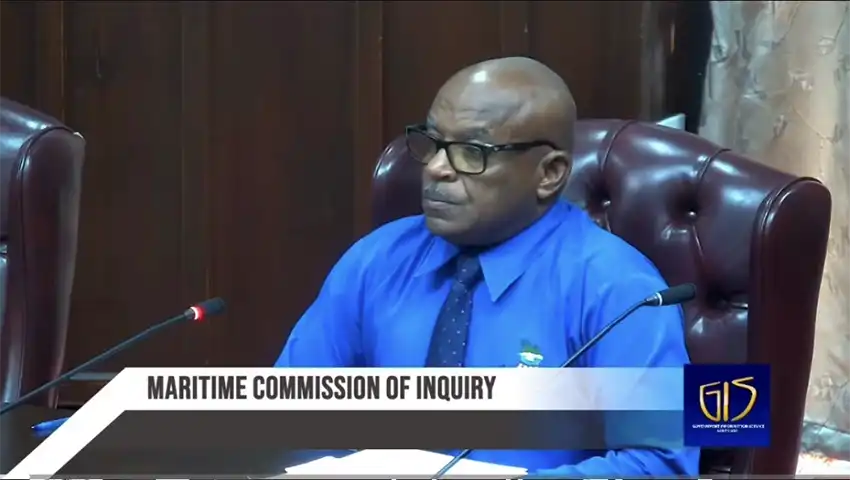
During a recent hearing, Saltibus criticized the existing safety measures and called for immediate action to address ongoing reports to the marine unit, as well as the frustrating delays that impede investigations.
“We cannot wait for another accident to happen,” he emphasized.
Saltibus shared alarming observations of vessels approaching the beach to collect and discharge passengers, highlighting incidents where boats enter swimming areas occupied by children. “I’ve seen children bathing, and boats are coming in. We have to tell the children to get out of the water,” he reported.
He further detailed a troubling incident where a swimming boundary line, sponsored by Sugar Beach, was stolen within a week of installation.
Saltibus urged the need for its replacement and advocated for stricter enforcement against operators who put swimmers at risk. His testimony raised broader issues of enforcement, accountability, and coordination in Soufriere’s busy maritime space as the commission continued to investigate the July 18, 2026 collision.
While the foundation oversees local jetties, it lacks the statutory authority to stop or seize vessels, often reporting suspected illegal activities to the Police Marine Unit and the Saint Lucia Air and Sea Ports Authority (SLASPA) without receiving timely responses.
Saltibus noted that some land-based police officers appeared hesitant to address water-related matters, citing a lack of resources and training, although he praised the officer in charge of the Soufriere Police Station as proactive in intervening.
Regarding SLASPA’s presence in Soufriere, he acknowledged the existence of an assigned officer but expressed concern over the lack of visible enforcement of duties at the port.
When questioned about safety measures at the foundation’s three operating jetties—Hummingbird, Broad Rock, and the main jetty—Saltibus admitted that operators are not currently required to provide proof of vessel insurance when discharging passengers. He proposed a system where the dockmaster could verify vessels against an authoritative list to ensure compliance.
He further stated that the harbour lacks adequate signage, demarcation for different users, and necessary navigational lighting.
Regarding a broader harbour management plan, Saltibus mentioned that he was informed of an existing plan by a former maritime affairs director but had yet to see it. He indicated that the foundation is working on developing operational procedures for its facilities and seeks endorsement from SLASPA.
Saltibus also highlighted delays in a proposal that would allow foundation personnel to perform maritime officer duties.
Despite identifying these issues, he noted positive efforts to enhance maritime safety, including new radios, training for boat operators, and plans for a Police Marine Unit base in Soufriere, achieved through collaboration with Sugar Beach, SLASPA, and other stakeholders. He expressed a strong working relationship with the Soufriere Marine Management Association, indicating that stakeholders plan to hold monthly coordination meetings once the Marine Unit is operational.
Saltibus called for a police presence that combines enforcement with education, emphasizing the importance of helping boat operators and other sea users understand their responsibilities.
Finally, he advocated for more visible customs and immigration checks at the seaport, stating that some visitors arriving by sea struggle to locate the relevant offices.
“We need to treat our seaport like our airport,” he remarked, stressing that safeguarding the harbour requires decisive action from all relevant agencies.
“I think it’s a matter of getting it done,” he concluded, highlighting the necessity of protecting swimmers from approaching vessels.
[R.A].