


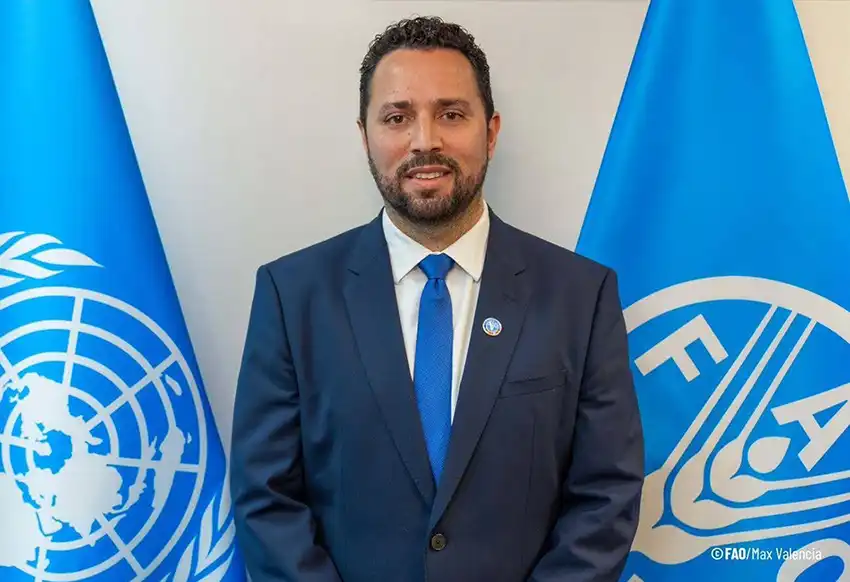
Javier Villanueva, the FAO Senior Fisheries and Aquaculture Officer and Better Production Coordinator for Latin America and the Caribbean, shared insights into the importance of this observance.
Villanueva emphasizes that this day provides an opportunity to value the contributions of fishing communities to food security, nutrition, and local economies. It is also a moment to renew our commitment to the sustainable use of aquatic resources.
He highlights that behind every landing and food item that reaches our tables lies hard work, knowledge, and a deep connection to the local environment. Those involved in catching, processing, and marketing fishery products sustain a value chain that links communities to consumers.
Recognizing this contribution, particularly that of small-scale fisheries, is fundamental in building a sustainable future. According to the FAO’s report, The State of World Fisheries and Aquaculture (SOFIA 2026), Latin America and the Caribbean accounted for approximately 16 percent of global marine catches and 15 percent of global exports of aquatic animal products in 2024, yielding a trade surplus of USD 21 billion.
Notably, Peru ranked as the world’s fourth-largest producer of aquatic animals from capture fisheries, producing 5.7 million tonnes, with anchoveta being the most-caught species globally.
In addition, Chile and Ecuador are leaders in aquaculture within the region, employing over three million people directly in the primary sectors of fisheries and aquaculture, bolstering economies in both coastal and inland areas. However, the average per capita availability of aquatic animal foods in the region was only 10.1 kg in 2023, less than half the global average of 21.1 kg. This measurement reflects the fish available for human consumption rather than actual intake.
Villanueva points out, “The region produces for the world, but it could make better use of that potential to feed its own people.”
Aquatic foods offer high-quality protein, omega-3 fatty acids, and essential vitamins and minerals, making them crucial for food security and nutrition, especially for low-income households and vulnerable groups. Several factors hinder access to these resources, including affordability, territorial disparities, and domestic distribution systems that have yet to align with the region’s production capabilities.
The challenge lies in complementing the benefits of exports—with their contributions to employment and income generation—with improved access to nutritious aquatic foods for regional populations.
Addressing illegal, unreported, and unregulated (IUU) fishing is essential for safeguarding the livelihoods and food security of families dependent on these resources. Strengthening fisheries management, with the involvement of marine and inland fishing communities, is critical for sustainability. Further complicating these challenges is the El Niño phenomenon, which affects sea temperatures and nutrient supply.
In the Southeast Pacific, it can diminish catches and impact incomes and the availability of aquatic foods, with varying effects depending on the region and species. Implementing early warning systems and adaptive fisheries management is crucial to protecting livelihoods and food security.
Villanueva stresses that the challenge extends beyond merely having substantial fisheries and aquaculture potential; it involves overcoming embedded obstacles that prevent this wealth from translating into greater access to high-quality protein-rich foods.
He asserts, “Celebrating fisheries also means working to break down these barriers. Expanding access to aquatic foods and bolstering the resilience of those who produce them are interlinked goals on the road to food security and improved nutrition.”
Highlighting the strategic importance of the FAO’s Blue Transformation initiative, Villanueva notes, “It aims to optimize the role of aquatic food systems in providing healthy, affordable diets. This involves sustainably expanding and intensifying aquaculture, effective fisheries management, and enhancing value chains while ensuring governance that protects both ecosystems and the communities that rely on them. The goal is not only to increase production but to enhance quality, reduce food loss and waste, and ensure equitable access to aquatic foods.”
Latin America and the Caribbean possess the resources, knowledge, and experience needed to advance in this direction. The key challenge is translating that potential into actionable steps: strengthening the involvement of fishing communities in decision-making, enhancing product preservation and distribution, and facilitating access to markets.
By doing so, we can ensure that recognition of those who feed us translates into better opportunities for all.