


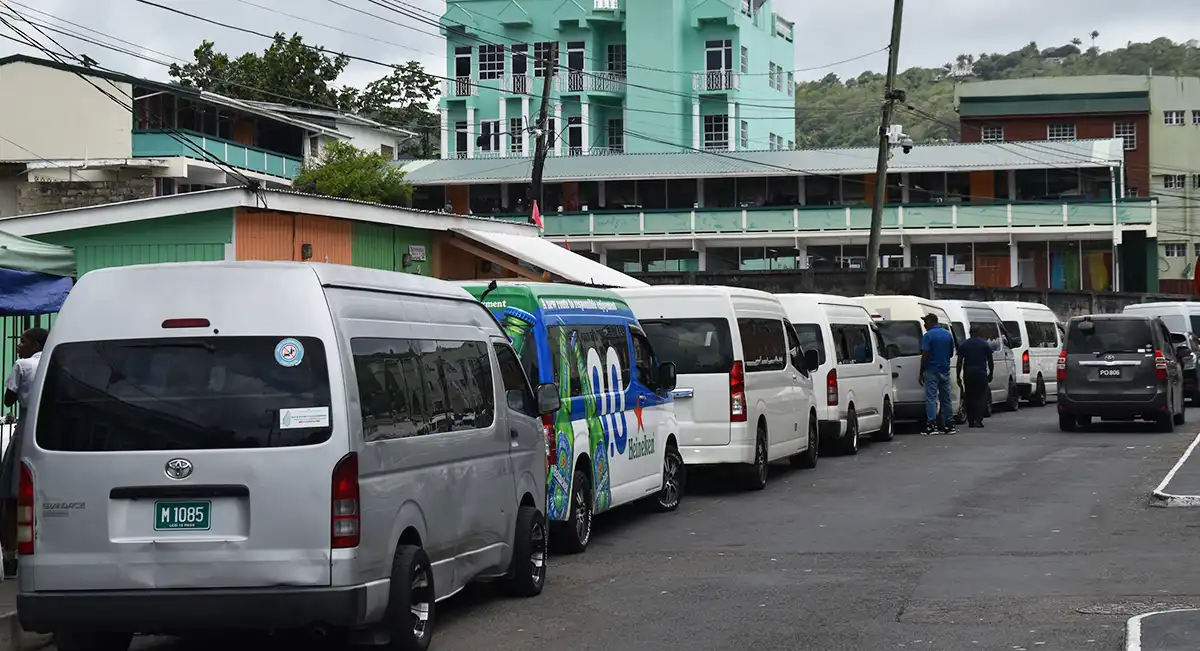
Prime Minister Philip J. Pierre has acknowledged the recent Caribbean Development Bank (CDB) study on public transport, which proposes sweeping reforms to transition the region’s minibus networks into more sustainable, efficient, and customer-centric systems.
However, he cautioned that implementing these expert recommendations may not be politically expedient, requiring a careful balancing of political and social realities. Significant reforms could risk public push-back or electoral consequences.
While evaluating the CDB report, PM Pierre emphasized the need to draw a ‘dividing line’ between political interests and the welfare of the state’s affairs. He recognized the growing challenges facing commuters and transport operators and stated that the government is actively exploring options to address these issues.
“When discussing these reports, it’s important to remember they are prepared by technocrats, not politicians, and sometimes politicians cannot fully align with technocrats’ suggestions,” PM Pierre noted.
“However, these reports do have political repercussions,” he said.
Commenting on the proposed CDB recommendations, PM Pierre acknowledged the potential difficulties in implementing reforms and navigating the political realities associated with major policy changes. He suggested that while expert recommendations are often logical and effective on paper, they can provoke public backlash if they negatively impact significant portions of the population.
“Sometimes technocrats do not consider the electoral implications,” he remarked, adding that any politician who claims indifference to election outcomes is not being truthful.
Despite these concerns, the Prime Minister reassured that transportation reform remains a priority for the government. He revealed that Minister for Transport Stephenson King will provide further details on the findings and recommendations of the CDB study.
In recent months, the global implications of the U.S.-Iran conflict have had severe ramifications, including rising shipping rates, escalating food prices, rising utility bills affecting transport handlers, motorists, and commuters who are ‘feeling the pinch’ as they navigate these challenges.
PM Pierre also announced that the upcoming national budget will include funding aimed at modernizing and centralizing bus terminals across the island. This investment is expected to rectify longstanding inefficiencies within the transport network while enhancing the commuter experience.
A key priority, according to the Prime Minister, is addressing the chronic shortage of late-night transportation, which frequently leaves hospitality workers stranded after shifts, especially those travelling to rural communities.
These comments come amid increasing pressure from the National Council on Public Transportation (NCOPT), which has intensified calls for a modern, data-driven method to determine bus fares.
The organization contends that the existing practice of simply adding twenty-five cents or one dollar to rates whenever operating costs increase is unsustainable, particularly in light of rising fuel prices and mounting expenses for minibus operators.
Pierre confirmed that the CDB study explored the possibility of implementing a structured fare-setting formula. However, he emphasized that the report extends well beyond fare adjustments, addressing broader issues that impact the future of public transportation in Saint Lucia.
As discussions around transport reform intensify, Pierre’s comments underscore a critical challenge faced by governments throughout the region: how to introduce essential yet potentially unpopular reforms while maintaining public support and ensuring meaningful improvements for citizens.