


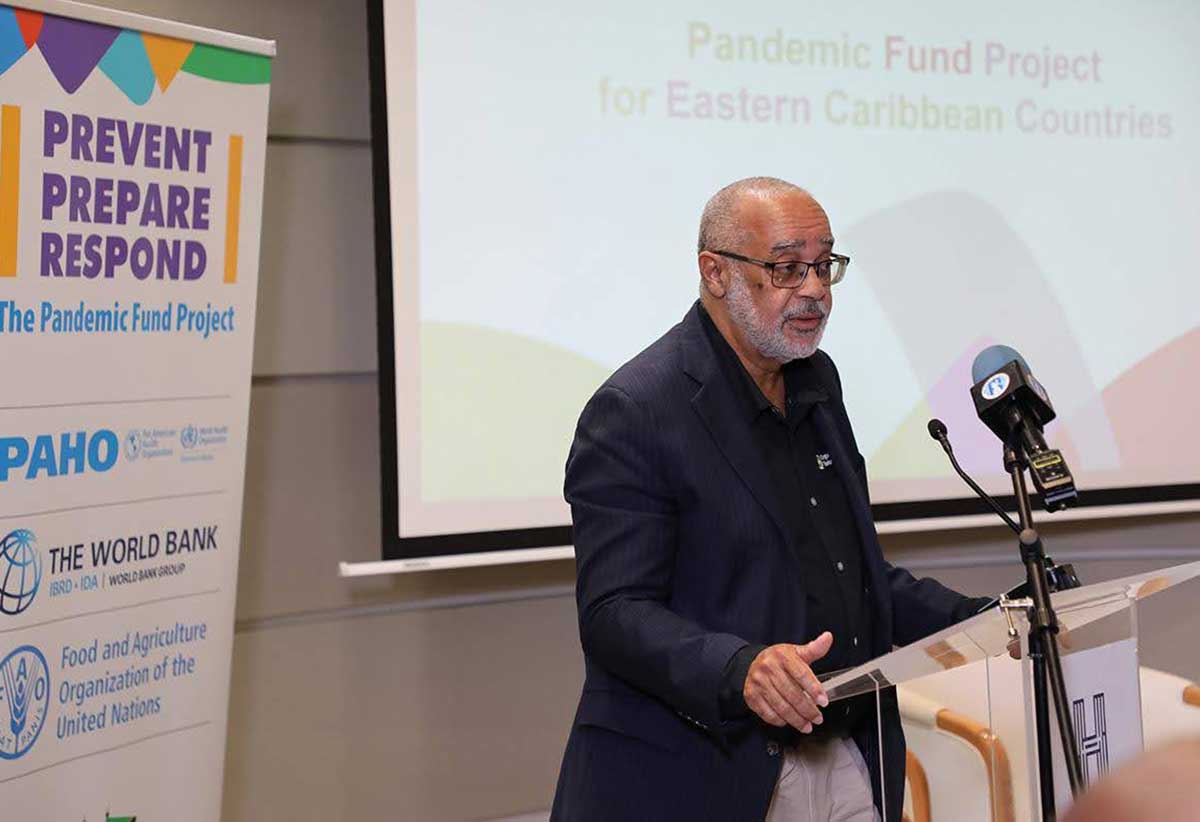
Ministerial representatives and key personnel from the sub-region are taking decisive action to safeguard against natural hazards.
Consequently, the authorities have implemented an impactful Pandemic Fund Project specifically designed to protect citizens, particularly those who are less privileged.
Saint Lucia recently hosted a critical gathering of representatives from the six Organisations of Eastern Caribbean States (OECS) for the Pandemic Fund Project, themed “Strengthening Prevention, Preparedness, and Response to Emerging Health Threats in the Eastern Caribbean.”
This two-day workshop, held at the Harbor Club in Rodney Bay from June 11 to 12, brought together key stakeholders and decision-makers. With support from the Pan American Health Organisation (PAHO-WHO), Food and Agriculture Organization of the United Nations (FAO), and World Bank, this initiative will equip Antigua and Barbuda, Dominica, Grenada, St. Kitts and Nevis, Saint Lucia, and St. Vincent and the Grenadines to bolster early warning systems, laboratory diagnostics, and health human resources through a One Health approach.
OECS Director Dr. Didacus Jules emphasized the organization’s commitment to improving the welfare of its citizens, particularly the disadvantaged. He firmly stated the need to “make the poor richer” by enhancing their living conditions.
Dr. Jules also highlighted ongoing initiatives aimed at better serving the welfare of citizens through targeted social protection programs.
During the Wednesday session, project priorities were clearly laid out, focusing on enhanced preparedness and human resource capacity building.
A panel discussion featuring health and agricultural representatives from the OECS yielded strong recommendations to fortify the primary health care system in the sub-region. It was underscored that access to essential tools for early health issue detection and building partnerships with the private sector are paramount.
A critical point of discussion included strategies to assist farmers in monitoring their livestock and fostering collaboration between farmers , agricultural experts and health personnel to swiftly identify issues.
Additionally, the significance of robust training components and the development of laboratory capacity was firmly asserted.
Saint Lucia’s Chief Medical Officer, Dr. Sharon Belmar-George, articulated the indispensable role of the Pandemic Fund Project in the wake of the COVID-19 pandemic, which critically impacted the health sector.
She announced that Saint Lucia has initiated the establishment of a Respiratory Hospital and new primary care centers to effectively handle respiratory-related ailments.
Dr. George also highlighted the necessity of strengthening relations between public and private sectors to secure essential tools for timely emergency responses during natural disasters.
Panelists unanimously reiterated the importance of training to build human resource capacity and the need for proper equipment and testing facilities to effectively combat diseases.
Furthermore, community involvement in ongoing awareness campaigns is vital, ensuring the public is well-informed about the project’s objectives.
Initially, the OECS territories received US$24.4 million from the Pandemic Fund to enhance regional public health security. This grant has mobilized an additional US$22 million in co-investment and US$7.8 million in co-financing.
The three Implementing Entities (IEs) for this project are the Food and Agriculture Organization of the United Nations (FAO), the Pan American Health Organization (PAHO)/World Health Organization (WHO), and the World Bank.
As a PAHO spokesperson asserted, “These small island states are popular tourist destinations, yet their position in the Caribbean hurricane belt exposes them to significant natural disaster risks. The frequent influx of travelers also heightens the spread of communicable diseases.”
Moreover, the spokesperson emphasized, “In all six countries, inadequate budgets, infrastructure, and human capacity hinder effective management of large-scale disasters and health emergencies.”
A PAHO statement concluded: “Diverse, multisectoral collaboration is foundational to the Pandemic Fund. The Eastern Caribbean project is spearheaded by the countries’ Ministries of Health and Agriculture, alongside the IEs and partners including the Caribbean Association of Medical Technologists, Caribbean Med Lab, the Organization of Eastern Caribbean States, the Regional Coordinating Mechanism, Ross University Medical School, and the School of Veterinary Sciences at St. George’s University.”
With the Pandemic Fund grant, the six countries are determined to significantly reduce disease, death, and socio-economic disruptions.