


Over the past decade and more, Saint Lucia has actively pursued legislation to establish a regulated cannabis industry on the island.
Several working committees have been formed, providing recommendations for the industry’s development. Despite public criticism and social activists advocating for faster progress, transitioning to a legal cannabis framework is complex, requiring careful planning and execution.
In late October, key stakeholders gathered for the Cannabis Banking and Financial Integrity Summit, where regulators, bankers, and government officials engaged in discussions about how the new industry could operate within the formal financial system. A central concern emerged: as Saint Lucia moves closer to establishing a legal cannabis industry, will banks be willing to accept transactions from producers and retailers?
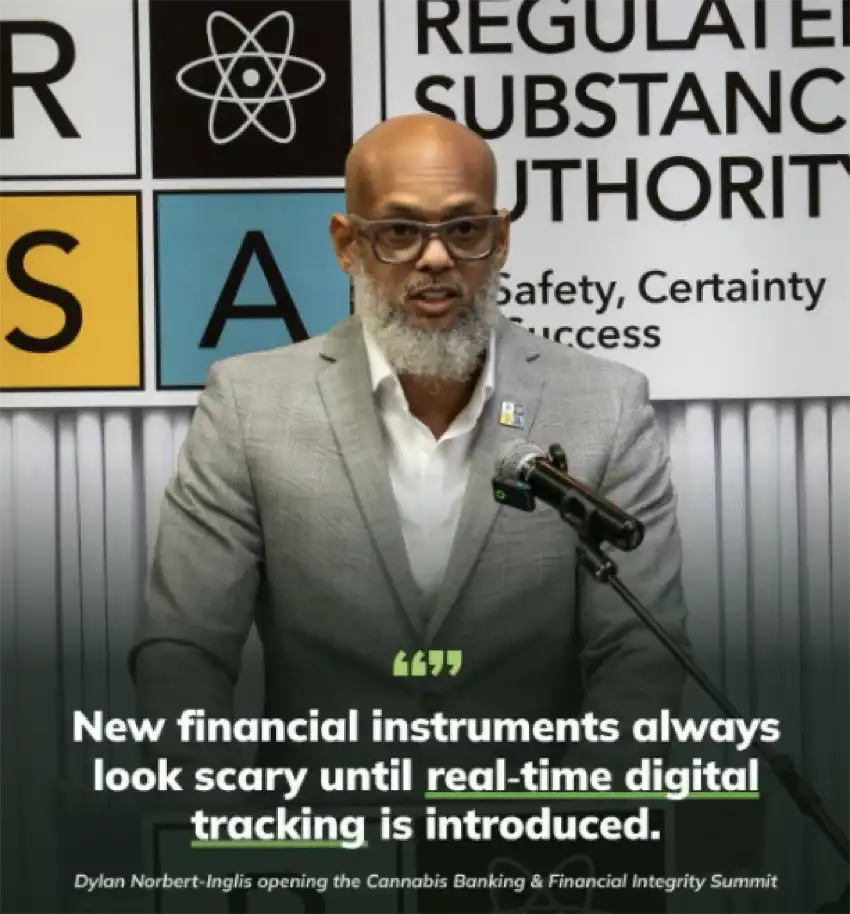
Dylan Norbert-Inglis, Chief Executive Officer of the Regulated Substances Authority, emphasized that legalizing cannabis without enabling businesses to bank their earnings would create significant gaps in the system. “If our domestic banking system refuses to trust and handle these funds, how will salaries be paid? How will vendors be compensated? Will taxes and social security contributions be settled?” he questioned.
This issue extends beyond businesses involved in growing, processing, or selling cannabis; workers, suppliers, insurers, and other service providers could all handle money earned from the industry.
Inglis cautioned that relying on cash transactions could hinder regulatory oversight. “We do not stop the flow of capital by doing this; we merely drive it into an unmonitored space,” he said.
Local banks face their own challenges, relying on overseas correspondent banks for international transactions. With cannabis still restricted in many major markets, they risk serious compliance issues if they mismanage funds related to the industry.
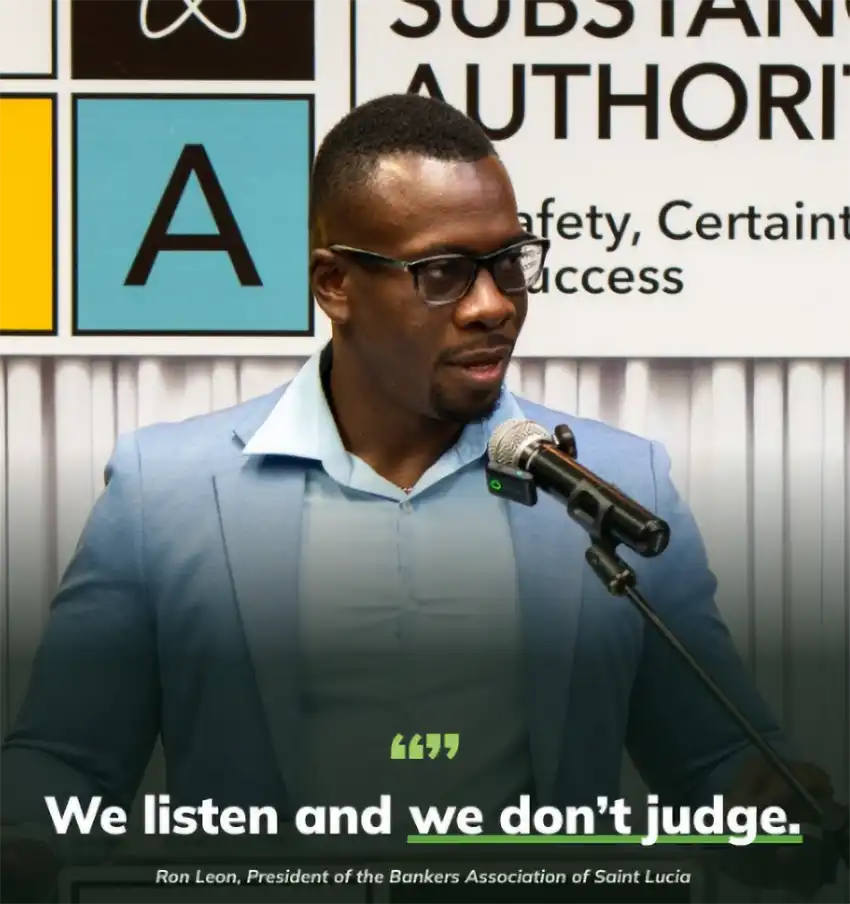
Ron Leon, President of the Bankers Association, noted that while the sector has not settled on an official stance, there is an openness to exploring viable solutions. “We did not come here with a set position but are seeking to understand how we can adapt and formulate a position as an association,” he stated.
Leon also acknowledged the financial sector’s critical role in facilitating economic growth. The Regulated Substances Authority believes that technology can help assuage banks’ concerns.
A proposed seed-to-sale tracking system would track cannabis through the legal supply chain and maintain a digital record of transactions. This way, when a licensed business makes a deposit, the bank can trace the money back to a legal sale, a process Inglis referred to as “seed-to-sale-to-bank verification.”
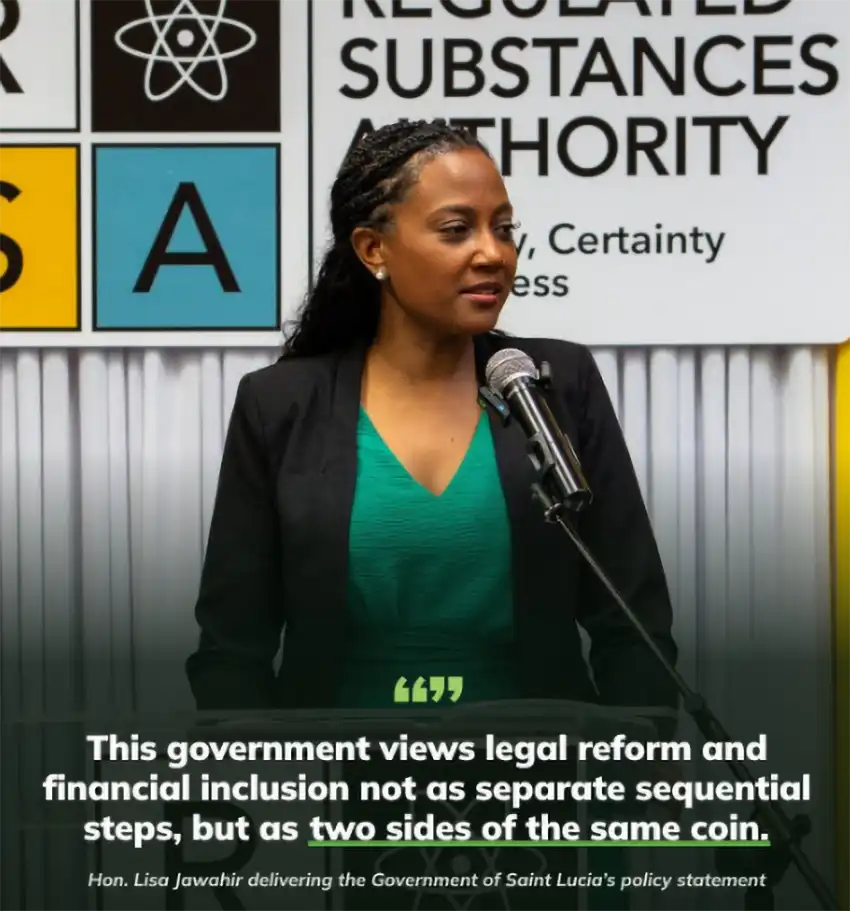
Agriculture Minister Lisa Jawahir asserted that banking cannot be an afterthought once the industry is established. “A policy framework that legalizes an economic sector while leaving it financially isolated is incomplete,” she remarked.
She emphasized that cannabis businesses will require basic financial services similar to other legal enterprises, including bank accounts, payroll processing, electronic transfers, and access to credit.
Jawahir also argued that operating the industry primarily in cash could exacerbate the issues banks aim to avoid. “An unbanked, cash-intensive industry presents a far greater anti-money laundering risk than a regulated, transparent, and banked sector,” she stated.
Saint Lucia’s Collaborative Approach to Cannabis Industry Regulation
Saint Lucia is undertaking the significant task of establishing its cannabis industry with the support of regional agencies and partner states. At the recent forum, Inglis highlighted Saint Lucia’s alignment with other regional nations that have successfully implemented regulatory standards tailored to their specific contexts. He acknowledged the valuable contributions of the Caribbean Development Bank (CDB) while emphasizing the goal of enhancing regional compliance with global standards and regulations.
Regional Success Stories:
Jeniece St Romain, Crown Counsel 1 at the Attorney General’s Chambers in Antigua & Barbuda, discussed the legal framework established between 2018 and 2019, which enabled licenses for operational activities within the industry. She elaborated on the Overview and Adaptation of regulatory substances, detailing the categorization of granted licenses and the establishment of a Track and Trace System.
Richard Branch, CEO of St Vincent Cooperative Bank, provided insights into the policies governing St Vincent and the Grenadines (SVG), highlighting the involvement of the Banking Sector of St Vincent and the Grenadines (BOSVG)
Branch noted the robust monitoring of cannabis banking funds and the periodic reviews conducted to ensure compliance and efficiency.
Kezron Walters, Legal Counsel at the Eastern Caribbean Central Bank (ECCB), stressed the importance of early risk identification in the cannabis sector. He added that site surveillance is crucial for assessing development opportunities in the industry.
Looking ahead, the Saint Lucian government is poised to implement its cannabis industry by 2027, with the legislative framework set to be presented to Parliament in the near future.