


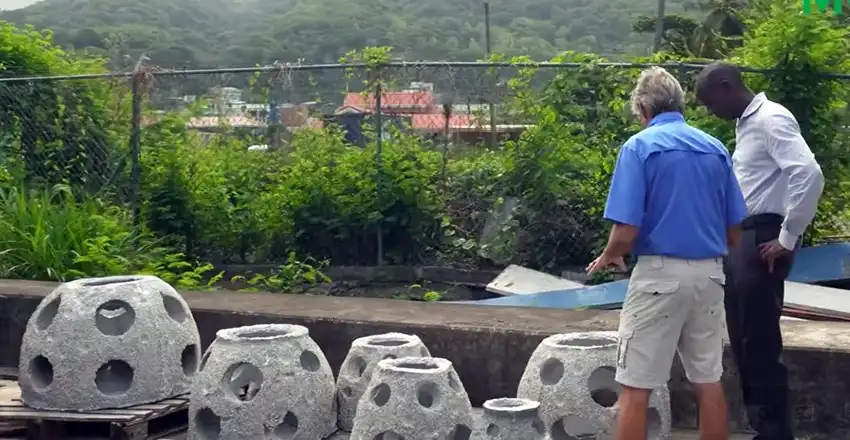
Efforts to restore St. Lucia’s coral reefs and enhance marine habitats are receiving a boost as local stakeholders gain practical skills in the construction and use of reef balls. The Department of Fisheries in collaboration with Clear Caribbean and Canary conducted a week-long training session from October 19th to the 23rd, 2026. The initiative focuses on the preparation, construction, deployment and the maintenance of reef balls as a nature-based approach to core reef restoration and marine habitat enhancement. Reef balls can provide additional habitat for marine organisms, and when appropriately designed and deployed contribute to rehabilitation of degraded marine areas. The training aims to equip participants with the knowledge and practical skills needed to support this work.
It is the responsibility of the Department of Fisheries to safeguard and maintain St. Lucia’s marine ecosystems, says Deputy Chief Fisheries Officer Thomas Nelson, pointing to the national fisheries policy.
“The Department of Fisheries has a responsibility to manage and conserve Saint Lucia’s fisheries and fisheries related resources to ensure the sustainable use for present and future generations. This responsibility is closely linked to the health of our marine environment, which, of course, all of you know, [which is] why you’re here.”
“As well as coastal protection, this is a priority area under the national fisheries policy. It’s particularly relevant to this training. The policy recognizes the importance of maintaining healthy marine ecosystems as the foundation for sustainable fisheries management and long-term benefits.”
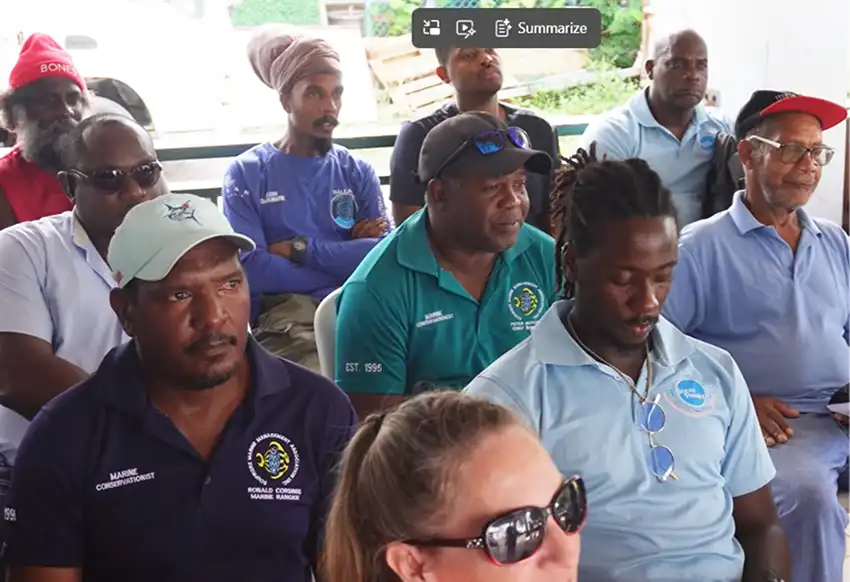
Executive Director of CLEAR Caribbean Owen Day says the initiative has been tried and tested.
“We’ve heard about the reef ball foundation’s contribution to this. We are doing this in Saint Vincent and the Grenadines… We started a reef ball program, which is going extremely well, employing local people, coral gardens to build reef balls, deploy them, and put corals on them. We are calling them hybrid reefs. They’re not artificial reefs.”
For the collaboration, participants are being equipped to take a more active role in marine restoration, strengthening local efforts to rehabilitate degraded habitats and safeguard Saint Lucia’s marine resources.