


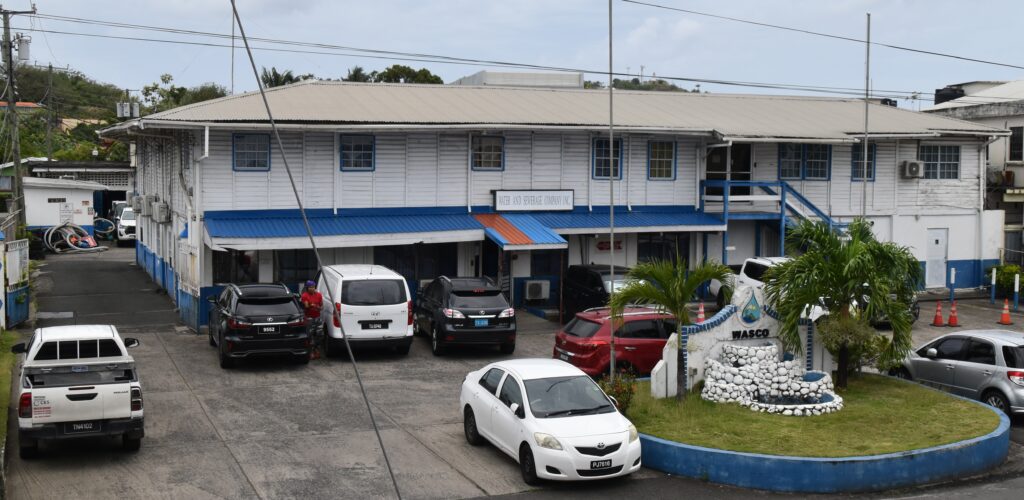
As the country faces the challenges of changing climatic conditions and unpredictable weather patterns, the Water and Sewerage Company Ltd (WASCO), in partnership with the Ministry of Agriculture, is urgently calling on all residents to recognize the importance and immense benefits of rainwater harvesting (RWH).
During a recent media briefing, water technicians stressed that implementing effective RWH measures is not just a choice but a necessity for bolstering the island’s water supply alongside what is provided by Saint Lucia’s primary water utility provider.

Jason Ernest, Director of the Water Resources Management Agency (WRMA) affiliated with the Ministry of Agriculture, shed light on the substantial advantages of adopting RWH practices. These methods can be easily integrated into the customer’s home, and the agency is prepared to assist anyone interested in erecting these structures within their premises.
March marks the peak of the dry season, making effective rainwater harvesting all the more critical.
“In the dry season, the impact of rainwater harvesting surpasses what occurs at a catchment level,” Ernest emphasized.
He said the benefits of rainfall are significant; it contributes to the inflow and replenishment of vital water bodies, such as the John Compton Dam (JCD) at Millet. Without proper storage, however, this precious resource could simply flow back into the sea, wasted.
“The dynamics of rainfall during the dry period underscore the importance of storage,” he noted. “When we compare rainfall levels to the climatological mean, we see that we are exceeding expectations this March.”
He also highlighted how critically important RWH is for recharging water systems, emphasizing that the amount of water available correlates directly with the size of storage maintained. For WASCO, the enhancement of storage capacities—both at household and commercial levels—is essential.
“We are not just encouraging this practice; we are actively promoting it as a solution to address the dilemmas we face in our water supply,” Ernest stressed. “As we navigate through the dry season, we have already experienced several moderate to significant rainfall events this January, which greatly benefited the JCD. As we approach the wet season, we anticipate fluctuations in rainfall, which necessitates the urgent need for adequate water storage solutions.”
While the Met Services predict a potential reduction in normal rainfall activity, he said, significant rainfall can still occur sporadically, emphasizing the need for capturing every drop that falls.
“If we can harness as much of that water as possible, we may alleviate the pressure on our water supply for weeks to come,” asserted Ernest.
Frequent rainfall events can profoundly enhance the RWH efforts, making each collection effort crucial.
Calvin Vidal from WASCO’s Production Treatment Unit added, “We’ve observed variability in water production across our treatment facilities at the JCD over the past few months.”
Key infrastructural upgrades in March have improved production, but leaks in both northern and southern pipelines have limited optimal efficiency.
In light of these challenges, he added: “We urge every household to enhance their water storage—be it through drums, tanks, or buckets. Every single effort to conserve and manage water can make a considerable difference in our community’s resilience.”
Vidal noted, “As we prepare for the upcoming hurricane season, we remain hopeful that conditions will improve. Our proactive measures, including de-silting and other necessary enhancements to our infrastructure, are already in motion. Together, let’s adopt rainwater harvesting as not just a practice but a fundamental part of our daily lives, ensuring a sustainable water supply for generations to come. Your involvement is not only vital; it is a step toward securing our future water resources.”
[R.A].