


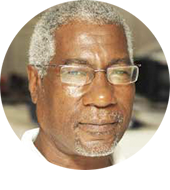
Chairman of the Caribbean Community (CARICOM) and Saint Lucia’s Prime Minister, Philip J. Pierre, has repeated earlier calls on the world’s richest countries, as the biggest global carbon emitters, to talk less and act more to help poor and developing nations better combat the increasingly-dangerous effects of accelerated Climate Change.
Chair of CARICOM’s Prime Ministerial Sub-committee (PMSC) on Climate Change and Environmental matters since 2021, Saint Lucia PM has repeatedly called on the world’s biggest emitters to deliver on their annual promises to contribute more to Climate Financing and to ease poorer nations’ access to related funding.
He repeated the call at his weekly Press Conference last Monday (November 9) ahead of the 31st Conference of Parties (COP 31) in Antalya, Türkiye, stressing that CARICOM member-states are increasingly prone to combined annual climate crises like hurricanes, drought and coastal erosion.
Describing annual COP meetings as “the premier global conferences on climate change and related issues”, he said his presentations at COP 31 will be in his dual capacity as Saint Lucia’s PM and the lead CARICOM spokesman, with sustained emphasis on upholding the 1.5 (degrees centigrade) goal agreed to at COP 2015 in Paris.
“We’ll also be pushing for adaptation and resilience,” PM Pierre added, “as adaptation is imperative for the sustainable development of the Caribbean.”
He noted that despite the region being among the world’s smallest carbon emitters, it continues to be among the biggest victims.
“Loss and Damage”, he said, will be another key topic he’ll address in Antalya.
The Prime Minister noted that contributions to the global fund for addressing Loss and Damage “are not in keeping with the needs of developing nations” and said he’d call on the major emitters to deliver on their annual funding promises.
He stressed that Climate Financing “remains the cornerstone” for addressing climate-related effects on Caribbean states and called for inclusion of “climate clauses” in developmental loans, “as all our progress can be wiped out by one hurricane.”
The CARICOM spokesman further explained that while small island states and poor developing nations are usually described as being “highly indebted” nations, “the reality is that many of the loans are for repairing the damages caused by hurricanes and storms.”
But while Caribbean hurricanes are the usual international headline events, he explained, “we also face other climate-related crises like droughts, which require financing to provide and truck water to affected areas.”
Biodiversity and keeping the region’s forests intact, he indicated, will be another of his talking points in Türkiye, adding that “the region will be well-represented at COP 31”, because of the importance of addressing related climate matters.
True to his promise, PM Pierre addressed all the above matters in his address at the Antalya conference, with other nations from the Global South also focusing on similar issues related to Climate Financing for addressing Loss and Damage.
However, while the rich nations that directly cause the acceleration of climate change through their increasing emissions have historically refused to match their words with actions, 2026 has been a revealing year that brought home to them that they too are being increasingly affected by their actions.
For example, earlier this year, the effects of the worst El Nino phenomenon were felt across Europe and North America, as heat waves and floods led to forest fires and drying of rivers like never before.
Each of the last three years has been the hottest on record, while bigger hurricanes and worsening floods have led to greater and longer-lasting emergencies.
Across Europe, the relative absence of air conditioning systems led to homes being abandoned during heat waves, while forest fires hit hard across the USA and Canada.
Japan also experienced new climate crises that tested its preparedness for related emergencies.
Melting of glaciers in China led to Nepal’s flooding tragedies, worsening monsoon rains hit the Indian sub-continent harder-than-ever and forest fires (both natural and human-induced) led to worsening air pollution across countries.
In Latin America, double-earthquakes hit Venezuela and Panama, while Colombia also suffered alongside other nations on the Pacific ‘Rim of Fire’ that stretches all the way to Taiwan.
Australia and New Zealand were not spared, nor were African nations, all hit by droughts and other climate-related crises.
The COP 31 meeting, therefore, was one in which the North and South coexisted as victims of worsening Climate Change, with the richer nations also having this year felt the effects of the worsening conditions their emissions cause.
Their new experiences ought to convince them to curb their emissions and contribute more to climate financing, but if history be the judge, there’s not much room for optimism.
For starters, the industrialised nations will most-likely argue they need to keep their emitting factories smoking to keep their economies running and many have also reversed their earlier positions to abandon coaling and other fossil fuel activities to promote renewable energy.
The USA, under Trump administrations, has consistently remained in climate denial mode, Washington pulling-out of the COP and withdrawing related funding, while accelerating fossil fuel use and encouraging private sector violations of environmental protection progress earlier achieved.
Against this background, CARICOM and the wider Caribbean and Latin American region are likely to be left to continue borrowing more to spend much-more on addressing Loss and Damage from hurricanes and storms, droughts, rising sea levels and global warming.
But, irrespective of whether the rich nations deliver on their promises at COP 31, the CARICOM region has no choice but to upgrade traditional emergency mechanisms to not only prepare for more hurricanes and storms, but to also address the worsening heat waves and widening effects of Sahara Dust clouds, while also coping with the increasing range of Sargassum threatening Caribbean beaches.
These are just some of the new realities compounding CARICOM’s worsening climate challenges, as the world reels from worsening emissions at every level.