


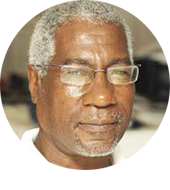
Several schoolmates recently sent me an undated clipping (originally circulated by researcher Timothy Fevriere) of an old article in ‘The Voice of Saint Lucia’ newspaper.
Headlined ‘74 qualify to enter College’, it listed names of boys from Roman Catholic, Anglican, Methodist Primary, Senior School and St. Joseph’s Convent in Castries, plus others in Anse La Raye, Soufriere (Bouton), Gros Islet and Dennery, who’d passed the ‘Entrance Test’ to enter St. Mary’s College (SMC).
Each time I revisited that clipping sent by e-mail or WhatsApp, my mind raced down Memory Lane, recalling the scores of classmates I’d shared the good times with at the island’s most prestigious secondary school.
I’d won a Civil Service Association (CSA) scholarship and during my first two years in Form 1A was described by then Principal (Irish Presentation Brother Donatus Brazil) as ‘one of the brightest, but most-troublesome’ in my class, thus almost-daily subjected to corporal punishment by ‘caning’ or after-school ‘detentions’.
That was between 1969 and 1970, when the ‘Hippie’ and ‘Black Power’ movements in the USA were often in the local and regional newspapers and radio news, which largely influenced the likes of me into paying attention to and following The Forum, a local political grouping that preached a different type of politics on the Columbus Square in Castries, in words that offered a different view of Saint Lucia and the world than what we were being taught at the college.
Some of us started secretly reading and sharing ‘Black Power’ and ‘Peace’ magazines and booklets, socialist newspapers (like Cuba’s ‘Granma’), adopting ‘Afro’ hairstyles and sharing radical ideas between classes (during break and lunch sessions) — and eventually formed the Students Revolutionary Organization (SRO).
In 1971, my father, Charles V.E. Bousquet – a Senior Pilot with the Harbour Master’s Office — would decide to keep me away from those he considered my ‘wayward friends’ by landing me ‘summer jobs’ on the ‘banana boats’ that weekly ferried exported bananas from the Windward Islands to the British port of Barry (in South Wales).
At age 15, while still a ‘College Boy’, my dad secured (on August 31, 1971) my Seamen’s Passport (No. 000357) – officially described as a ‘Continuous Certificate of Discharge’ — issued by the Mercantile Office in Saint Lucia and approved by the Minister of Transport and Civil Aviation in the United Kingdom (UK), in accordance with the Imperial Merchant Shipping Act (1894).
Despite my two uncles (J.M.D and Allan Bousquet) being government ministers at the time, my father had determined I was ‘too young’ and it was ‘much too early’ to follow his two younger brothers into the family tradition of becoming ‘politicians’.
He explained to me that based on his lifelong experience as a seaman (before, during and after World War II), I would have to ‘Go to Sea, to See Where to Go’ later in life.
My first such trip – from July 22 to August 17, 1971 — was on the Geest Port, under the command of Captain David Boon.
Having excelled in English Language before and at SMC, I penned a daily diary, dutifully recording everything — from seemingly-endless days and nights at sea with no land in sight, to nightly jaunts at ‘pubs’ and discotheques in Port Cardiff.
After one of his weekly Sunday ‘inspections’ of cabins, Captain Boon would read the entries in my diary and tell my dad at the end of that first trip: ‘Earl is more of a writer than a sailor.’
Then, after observing I studiously read all the UK newspapers available while off- duty and helped unlettered fellow sailors write to their families back home, the captain encouraged me to register for a ‘Correspondence Course’ for an O-Level General Certificate of Examination (GCE) in English Language — which I passed with what he described as ‘flying colours’.
By 1974, I had been promoted to Junior Ordinary Seaman (JOS) and crossed the Atlantic four times on the Geest Port, Geest Cape, Geest Haven and Geest Land, with calls to Marseilles and Dieppe (France), Naples (Italy), Colon (Panama Canal) and Guadeloupe (French West Indies).
By then considered a ‘Bad Boy’ at SMC, but with ‘Very Good’ annual reports inscribed in my Seamen’s Passport (Certificate of Character), my dad decided that ‘sea’ was where I would ‘go’.
I was then transferred to chartered Geest ships that, over the next two years, would see me circumnavigate the world’s Five Continents and Seven Seas.
Early in 1976, I’d developed stomach ulcers that required successive surgeries in St. Lucia, Barbados and Jamaica, which eventually brought my sailing days to an end.
Shipwrecked and feeling extremely bored ashore, I wrote several political ‘Letters to the Editor’ in The Crusader newspaper.
I then casually responded to a published Invitation for Applications for the position of Editor – and on April 1, 1976 started my first journalism job – at age 20 — as Crusader Editor.
Thus started my long writing career.
The recalled Voice clipping was also posted on Facebook last month, with a headline: ‘Where are they now?’
My fellow ‘College Boys’ included many who excelled at art, aviation, banking, business, economics, insurance, law, music, policing, politics, seafaring and sports – and many (including me) joined the Rastafari Movement.
One (Rowan Seon) would become a SMC Principal, another (Philip La Corbiniere) would become a senator and government minister and yet-another (Philip J. Pierre, who enrolled a year before us) would become Saint Lucia’s ninth Prime Minister.
Fifty years later, I’ve spent five wonderful decades as the ‘College Boy’ who became a sailor and then a writer – and with no regrets.
My tens of thousands of published articles – from pen-and-paper to typewriters, word processors and computers — have spanned the globe, wider than the 70+ countries my profession has taken me to.
Now, with IT and AI placing the world at my hands every time I finger my keyboard in this new Age of Enlightenment, it’s like I’ve only just started…