


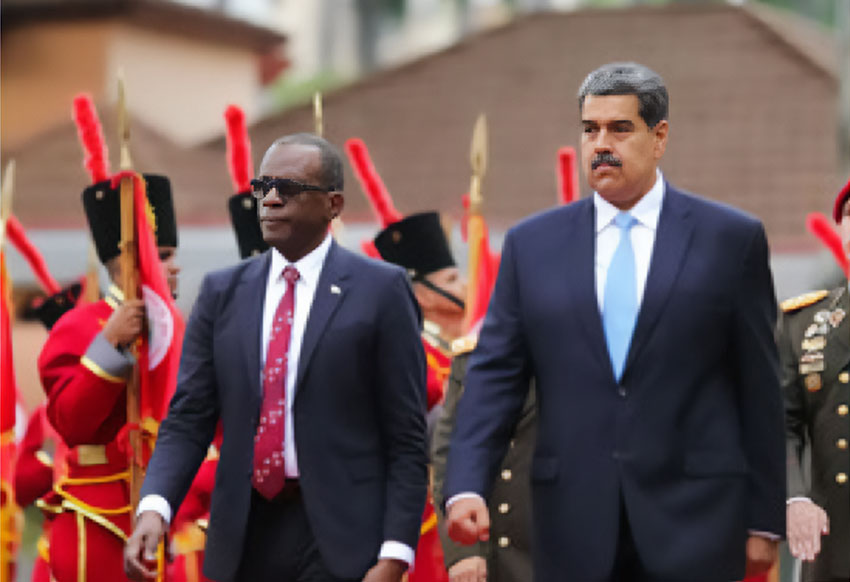
In light of the recent shocking events in Venezuela, Saint Lucia—standing alongside several Caribbean and Latin American nations—faces an urgent and unprecedented crisis that demands a united response.
The unfounded kidnapping of President Nicolás Maduro, along with his family, is not just a violation of sovereignty; it is an affront to the fundamental democratic principles that the people of the region hold dear.
In this regard , the regional leaders, cannot afford to remain silent. Now, more than ever, the region must come together to condemn this aggressive act and demonstrate its unwavering commitment to peace and stability in the Caribbean.
The actions taken against Maduro must be viewed as a serious threat that endangers not only Venezuela but the entire region.
Prime Minister Philip J. Pierre recognizes the gravity of the situation and has aligned with CARICOM leaders to issue a collective statement, urging immediate and decisive action.
The region must stand firm against such violations, affirming its dedication to democratic governance and the rights of all nations to self-determination.
Let the region’s people raise their voices in unison against this military aggression. It is time to act, to support our neighboring countries, and to preserve the principles of democracy.
A strong, united stand today will echo through history, reinforcing the region’s commitment to safeguarding peace and sovereignty in the Caribbean. The time for decisive leadership is now—silence is not an option!
The Bureau of the Conference of Heads of Government of the Caribbean Community (Jamaica, Saint Kitts and Nevis, and Saint Lucia) convened on Saturday 3 January 2026 following US military action in Venezuela.
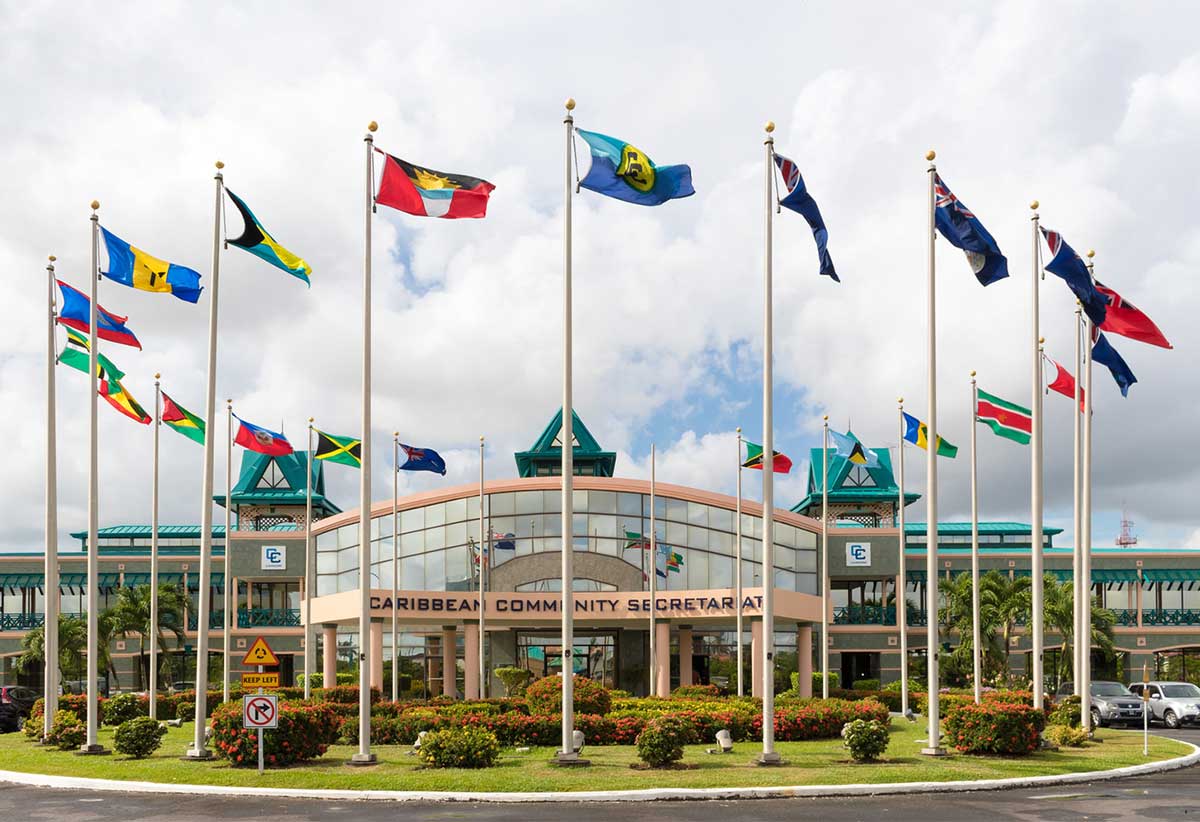
Statement from the Bureau of the Conference of CARICOM Heads of Government on Military Action in Venezuela
It reads : The Caribbean Community (CARICOM) is firmly committed to the fundamental principles of international law and multilateralism enshrined in the UN Charter, including sovereignty and territorial integrity of States and respect for human dignity.
The Region reiterates its call for peaceful dialogue through diplomatic channels to ensure Venezuela’s stability, good governance, democracy and prosperity for the people of Venezuela.
CARICOM remains ready to support all such efforts, in a spirit of cooperation and mutual respect.
The Bureau of Heads of Government assures that every effort is being taken to ensure the safety and security of citizens of the Region. The Bureau will continue to monitor the multifaceted impact of this evolving situation and the implications for economic activity within the Community, particularly air travel.
The recent U.S. military intervention in Venezuela and the capture of President Nicolás Maduro provoked a range of strong reactions from Latin American nations and regional leaders. While some countries, such as Argentina and Ecuador, expressed support or cautious endorsement for the operation, others—including Brazil, Chile, and especially Mexico and Colombia—raised concerns about regional sovereignty and warned of humanitarian risks.
Regional responses highlighted divides: Gustavo Petro, Colombia’s president, condemned the U.S. actions and ordered a heightened military alert, warning about the risk of increased refugee flows from Venezuela, while government officials in Mexico voiced objections to what they described as a breach of international norms.
At the same time, the operation drew celebration among many members of the Venezuelan diaspora in Lima, Santiago, and Madrid, underscoring how attitudes toward Maduro’s ouster differ between governments and exiled populations. The operation also triggered a wave of debate about the legitimacy of military intervention and set off regional anxiety about further U.S. actions—especially as President Donald Trump suggested Cuba and Colombia might be next targets in his administration’s fight against drug trafficking and authoritarian regimes.
Beyond official government statements, the responses in the wider region revealed shifting alliances and activated fresh rounds of diplomatic and public debate, with Cuba’s government openly condemning the U.S. raid and warning of the risk of regional destabilization.
R.A.