


![Dr. Keturah Edwin-Tobias, Community Dermatologist, Ministry of Health/Leprosy Focal Point [Photo credit: GOSL]](https://thevoiceslu.com/wp-content/uploads/2026/01/Dr-Keturah-Edwin-Tobias.jpg)
The theme for World Leprosy Day 2026 is “Leprosy is Curable; the Real Challenge is Stigma.” This theme seeks to raise awareness about leprosy, highlight the difficulties faced by those affected, and inspire a united effort towards its elimination.
Leprosy is a chronic condition which affects the skin, peripheral nerves, upper respiratory tract and eyes. Leprosy is no longer the frightening illness it once was. Thanks to modern medicine, it is curable. Treatment is free, effective, and accessible, simply visit your nearest Dermatology Clinic at a nearby Wellness Centre for assessment. Early diagnosis and care ensure that no one should suffer lasting disability. This is a milestone worth celebrating.
However, here in Saint Lucia and worldwide, the true challenge is not the disease itself, but the stigma endured by those affected.
- Stigma silences those who need help.
- Stigma isolates families and communities.
- Stigma inflicts pain long after the illness has been cured.
Stigma persists because many believe leprosy is highly contagious, incurable, or caused by sin or curses. As someone affected by leprosy once said, “this happens not because people are mean, but because they don’t understand.” Just as we come together to support one another in times of crisis after storms or fires, we must also unite to combat stigma. No one should be judged or excluded because of a disease that is curable.
The Ministry of Health, Wellness & Nutrition urges individuals to do the following:
- Share the truth; leprosy is curable.
- Show compassion; welcome and support those affected.
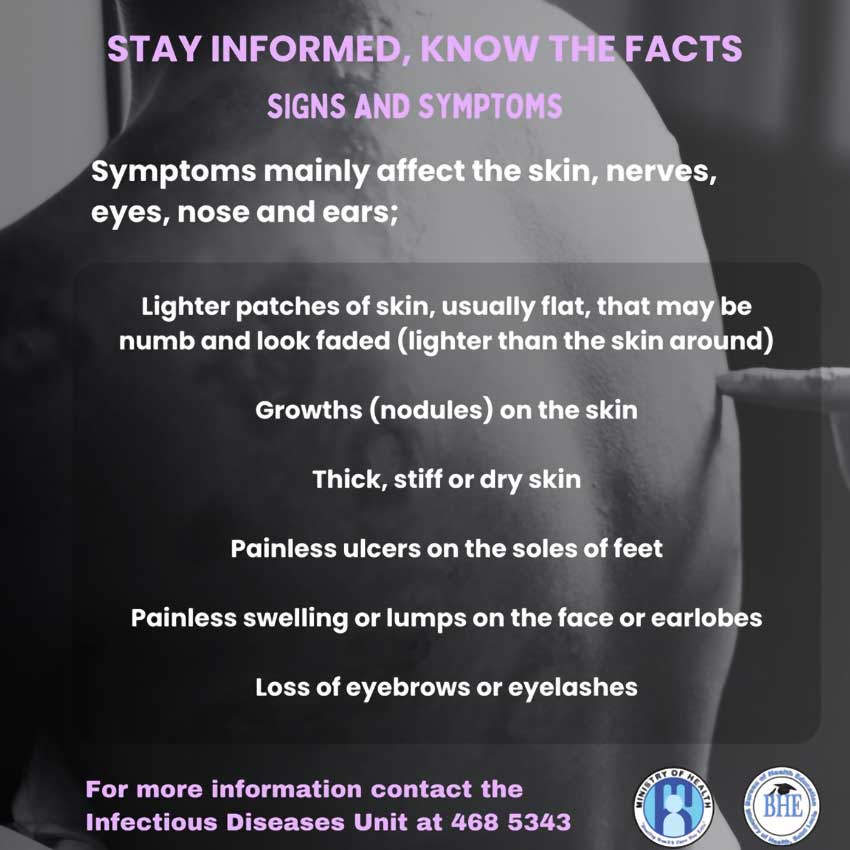
Remember, the first step towards a cure is diagnosis. If you notice a pale spot with decreased sensation, lumps or bumps on the face, ears, or body, or repeated burns and ulcers on the hands and feet, please visit your nearest dermatology clinic for a free assessment.
Treatment is available at no cost. The Ministry can also provide preventive treatment to relatives to reduce their risk of developing leprosy.