


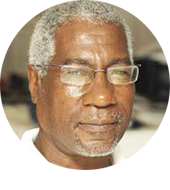
Saint Lucia’s Prime Minister Philip J. Pierre always had his second term well- cut-out.
The voting majority valued the difference he brought to governance in his first term — especially how he studiously, steadfastly and methodically delivered on his party’s election campaign promises — and responded positively to his Saint Lucia Labour Party’s (SLP) appeal for continuity.
One month after the SLP’s December 1, 2025 victory, the new Pierre-led administration got its worst early-morn’ wake-up call on January 3, 2026 when the US invaded Venezuela — in the process unfolding a new extension to Washington’s unipolar foreign policy that now uses and carries-out bold external threats – including against traditional allies.
But Caribbean Community (CARICOM) governments had already earlier seen the economic squeeze coming after the region was wholly affected by the unilateral closure of its airspace.
There were also clear signs the US and the European Union (EU) were targeting Citizenship By Investment Programs (CIPs) vital to five of CARICOM’s six smallest island nations (Antigua & Barbuda, Dominica, Grenada, Saint Kitts and Nevis and Saint Lucia).
Washington and Brussels simultaneously changed the goalposts for entry of selected Caribbean citizens from smaller states into the US and EU, by outlawing their CIPs and (automatically) invite restrictive attention to their citizens at ports of entry into the US and Europe.
Never mind the likes of the World Bank and the International Monetary Fund (IMF) certifying that the CIPs are vital revenue sources that these members of the Organization of Eastern Caribbean States (OECS) depend on, the US and EU are determined to kill them.
The joint use by the US and EU of visa entry restrictions and exclusive negative immigration selectivity as punitive actions against some Caribbean nations will naturally have serious repercussions for their (including Saint Lucia’s) income earning capacities, with implications for the Pierre Administration’s Estimates of Revenue and Expenditure for its 2026-2027 Budget.
Likewise, disruptions to Caribbean citizens’ travel plans — for business or pleasure, medical emergencies or disaster — have serious implications, at added costs to national treasuries.
Traditional aid donors in the EU have long tightened their purse strings and reduced or ended offering grants-in-aid, some also cutting their expenditures on social services to the needy at home, to increase military spending on Ukraine.
The US has now also pressed the vast majority of CARICOM member-states to agree (or commit to agreeing) to host ‘third country’ asylum-seekers in the US from dozens of countries who’ve been rejected and will be deported to receiving nations.
The impending complications in trade and effects of tariffs and other costly factors Caribbean governments and people are likely to face in 2026 (and beyond) were therefore always real, only now having considerably worsened.
Prime Minister Pierre has not joined the traditional proverbial ‘weeping and wailing and moaning and gnashing-of-teeth’ about rich countries taking advantage of poor countries — like it’s something new.
Instead, like during his first term, he’s (again) using the opportunity to drive home the bitter truth that the only (or best) way out for Saint Lucia and the Caribbean region, is for citizens to quickly understand why they must eat what we grow and grow what we eat.
He appealed at his last weekly Monday press conference for citizens to make better use of natural resources and to conserve and harvest water.
The PM also appealed – yet again – for citizens and businesses to pay their due taxes, especially as government’s revenues will surely decline if and when trade and travel are hit harder by the new rules being selectively applied by the US and EU – which are also competing in the business of selling citizenship through million-dollar ‘Gold Cards’.
Prime Minister Pierre has acquired a reputation for showing he can find the money for everything all previous administrations claimed they couldn’t.
Since taking office in 2021, his administration has: kept prices of essential government-controlled foods and goods low, subsidized fuel and cooking gas and reduced costs of building materials.
In addition, it’s: Completed the reconstruction of the St. Jude Hospital (that had eluded the three previous administrations), resumed on fast-track the long-delayed Hewanorra International Airport (HIA) Rehabilitation, Halls of Justice and Castries-Gros Islet Highway projects, settled outstanding payments to and increased wages of (including two Christmas bonuses) to Public Servants, increased Government Pensioners’ and Special Assistance payments – and all after the collective effects of COVID-19, the Supply Chain Crisis, the many reverberations from Ukraine War economic sanctions – and the imported inflation from recent global tariff increases.
But nothing will change for the better unless and until Saint Lucians start accepting the likely or assured grave consequences of not quickly changing consumption and spending patterns and start trusting local products and producers more.
There are still too-many income earners not paying due taxes and too-many businesses not remitting collected VAT payments timely-enough – or not at all.
Same with employers who extract National Insurance Corporation (NIC) taxes from employees’ pay — and never submit.
Unfortunately, most Caribbean citizens (like everywhere else) are simply unwilling to pay their fair share of taxes, not seeing it as investing in the ‘free’ services they usually demand from government.
Like so-many other areas of life and living, Caribbean citizens (including Saint Lucians) who haven’t understood the importance of taxation urgently need practical financial literacy lessons they can relate to – and it’s quite possible.
Just like Public Service technocrats and private sector bodies meet annually to discuss national budgets and upcoming legislation as matters of routine, CARICOM governments also now need – more than ever — to urgently devise and deploy national information programs to take such discussions to communities, across all sectors.
As Finance Minister, Prime Minister Pierre can be expected to continue to work his attributed ‘mystic magic’ with numbers, figures and statistics to present a next budget that will continue ‘Putting People First’.
But if taxpayers keep weakening the power of his invisible wand, there’ll be no magic to perform.