


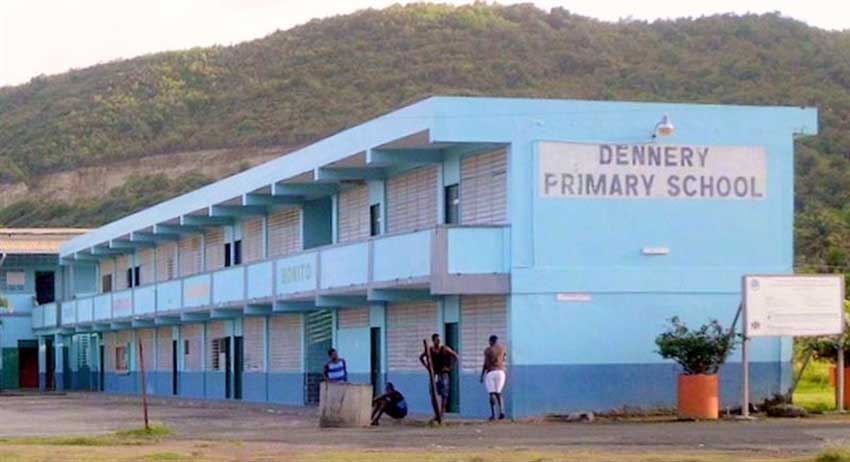
Two schools in Dennery are set to benefit from a groundbreaking renewable energy initiative designed to enhance resilience and energy security in Saint Lucia.
The Dennery Infant and Dennery Primary Schools will soon be powered by a solar microgrid and solar-powered water pump, thanks to a project spearheaded by the Government of Saint Lucia in partnership with the European Union (EU). The initiative aims to ensure uninterrupted power supply during extreme weather events, safeguarding essential services and supporting the country’s climate resilience goals.
Funded under the EU’s Global Gateway strategy and supported through its Euroclima Programme—co-financed by the German Federal Ministry for Economic Cooperation and Development (BMZ)—the project aligns with Saint Lucia’s push toward sustainable development and climate action in the Caribbean region.
“This project represents a milestone in our strategic efforts to future-proof Saint Lucia’s critical facilities,” stated Kurt Inglis, Acting Chief Energy and Public Utilities Officer. “By decentralizing energy generation and prioritizing renewables, we are not only reducing greenhouse gas emissions but also ensuring that essential services like education and emergency response remain operational during disasters.”
The microgrid project supports Saint Lucia’s recently submitted Nationally Determined Contribution (NDC) 3.0, which outlines the country’s climate action commitments under the United Nations Framework Convention on Climate Change (UNFCCC).
Beyond powering schools, the initiative will involve community engagement, capacity building, and stakeholder training across agencies such as the Energy Division, National Utilities Regulatory Commission (NURC), National Emergency Management Organisation (NEMO), and others, to ensure long-term sustainability.
The project is being implemented by the Deutsche Gesellschaft für Internationale Zusammenarbeit (GIZ), with additional support from the Rocky Mountain Institute (RMI) and the Climate Finance Access Network (CFAN).
European Union Ambassador to Barbados and the Eastern Caribbean, Malgorzata Wasilewska, praised the project as a model for resilience and sustainability. “This microgrid demonstrates how climate ambition can translate into concrete benefits for education, emergency preparedness, and energy security.”
Skeeta Carasco, CFAN advisor to Saint Lucia, noted, “This project shows what implementation of national climate targets can look like on the ground. It’s heartening to see the support this project has received and the collaboration it inspires.”
The initiative is expected to deliver far-reaching benefits, including greater energy independence, economic opportunity, and improved social wellbeing, marking a significant step in Saint Lucia’s transition to a greener, more resilient future.