


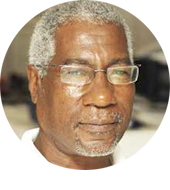
My friendship with Denis Dabreo took earnest shape after the March 13, 1979 Grenada Revolution, when he became the first Caribbean writer to publish an entire book about ‘The Revo’, within a month.
Simply entitled ‘The Grenada Revolution’ (1979), it offers precise details of the feverish diplomatic shuffles in and between London and Bridgetown (Barbados) following the first Revolution in the former British West Indies.
The book details, blow-by-blow, the frantic diplomatic to-and-fros that Tuesday morning between CARICOM leaders, ambassadors and foreign affairs ministers.
It also reveals how Saint Lucia Prime Minister John Compton – less than three weeks on the job – had dispatched a letter that very morning to Saint Lucia’s High Commissioner in London, Dr Claudius Thomas, urgently inviting the British government to send troops to put down ‘the communist’ takeover.
Closely monitoring radio and newspaper dispatches across Caribbean skies and waters was no easy task back then, when the internet was not yet invented.
But Denis took virtual residence on Montserrat-based Radio Antilles and CBC Barbados, monitoring reports from Grenada by veteran journalists Alister Hughes and Lew Smith, closely following CARICOM governments trying respond quickly to the lightning armed overthrow, just hours earlier.
Unlike Compton, most other CARICOM leaders preferred avoiding external military intervention and eventually all sides, including the British, agreed to accept that Prime Minister Eric Gairy, abroad when he was overthrown, would not be returning home soon.
Denis’ original manuscript was professionally typed (by typewriter, back then when journalists still wrote with pens and walked with notebooks) and the first copies were printed locally.
But Dabreo didn’t only write about Grenada.
His other books include (my favourite) ‘Lessons from Caribbean Revolutions’ examining the new politics influenced by the ripple effect across the region of the unfolding ‘Black Power’ revolution in the USA.
It also looked at the stormy 1970 multiracial and united trade union and political protests in Trinidad & Tobago against the new twin-island republic’s then eight-year-old government led by Prime Minister Dr Eric Williams.
This pre-1979 publication focused on progressive political parties and movements in Antigua and Barbuda, Dominica, Grenada, Guyana, Jamaica and Trinidad & Tobago in the 1970s, plus their national impacts and potential for pursuit of a common Caribbean revolutionary struggle.
Other books include: ‘Prostitution of Democracy – The Agony of Grenada’ and ‘Confusion in the Caribbean.’
And then came (circa 1983) ‘Of Men and Politics – The Agony of Saint Lucia’ – a stinging analysis of how the Saint Lucia Labour Party (SLP) imploded within two years after sweeping the polls in 1979.
A Grenadian, Denis always reminded me that ‘Maurice is my cousin.’
But his Grenadian lineage was more akin to that T.A. Marryshow, publisher of ‘The West Indian’ newspaper, which, in the first half of the 20th Century, promoted ‘One West Indies, Under God.’
In his compatriot’s shadow and footsteps, Dabreo launched here the ‘One Caribbean’ newspaper and his own advertising agency Media, Advertising and Publicity Services (MAPS).
Then came ‘Think Caribbean Television’ (TCT), operating from a one-room city backyard near a tire shop in Castries, televising daily (and nightly) what he printed in the newspaper on weekends – articles and biting commentaries alternatively taking political parties — Governments and Opposition — to task, always citing ‘the public interest’ and ceaselessly advocating One United Caribbean.
But Denis was also a politician — at heart and to the bone.
He generally supported George Odlum and Peter Josie pre-1979, but took issue with both after the break-up of the SLP and Odlum’s launching the rival Progressive Labour Party (PLP).
Denis and I would wax warmly (decades later) as we (often) mused by telephone over both Odlum and Josie accepting appointments by hitherto eternal enemy John Compton to top jobs in UWP administrations: Odlum as UN Ambassador and Josie as a Cabinet Minister.
But even in their sworn opposition to each other after 1979, both equally despised Kenny Anthony, who in 1997 would lead the SLP to a historic 16-1 victory — with Odlum as a candidate and also appointing him to Cabinet.
However, Odlum never fully settled with Anthony as his leader, who had resigned in quiet disgust from the post-1979 Labour administration’s Cabinet after it became Crystal Clear that Odlum would stop at nothing to replace Allan Louisy as Prime Minister.
We would also bellyache, however, over how two of Saint Lucia’s most effective progressive political agitators for change, who influenced generations of Saint Lucians, would have turned on each other like the two ex ‘enfents terribles’ did.
The independent thought that drives real journalists to often disagree with friends on points of principle often came to the fore in Denis’ relations with local politicians Left and Right, such thinking driving him to register to contest the 1997 General Elections as an Independent candidate for Dennery South.
Quoting Derek Walcott’s eloquent but damning description of Dennery as ‘This village stricken with a single street/Contented like a cripple in defeat’, Dabreo published (in 1996) a booklet entitled ‘A Vision for Dennery’ outlining a plan for ‘Total Development and Full Employment for the People of Dennery and La Caye.’
Having told his daughter in December that one of my first assignments when I emerge from my temporary wheelchair would be to interview her blind dad without anyone realizing he couldn’t see and anxiously looking-forward to the day early this year, I was therefore shocked beyond words when a TV crew turned up at my door earlier this week, casually requesting ‘a comment on Dabreo’s death…’
The dumpling was still in the middle of my throat while I spoke briefly – and like then, I still didn’t enjoy writing this Ode to Denis, instead of speaking with him, as per usual.
My silent solace rests, however, in having shared this precious little about all I know about him, the rest saved for another time.
Or another book!
Earl, this is indeed a full hearted and eloquent rendition of a fellow journalist, writer and dyed-in-the-dien- dien West Indian patriot.
Let’s hope that the legacy of history Mr. Dabrio has left becomes an integral part of the history curriculum presented to students partaking at all levels of education in the Caribbean.
Yes, we have lost a veritable chariot of righteousness of Caribbean history and politics. Upon whom will his mantle fall?