


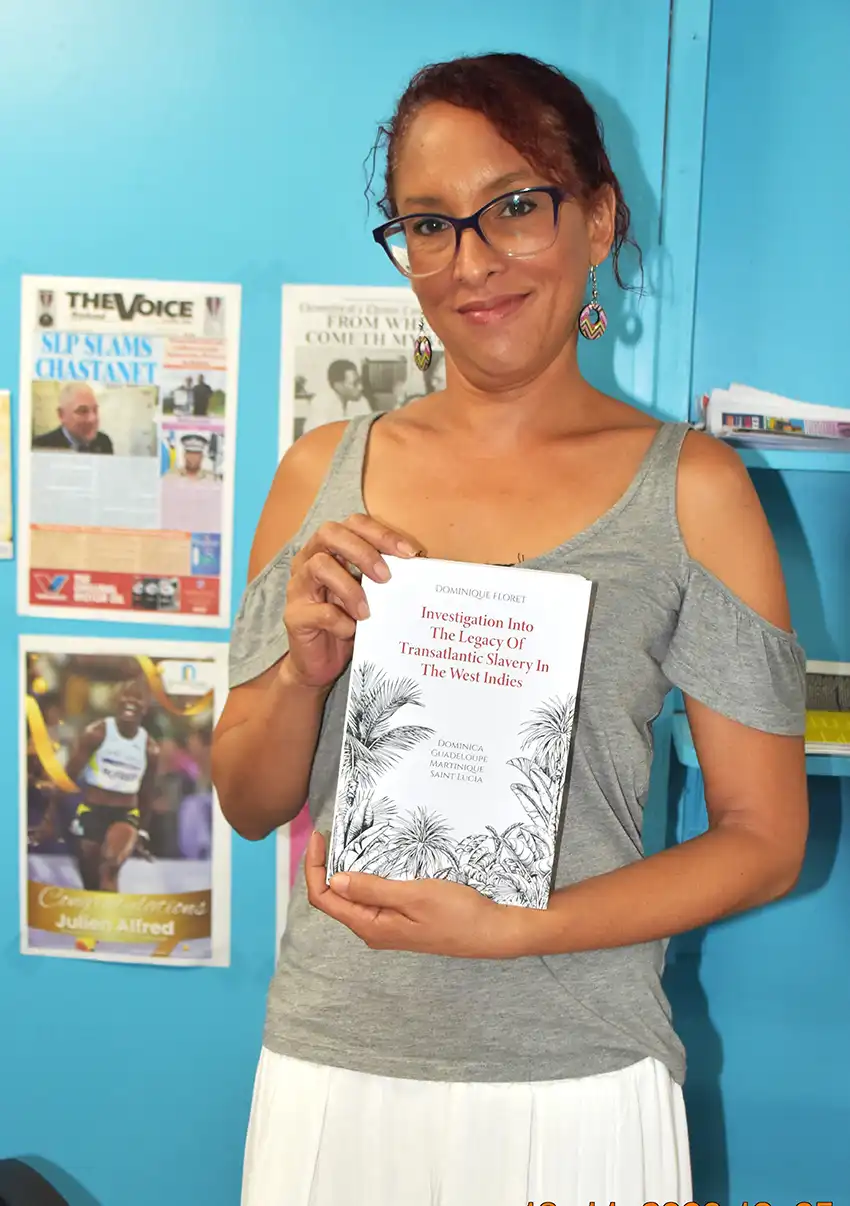
A French project that started in 2016, reached its English destination in October of this year, unveiling new perspectives of Caribbean people in regards to the transatlantic slave trade.
A study involving interviews in four regional territories, St. Lucia, Martinique, Guadeloupe and Dominica, and focusing on ten key areas was aimed at getting a better feel for what the people of these islands thought of the atrocity and how it affected them today.
The results of the initiative, which has come in the form of a book entitled “Investigation Into The Legacy Of Transatlantic Slavery In The West Indies” was written by French national, Dominique Floret. The initiative tested the knowledge of participants from the four islands as well as probe their interest in that history while invoking their feelings about the effects of the slave trade on current life and highlighting their opinions on the issue of reparations.
According to the book, participants from all four territories agreed that there was not enough emphasis being placed on educating the region on the issue of slavery. The book also highlighted that participants from Martinique and Guadeloupe were engaging on the issue while participants from St. Lucia were removed, much like Dominica, and used religion as a source for retreat, comfort and a guide moving forward.
In Dominica and St. Lucia many saw the Rastafarian movement as the main force driving the education on the issue while the people of Guadeloupe and Martinique were self-motivated to do research on the history of the slave trade.
The issue of reparations was the last question on the list of ten, which drew even more differing views from the four territories. According to the Author, the English-speaking territories seem of the impression that slavery discussion was long gone and should be left that way, while the French territories were concerned about an apology, money, psychological wounds and their dignity. French participants feared that, in light of recent and current events, that slavery could be reinstalled. The English-speaking territories were also of the impression that they were absolutely free and had made considerable strides since, while their French counterparts were adamant that they were still party to a form of slavery to this day.
The book is available locally, on Amazon and on most platforms in ebook form.
Dominique Floret revealed that while this edition focused on the impressions of individuals on the slave trade, part 2 will focus on the experiences of living through that period.
Last week, a copy of the publication was presented to the Office of the Prime Minister personally by the author Dominique Floret.