


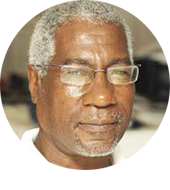
The first phase of my year-long 70th birthday ended last weekend on May 25 – formerly African Liberation Day and now Africa Day.
But the clear highlight was the two-day National Youth Parliamentary Debates on Reparations by the finest group of young citizens many have heard address the burning issue of the Caribbean Community’s (CARICOM’s) ongoing regional quest for Europe to pay-up its outstanding debts for centuries of subjection of Africans and People of African Descent to Native Genocide, Slavery, Colonialism, Neo-colonialism and Imperialism.
One couldn’t but notice the clear double gender balance in favour of women – 20 to 10 in the two sessions, as with the Prime Minister and Leaders of Government and Opposition Business in the Senate.
The quality presentations by the 30+ youth parliamentarians — representing all-17 constituencies on both sides of the parliamentary aisle. Including as Independents – offered measurably positive estimates of the results of the work of the National Reparations Committee (NRC) in the over-12 years since its establishment.
Its members have taken the Reparations message to Saint Lucians at home and abroad, through traditional and modern bilingual and multi-platform media, in communities and schools, through monthly online and anniversary broadcasts and regular related statements.
Its member-organizations have confidently and successfully employed networking collaboration to survive — without a budget for its first 12 years, under three successive administrations — until that situation was changed by current Prime Minister Philip J. Pierre in 2025.
The NRC, as a member of the CARICOM Reparations Commission (CRC), has also been cooperating with like entities in CARICOM, as well as related Trans-Atlantic entities in Europe and North America.
As the entity responsible for implementation on government’s reparations mandate, the NRC has also collaborated since 2022 with The Repair Campaign (TRC) and Heirs of Slavery – the former led by Irish-Caribbean telecommunications entrepreneur Denis O’Brian and the latter spearheaded by award-winning former BBC journalist and international presenter Laura Trevelyan.
The Saint Lucia NRC scored significant inroads in 2019 with its bilingual national and regional History and Reparations Broadcasts to Schools at home and in CARICOM member-states, also followed by students, teachers and lecturers at colleges and universities in The Diaspora.
The NRC is working steadfastly to resume the lectures in 2026 – hopefully with resumed assistance form the CRC.
However, this year has already seen remarkable demonstrations of the massive power of modern online messaging, with the hosting of live-streamed parliamentary youth debates in St. Kitts and Nevis (SKN) and Saint Lucia.
NRC members spent both days happily basking in the fertile imagination of the young Saint Lucians and I am personally happy to share the following (from among the many-more) selected observations I noted:
(1) The young parliamentarians were well-prepared and delivered way beyond expectations, through well-researched presentations
(2) Women twice outnumbered Men (20 to 10)
(3) Bilingual deliveries took the message beyond traditional spaces
(4) CARICOM’s Ten-Point Plan (TPP) for Reparatory Justice was clinically examined
(5) Most presenters felt Reparations should also be demanded by Saint Lucia from France; and that France should repay Haiti the reparations debt forcefully extracted
(6) Health-related legacies of Slavery were highlighted (including Diabetes and Hypertension)
(7) Every speaker supported Reparations as being unquestionably legal, moral and justifiably owed to the descendants of enslaved Africans
(8) Reparations paid by Europe should be institutionally shielded from abusive access
(9) CARICOM needs more foreign policy coordination on reparations; and
(10) Reparations is not only about compensation, but also requires national repair
Netizens everywhere now have permanent online access to the several hours of genuine debate.
I’ve been (somewhat) taken to task by well-meaning colleagues regarding disagreement on choice quotes from an interview I did with a local TV station.
After all, I welcome all feedback in the interest of continuing discussion – even with those who still haven’t found or made tome to watch or listen to the entire debate, whether through genuine time pressure, or limited attention spans – or both.
Nonetheless, I still hold to state my points that:
(1) Reparations isn’t about extracting inherited wealth from fellow citizens of CARICOM nations on the basis of perceived historical links to Slavery; and
(2) Reparations advocates should be careful about mistakenly associating local family names today with the exploits of unrelated slave society namesakes
CARICOM is formally seeking reparations from the governments of nations that built empires on the backs of enslaved Africans — and not necessarily from today’s heirs and successors of slave-owning families.
Interestingly, in a related case, former Saint Lucia Prime Minister Dr Kenny D. Anthony was accused by another former Prime Minister, Allen Chastanet, of being part of a local family linked to Slavery – only for Dr Anthony to prove that his plantocracy lineage actually followed Abolition.
The parliamentary debates in SKN and Saint Lucia have surely sparked positive debates and conversations in the Caribbean and beyond, in very-welcome ways.
The NRC’s early messaging investments are now paying-off high dividends, including by way of healthy cooperation between like-minded forces heading to a common destination – evident, for example, in the Joint Socio-Economic Reparatory Justice Reports being prepared by TRC and some NRCs for presentation to governments.
This type of cooperation has been quietly helping take Reparations from an idea to a source of discussions, debates and actions, benefitting now from levels of infusion of hidden youth energies, through new and increasingly more-effective platforms.
It is in that respect that I see the debates and other related initiatives involving youth as bridging the generational gaps in ways never imagined by the older generation now increasingly opening-up to tomorrow’s people, today.
The struggle for reparations continues and the benefits – whenever – will also be, not for one or another group, but for all citizens in all beneficiary nations.
African Americans are using DNA yardsticks to measure qualification for reparations, but not-so with the CARICOM model, which seeks Reparations For One And All!