


This has been a very interesting week.
It started Sunday with a multi-denominational ecumenical mass at the Minor Basilica of the Immaculate Conception, where the major churches came together to pontifically celebrate the 75th Anniversary of Saint Lucian gaining Adult Suffrage – the Right to Vote – back in 1951.
Coming in the middle of this year’s annual observance of Kweyol Heritage Month, the mass featured the island’s two languages and the archbishop and priests, choir to congregation, were mainly dressed in Kweyol outfits.
The bilingual sermons underlined the fact that the Right to Vote came at much sacrifice by our fore-parents and we should not today take voting for granted in the way most do today.
It’s simply sad, but true, that just like back in 1951, less-than-half the population is registered to vote – and less-than-half of those registered do vote in elections.
So, parties win General Elections with less-than 50% of voters voting, but, in the name of so-called ‘Democracy’, that’s accepted as a ‘Majority Vote’ – and not only in Saint Lucia, but across the Caribbean and the wider world, including in some places where voting is said to be ‘mandatory’.
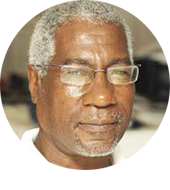
But these sad-but-true facts underlined on Sunday were all set aside on Monday – October 12, date of the actual 75th anniversary – when the Parliament held a joint sitting of both houses to hear a compelling and enlightening speech by former Vincentian Prime Minister Dr Ralph Gonsalves.
The inimitable former longest-serving CARICOM Head of Government also spent decades as a lecturer in Government and Politics at the University of the West indies (UWI) before contesting his first election in his multi-island Caribbean home state.
And he traced Saint Lucia’s struggle for the right to vote from the start of the 20th century, right up to 1951 and beyond.
Dr Gonsalves correctly concluded that, from direct Colonial Rule to Statehood and Independence, after 47 years, what’s happening in the politics and socio-economic development of Saint Lucia today is simply a continuation of the Social Democratic Revolution that preceded the birth of the first trade union, the first political party and the first Government of Saint Lucia that did not have colonial representatives.
But then, colonialism never left — or disappeared — as there was always a British Administrator, then a Governor and now a Governor-General, as Head-of-State, representing the British Crown and existing in the name of ‘Her’ or ‘His Majesty’.
So, for example, the Throne Speech annually delivered by our Governors-General refer to ‘Her Majesty’ or ‘His Majesty’s Government’.
And we still have a ‘Royal’ Saint Lucia Police Force.
Be all that as it may, we are still an independent and sovereign government.
Yet, even though we no-longer have the British Privy Council as our final appellate court, we are still members of the Commonwealth of former British colonies, with King Charles III (like his mother) as our Head-of-State.
And — like Queen Elizabeth II – he is also the official ruler of the entire Commonwealth of Nations, even though the wealth is not common within his realm.
Take, for example, the matter of Reparations for Slavery and Native Genocide being demanded by Caribbean and African nations – which form the majority of former British colonies in The Commonwealth.
You’d think that since Britain built its empire off the blood and sweat on the backs of enslaved Africans for centuries, London would consider it natural justice to share some of that vast wealth with the Caribbean and African commoners whose governments have been making a case for since 2013.
But no, all Britain’s main political parties – Labour, Conservative and Reform – have made it repeatedly clear that none will pay reparations for having executed centuries of ‘Chattel Slavery’, which the United Nations (UN) has belatedly but correctly decreed as ‘The Gravest Crime Against Humanity’.
Interestingly, just before she died, Queen Elizabeth II became the first British monarch to offer what I always describe as ‘a royal expression of sorrow’ for Britain’s role in the trans-Atlantic Slave Trade; and her son, King Charles, told the last Commonwealth Summit in Rwanda – his first as the succeeding monarch – that ‘The time has come for a conversation on reparations.’
Like his mum and preceding UK Governments, the King and the current British government have absolutely refused to offer the ‘Apology’ that CARICOM demanded almost 13 years ago.
And that is so, even though 51% of the British public now support having that ‘conversation on reparations’ that he said is now due, vis-à-vis only 21% in 2013 when the CARICOM Reparations Commission (CRC) launched its 10-point Plan for Reparatory Justice from Britain – and all the European nations that built empires on enslavement of human beings they treated as unequal and less-than-common.
Be that as it may, the King has defied the palace and the government in London by insisting on having that ‘Conversation on Reparations’ when he attends the upcoming Commonwealth Heads of Government Meeting (CHOGM) in the Caribbean (to be hosted in Antigua & Barbuda from November 1st to 4th.).
He will not ‘Apologize’, but he will be pressed by CARICOM and African Union (AU) governments to at-least ‘say something’ – even though he can also be expected to use words that will not say much.
So, it will be expecting too-much to think the King will apologize and commit the British government to pay-up its outstanding dues to fellow unequal and less-than-common members of The Commonwealth.
However, like with Adult Suffrage, the quest by the Caribbean and Africa for Reparations is part of a continuing global Social Democratic Revolution that continues to unfold.
And this is happening at a faster pace than the revolts by workers across the Caribbean between 1937 and 1939, when the likes of Marcus Garvey visited Saint Lucia (on October 17, 1927) and Saint Lucia’s W. Arthur Lewis wrote the first everlasting case for Reparations in his first book ‘Labour in the West Indies’ in 1939.