


Tomorrow (Thursday, July 2, 2026) will mark 47 years since the Saint Lucia Labour Party (SLP) scored its first major Democratic Revolution at the Ballot Box, on a date in 1979 that changed the island’s history forever – to this day.
It was a year when the world was turning quite differently: The Iranian, Grenadian and Nicaraguan Revolutions had triumphed in Asia, the Caribbean and Latin America, respectively; some African leaders and Pakistan’s former Prime Minister Zulfiqar Ali Bhutto were executed; Margaret Thatcher became UK Prime Minister, then Ronald Reagan won the US Presidency.
It was also an age of Independence for former British West Indian (BWI) territories (including Antigua & Barbuda, Dominica, Saint Lucia, St. Kitts and Nevis, St. Vincent & the Grenadines) — and Guyana became a Republic.
- The year that rocked the world started on February 11, 1979, when the last Shah of Iran, Mohammad Reza Pahlavi, was officially overthrown after he fled the country on January 16, following escalating nationwide protests and strikes — marking the triumph of that Revolution
- Saint Lucia became Independent on February 22 — and three weeks later, Grenada had its popular armed revolution on March 13
- The SLP won Saint Lucia’s General Elections less-than five months later (July 2); and
- Nicaragua’s Revolution came just-over a fortnight later (July 19).
By 1983, the SLP had lost office and the Grenada Revolution lost power — both through avoidable suicidal leadership power-struggle events:
- The SLP administration, led by Prime Minister Allan Louisy, lost a ‘No Confidence’ vote in the House of Assembly on April 14, 1981 and Louisy resigned days later on May 4, succeeded by then Attorney General Winston Cenac
- The SLP miserably lost the May 3, 1982 General Elections, with the UWP returning to office with a sweeping 14-3 victory over the SLP (2 seats) and George Odlum’s breakaway Progressive Labour Party (PLP) that won only one
- Grenada’s ruling New Jewel Movement (NJM) would implode after Prime Minister Maurice Bishop’s arrest on October 17, 1983
- Bishop’s execution — alongside fellow members of the People’ Revolutionary Government (PRG) on October 19, leading to the US-led invasion of October 25
The positive progressive period 1979-83 was followed by a relative lull in progressive politics for the next 15 years — and the SLP would return to office with an amazing 16-1 victory on May 23, 1997, remaining in office for two consecutive terms under Prime Minister Dr. Kenny D. Anthony.
On December 11, 2006 the SLP would lose to the UWP, starting an unprecedented three terms of changing governments.
This was the start of parties and governments being returned-by-rotation after three consecutive General Elections (UWP in 2006, SLP in 2011 and UWP in 2016) – and each time with equal 11-6 margins.
That still-inexplicable three-time government-by-rotation exercise would lead to Dr. Anthony’s resignation as PM and SLP Leader after the SLP’s 2016 defeat — opening the way for Deputy Leader and former Deputy Prime Minister, Philip J. Pierre, to step into a job he was the most-prepared candidate for, by experience, since Nationhood in 1979.
Pierre and Anthony had both first won their seats in 1997 and together served three terms of shared and accumulated experiences in government and opposition, the two becoming the longest-serving parliamentarians after 28 years — until Dr. Anthony quit ‘elective politics’ in 2025.
Under Prime Minister Pierre’s leadership, the SLP has won two successive elections (July 26, 2021 and December 1, 2025) – continuing the mysterious rotating cycle, but giving the party a decisive 15-2 lead in 2021 that improved to 16-1 in 2025.
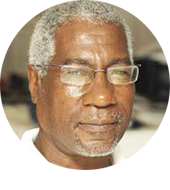
Seven months after his second term and approaching five years from his first term, PM Pierre has earned the enviable title of ‘Best Prime Minister Saint Lucia Never Had’ — evidenced by his and his party’s comfortable election and re-election by an electorate tired of the failed revolving-door approach.
On July 26, 2026, PM Pierre will have spent five years in The Top Job, demonstrating his ability to manage the economy in ways that have protected Saint Lucians’ from paying higher prices for energy and essential food products since he took office in 2021, while COVID-19 was still a distinct local and regional reality.
Pierre also took office as the COVID-related Supply Chain problems and economic sanctions associated with the Russia-Ukraine war started to result in higher local prices through what he’s always described as “imported inflation”.
But since first taking office as PM nearly five years ago, the accountant in the Minister for Finance inside him has husbanded the economy in ways that have seen the government absorb hundreds of millions of dollars through subsidies of energy supplies, essential food items and building equipment.
His administrations also consistently reduce Value Added Tax (VAT) on essential and popular food items, while raising Public Servants salaries (with backpay) and increasing benefits for pensioners and persons depending on Public Assistance.
Pierre also introduced some key new ministries in his first and second terms, including The Youth Economy and Persons with Disabilities, Constituency Development and People’s Empowerment.
The PM in Pierre starts the second half of his second term as Incoming Chairman of the Caribbean Community (CARICOM) and will host his regional colleagues at their 51st Conference of Heads of Government in Saint Lucia (July 5-8) – just ahead of CARICOM-African Union (AU) Day (September 7) and the 2026 Commonwealth Heads of Government Summit (CHOGM) in Antigua & Barbuda.
But perhaps his biggest political milestone this year will be leading the nation and his party into the 75th Anniversary of Adult Suffrage on October 12 – marking three-quarters of a century of the Right to Vote – and the SLP’s first election victory in 1951.
As the ninth Prime Minister following 12 General Elections since Independence, PM Pierre continues to see himself as a ‘Servant Leader’.
But for most Saint Lucians, 47 years after the island became a nation, he’s the leader they’ve long-been-wating for.