


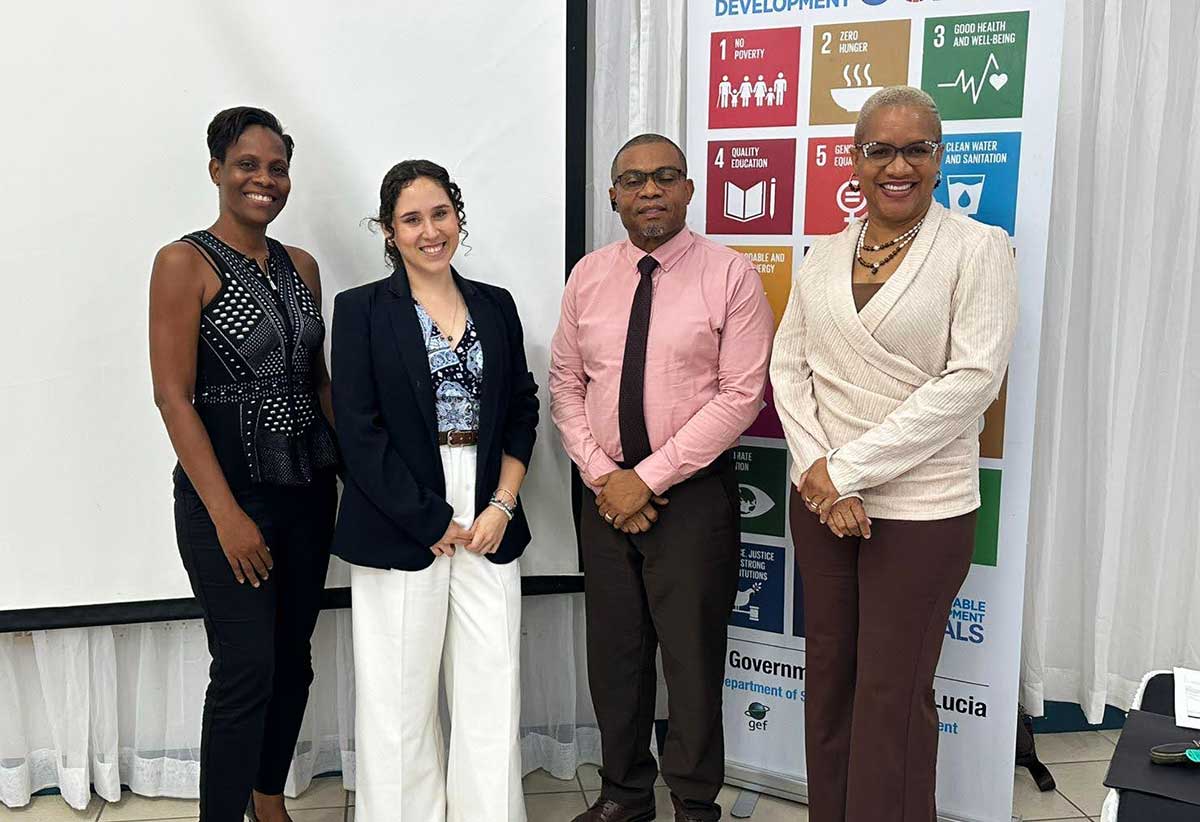
A National Workshop on Biosafety Legislation recently took place, spearheaded by the Department of Sustainable Development.
This initiative is crucial for consolidating stakeholder feedback on Saint Lucia’s legal and institutional framework for biosafety governance, specifically focusing on the country’s Biosafety Bill.
Saint Lucia is actively involved in the project “Strengthening Biosafety Legislation,” developed in collaboration with the United Nations Environment Programme (UNEP), the Food and Agriculture Organization of the United Nations (FAO), and the Secretariat of the Convention on Biological Diversity (SCBD).
This project aims to reinforce the legal framework on biosafety and ensure the effective implementation of the Cartagena Protocol on Biosafety.
The Biosafety Protocol is essential for protecting biological diversity from the potential risks posed by living modified organisms resulting from modern biotechnology.
It incorporates a legal diagnostic tool that facilitates the implementation of the Cartagena Protocol on Biosafety, allowing Saint Lucia to navigate this critical area effectively.
The legal obligations that States Parties must adhere to under the Cartagena Protocol on Biosafety (CPB) require careful navigation.
To address this need, the Development Law Service (LEGN), in collaboration with the St. Lucia Ministry of Education, Sustainable Development, Innovation, Science, Technology, and Vocational Training, successfully convened a biosafety legislation workshop last month.
The workshop was designed to clearly present the legal obligations under the CPB, strengthen the capacities of stakeholders in biosafety legislation, and facilitate discussions on the national context along with preliminary findings from analytical work on relevant national frameworks.
Key government institutions and stakeholders participated, including representatives from the Ministry of Agriculture, Fisheries, Food Security, and Rural Development; the Ministry of Commerce, Manufacturing, Business Development, Cooperatives, and Consumer Affairs; the Bureau of Standards; the Attorney General’s Chambers; and Customs.
Ms. Dawn Pierre-Nathaniel, Chief Sustainable Development and Environment Officer, and Ms. Samanthia Justin, Deputy Chief Sustainable Development and Environment Officer, represented the Ministry of Education, Sustainable Development, Innovation, Science, Technology, and Vocational Training.
Additional participants from other Caribbean nations joined online, including Antigua and Barbuda, Belize, Grenada, Guyana, and Saint Kitts and Nevis.
The workshop began with opening remarks from Chris Satney, Deputy Permanent Secretary at the Department of Sustainable Development, and Ms. Renata Clarke, FAO Subregional Coordinator for the Caribbean.
Following these remarks, Ms. Muñoz Carrasco from LEGN delivered a comprehensive presentation on the international legal framework concerning biosafety.
Dr. Odile Juliette Lim Tung of LEGN then introduced the draft Legal Diagnostic Tool on Biosafety, which is specifically designed to assist countries in evaluating their compliance with the CPB and identifying legislative gaps.
Jeremiah Edmund, Senior Forestry Officer, provided a thorough overview of Saint Lucia’s regulatory framework on biosafety.
Subsequently, Ms. Muñoz Carrasco presented initial observations on the 2018 draft Biosafety Bill, emphasizing both its comprehensiveness and areas that require further clarification. This event is a key component of the project UNUN/GLO/1249/UEP-F Strengthening Biosafety Legislation, funded by the UNEP Montevideo Environmental Law Programme.
This initiative, implemented alongside project UNUN/GLO/1254/CBD-F, which is financed by the Japan Biodiversity Fund through the Secretariat of the Convention on Biological Diversity (SCBD), aims to enhance understanding and raise awareness about the importance of legislation for biosafety.
The focus is primarily on developing and disseminating a diagnostic tool to analyze and identify gaps in national legislation for implementing the CPB.
In addition to Saint Lucia, these projects are providing essential technical legal drafting assistance to the Dominican Republic, Gabon, and the Seychelles, while actively seeking to engage further countries through awareness-raising, capacity-building, and outreach activities.