


Venezuela is escalating its condemnation of the United States (US) military presence in the Caribbean, emphatically calling on regional governments, their citizens, and global entities to unite against this ongoing injustice.
The Venezuelan government asserts that the region must be recognized as a ‘zone of peace.’ It views the US’s inflationary tactics and accusations of drug trafficking as mere attempts to destabilize Venezuela’s democratically elected administration.
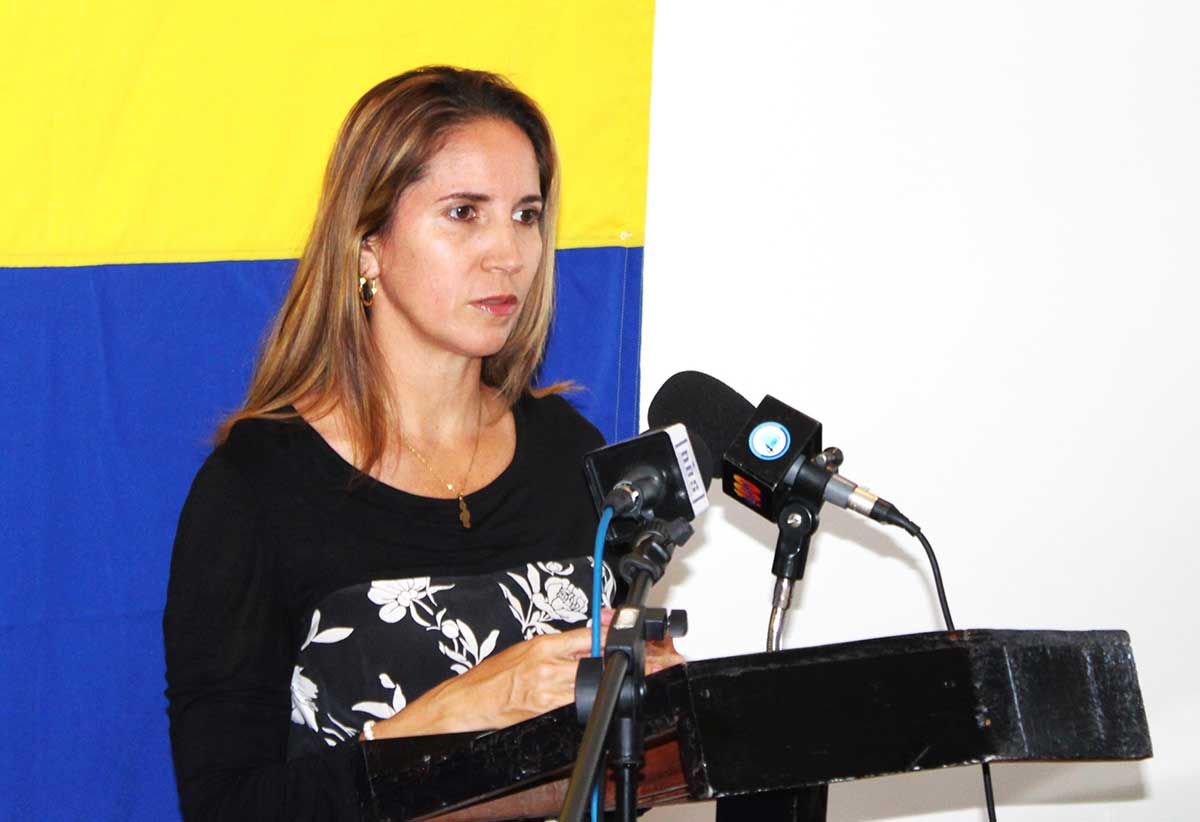
Venezuelan Ambassador Leiff Escalona asserts that the presence of US military warships in the region constitutes a blatant violation of international peace treaties.
During a recent media briefing, the Ambassador stated, “The US government is intensifying its hostile strategy against Venezuela, employing economic blockades, military intimidation, and a relentless media campaign.”
“This offensive is designed to force a change of government, a clear violation of International Law and the fundamental right of nations to self-determination. The deployment of military resources, including the presence of warships in the Caribbean, is unacceptable,” Ambassador Escalona declared.
She further emphasized, “The presence of nuclear weapons in our region directly contravenes existing Treaties that have established Latin America and the Caribbean as a zone of peace for many years.”
Ambassador Escalona unequivocally stated, “This strategy, historically recognized as ‘gunboat diplomacy,’ not only threatens Venezuela’s sovereignty but also sets a dangerous precedent of geopolitical coercion against our entire region.”
Highlighting key issues, the Ambassador pointed out that Venezuela has successfully dismantled numerous criminal networks and is widely regarded as a territory devoid of drug production. She adamantly rejects US claims labeling Venezuela as a ‘narco-state’ as a baseless and “malicious narrative circulated in international discourse.”
Ambassador Escalona proclaimed, “In addition to military and economic pressure, the United States government and its media affiliates have constructed a false narrative aimed at criminalizing the Venezuelan State and its legitimate leadership.”
She continued, “They accuse us of drug trafficking and concoct criminal structures such as the so-called ‘Cartel of the Suns’ without any evidence. This distorted narrative seeks to depict Venezuela as a so-called ‘failed state’ to justify interventionist actions.”
Citing factual data, she stated, “Official United Nations (UN) reports indicate that 85% of regional drug trafficking occurs through the Pacific and only 5% through the Caribbean.”
The Ambassador affirmed, “Venezuela boasts one of the highest records in seizures and dismantling criminal networks. Our country has no coca crops, no processing laboratories, and no established trafficking routes to support these accusations.”
Additionally, she reported that Venezuelan authorities efficiently dismantled a fraudulent operation orchestrated by the United States Drug Enforcement Administration (DEA), designed as a pretext for military intervention under the guise of a drug war narrative.
She highlighted the successful thwarting of a failed US drug conspiracy plot by the timely actions of Venezuelan intelligence agencies, revealing that the drugs were part of a DEA operation intended to frame Venezuela.
The Ambassador stressed, “The UN Office for Drugs and Crime has published 25 consecutive reports verifying our country as a territory free from illicit drug cultivation and production. Venezuela is recognized as a model in the fight against drug trafficking, evidenced by our success in capturing and dismantling a significant portion of the minimal 5% of drugs that transit through our territory, primarily sourced from Colombia.”
On a broader scale, in defense of its sovereignty and its people, Ambassador Escalona declared that Venezuela is committed to protecting its borders against external threats.
As part of this initiative, the country is preparing its citizens for comprehensive defense mobilization, with millions ready to participate in militia training.
“As part of our homeland defense strategy, the Bolivarian Government is actively enforcing the Independence Plan 200,” she asserted. “This plan safeguards over 284 strategic points throughout the country — including ports, airports, petrochemical and electric facilities, and communication infrastructure. Simultaneously, millions of Venezuelans are receiving training in 312 tactical units of the Bolivarian National Militia, amassing over eight million combatants prepared to defend our homeland.”
The Ambassador concluded, “This internal commitment is further strengthened by international support: governments and social movements globally have voiced solidarity with Venezuela, especially following recent developments.”