


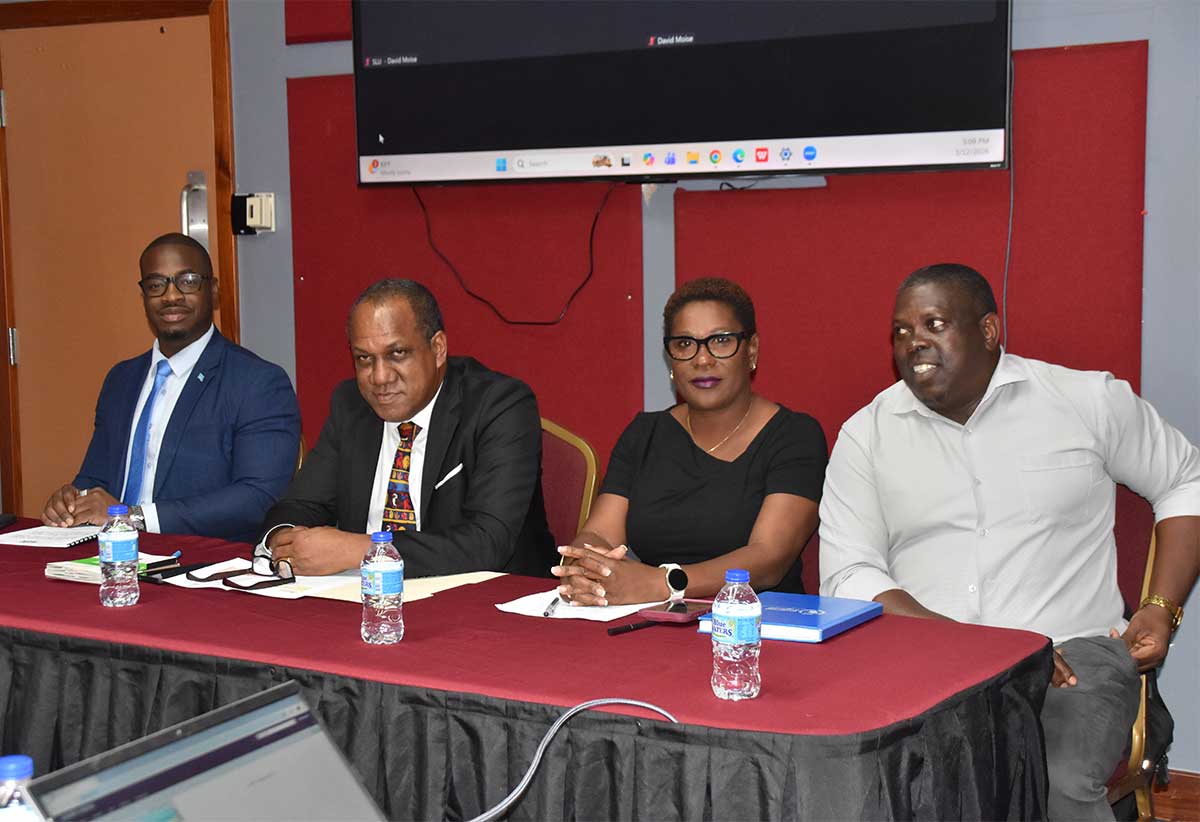
The Ministry of Education, Youth Development, Sports and Digital Transformation has taken sharp aim at doping in local sport.
The Ministry, along with other stakeholders, are in the process of establishing a National Anti-Doping Organisation {NADO} to govern the affairs of the, soon to be established, anti-doping policy.
A meeting to that effect was held Thursday at the Finance Administrative Centre in Castries.
Speaking at the opening meeting Minister of Education, Youth Development, Sports and Digital Transformation Kenson Casimir described the initiative as a “significant milestone.” “As we embark on this important step, it is fitting that we acknowledge those who have laid the foundation for antidoping in Saint Lucia. I wish to place on record our sincere appreciation to the Saint Lucia Olympic Committee, which for many years has shouldered the responsibility for anti-doping administration in our country with dedication and professionalism. Through its work, the Committee has helped to build a strong foundation of compliance, education, and awareness across our sporting community.” The Minister went on to say, “building on this strong foundation, we now look outward to international compliance obligations and strengthened regional partnerships to ensure that our systems are aligned with global best practices. The re-establishment of a fully functional National Anti-Doping Organization demonstrates Saint Lucia’s commitment to international standards and fulfills our obligations under the World Anti-Doping Agency framework. At the same time, it strengthens regional cooperation through our collaboration with the Caribbean Regional Anti-Doping Organization (RADO).”
The Ministry’s Permanent Secretary Dr. Euralis Delaire believes that this is an opportunity that St. Lucia must answer with enthusiasm.
“Across the world, the anti-doping movement is guided by the Worl Anti-Doping Agency’s powerful message: “Play True.” It is a call for honesty, integrity and respect in sport, and a reminder that every athlete deserves the opportunity to compete in a fair and safe environment.”
National Anti-Doping Organizations at designated, by their country, as the primary authority at the national level for anti-doping programs in that country. Among their stated objectives include adopting and implementing anti-doping rules, planning and implementing anti-doping education, directing and collecting samples, conducting investigations, managing test results and conducting result management.