


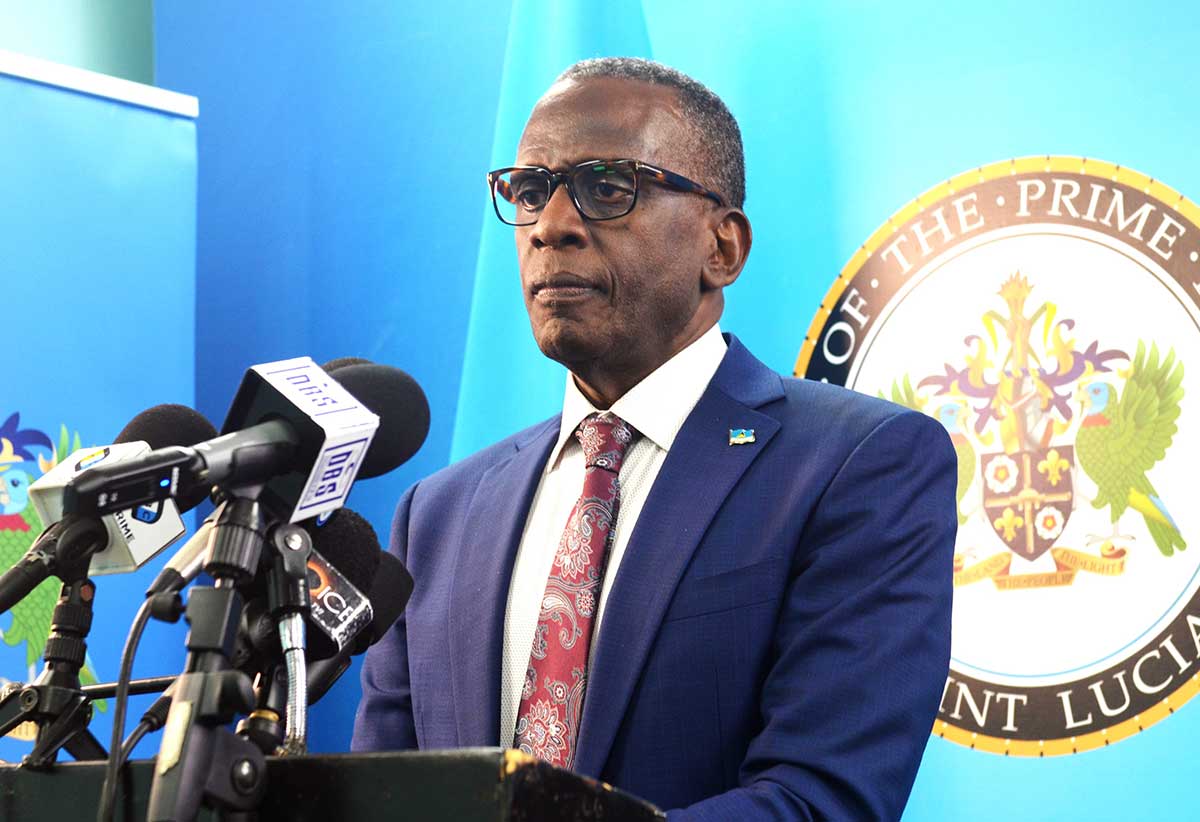
Prime Minister Philip J. Pierre has addressed the demands from the United States administration urging Saint Lucia to sever ties with Cuba regarding the services provided by the Cuban medical brigade.
The U.S. government has reportedly pressured Saint Lucia to end its agreements that allow Cuban medical personnel to work in the country and Saint Lucian students to study in Cuba.
This shift aligns with broader U.S. policy aimed at limiting Cuba’s international influence, particularly in healthcare and education, amidst concerns over the treatment of Cuban medical workers, including wage withholding and restricted movement.
In a statement made during the weekly pre-cabinet meeting on Monday, PM Pierre emphasized that, while he did not want to be “hypocritical,” the U.S. has clearly indicated its preference for Saint Lucia to disengage from the Cuban Medical Brigade operating in the region.
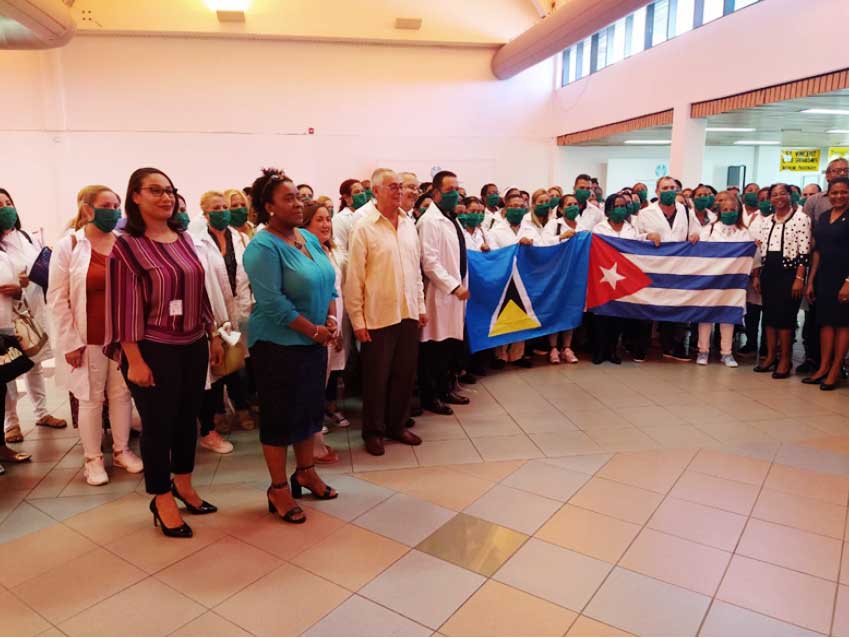
“The fact is that the U.S. government has a problem with Cuban doctors working in these islands, which puts the entire medical sector, including the exchange of doctors and students, at risk,” he declared.
PM Pierre said that there are rumours suggesting that some Caribbean nations have already opted not to accept Cuban doctors, but asserted that Saint Lucia has not confirmed such a stance. He acknowledged the concerns raised by the U.S. regarding Cuban doctors in Saint Lucia and local students studying in Cuba.
Further elaborating on the situation, PM Pierre remarked, “The whole issue is tied to the Cuban embargo, and last week, President Trump declared Cuba a threat to American security.”
He reiterated, “We are maintaining good relations with the American government, but we must protect our students and health services.”
Highlighting the potential ramifications, PM Pierre stated, “If Cuban doctors can no longer come to Saint Lucia, it would represent a tremendous loss to our medical services. We must be proactive; we also have students training in Cuba.”
He stressed the importance of addressing the reality of the international situation, especially as a small island nation. “We have to take precautionary steps to prepare for any possible changes,” he said.
PM Pierre emphasized that while Saint Lucia does not oppose U.S. government policy, alternative arrangements need to be made. “We can explore options regionally, and our people must understand the challenges we face to collaboratively find solutions,” he stated.
Regarding students currently studying in Cuba, the Prime Minister confirmed that they will continue their education there, as there is no immediate threat of withdrawal. He outlined plans to assess local positioning concerning scholarships and stated that Saint Lucia would look to other countries, including Mexico, Nigeria, Ghana, and Brazil, for potential support if necessary.
At the recent World Congress on Racial and Ethnic Health Disparities, PM Pierre echoed the pressures stemming from U.S. policies, emphasizing the geopolitical tensions that affect regional cooperation.
“I have a big problem; many of our doctors trained in Cuba, and now the United States has asserted that we can no longer pursue this arrangement,” he shared. He indicated that this ultimatum places additional stress on Saint Lucia’s already strained health sector, urging local initiatives and engagement with the diaspora to navigate the forthcoming challenges.
In a statement last month, the U.S. Embassy in Barbados cited the Cuban regime’s “medical missions” program, which has benefitted several Caribbean nations, as reliant on coercion and abuse, denouncing the conditions faced by Cuban medical workers, including withheld wages and restricted movement.