


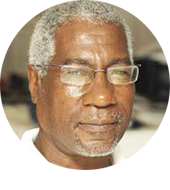
As Caribbean Community (CARICOM) leaders start gathering in Saint Kitts and Nevis for Tuesday evening’s opening ceremony for the regional group’s historic 50th Summit, the host Prime Minister, Dr Terrance Drew is urging colleagues to talk less and do more about the various challenges facing the region.
Outgoing CARICOM chair, Jamaica’s Prime Minister Andrew Holness, will address the opening session Tuesday evening, as will two of CARICOM’s three women Prime Ministers – Surinam President Dr Jennifer Geerlings-Simons and Trinidad & Tobago’s Kamla Persad Bissessar – both of who arrived Monday, a day ahead of the official opening ceremony.
It will be Simons’ first summit since being elected last May and Mottley’s first since being re-elected a third time earlier this month – and this will also be Persad-Bissessar’s first summit since taking office in early 2025, not having attended the 49th summit in Jamaica last July.
Also in Basseterre – two days ahead of the summit — is the USS ‘San Antonio’, an amphibious American assault war ship, currently docked at Port Zante, described as ‘a next-generation amphibious transport designed for 21st Century expeditionary warfare’.
Attention
The arrival of the top-class US war ship ahead of the expected arrival Wednesday of US Secretary of State and National Security Advisor Marco Rubio has drawn as-much regional attention as the US Presidential Security Adviser’s presence at the regional summit.
The summit agenda was already packed with various challenging regional issues – from Regional, Food and Energy Security to Reparations and Climate Finance – among several pressing geopolitical issues.
This being the first summit after the US’ January 3, 2026 invasion of Venezuela and abduction of its President Nicolas Maduro and his wife, Cilia Flores, the implications for Caribbean neighbours and the current naval blockade against Cuba will also gain the attention of the CARICOM leaders.
Assault
Rubio has led Washington’s assault on CARICOM nations’ four-decades-old health and medical accords with Cuba.
He’s also defended the deadly US attacks on Caribbean fishing boats the US claims were involved in ‘narco-terrorism’, which has taken at least 140 lives in Caribbean and Pacific waters since last September, in what international legal experts consider ‘extrajudicial killings’ on high seas.
Implications
With no explanation to date from Washington on this whole range of issues, the leaders will be expected by CARICOM citizens to quiz Rubio, as they have serious implications for the Eastern Caribbean and Latin American neighbours.
Ahead of the meeting, there were reports that several CARICOM nations had quietly dumped their popular Cuba health cooperation programs under pressure from Rubio and his State Department.
Seven former CARICOM Prime Ministers and Presidents – from Barbados, Dominica, Grenada, Guyana, Jamaica, Saint Lucia and Trinidad & Tobago — issued a joint statement on February 19, 2026, condemning the US President’s Executive Order ahead of the oil embargo against Havana.
The former leaders also called on the international community to assist Cuba.
Pressures
Caribbean citizens in CARICOM member-states under pressure from the Rubio State Department’s pressure to break their healthy medical cooperation ties with Cuba have been expressing loud public concern, even as member-states also come under US pressure to accept deported immigrants from 75 countries whose applications for asylum were rejected by Washington.
CARICOM citizens have been widely concerned about US threats to make entry into its borders more difficult for visa applicants, while the smaller Organization of Eastern Caribbean States (OECS) governments buckle under combined US and European Union (EU) pressure to dismantle their Citizenship by Investment (CBI) programs (also called CIPs) that they depend on even-more now, after the US and EU have cut their overseas aid budgets.
The annual summit – normally held in the first week of July — has been advanced by five months, suspectedly to allow regional leaders to earlier address the accumulating volume of regional challenges that have followed the last summit held in Jamaica.
Reparations
But while Rubio’s presence has been a major news item, the leaders are due to address the region’s quest for Reparations from Europe.
Indeed, two Prime Ministers, looking-forward to the Reparations discussion, issued statements last week on the 12-year-old demand by 14 former European colonies.
The leaders are expected to review a Revised 10-point Plan for Reparatory Justice, which outlines why CARICOM is seeking Reparations and what it plans to do with any debts collected from the European states that benefitted from Slavery and Native Genocide in the Caribbean region.
The Saint Kitts and Nevis National Reparations Committee (NRC) is also hosting a related 90-minute public discussion on February 27 — to which the CARICOM leaders are invited – that will examine ‘Reparations: Financing Justice, Advancing Caribbean Development’.
Host Prime Minister Drew said: “Our Caribbean Civilization, forged in the crucible of slavery and indentured labour, has produced achievements hat far exceed our size.”
He added, “The region’s advocacy for Reparatory Justice will therefore continue through the work of the CARICOM Reparations Commission (CRC) and the tenets of the 10-Point Plan for Reparatory Justice.”
Saint Lucia’s Prime Minister Philip J Pierre also spoke on Reparations before leaving Castries.
He said: “Saint Lucia remains resolute in our determination to take the Reparations message to our people for what the United Nations calls The Worst Crime Against Humanity and committed to the principles outlined in CARICOM’s 10-Point Plan for Reparatory Justice.
And he added: “We also know we’re never alone in our just and legitimate pursuit of Europe’s Black Caribbean Debt, calculated in 1939 by Sir Arthur Lewis as outstanding compensation for Centuries of Slavery and Native Genocide in the West Indies.”
Action
But PM Drew made it clear that – overall — he expects less talk and more action from the 50th CARICOM summit.
He said before the meeting, “CARICOM is not a talk shop, it is a platform for action.
“This 50th Meeting must move us beyond conversation and into concrete, measurable outcomes that advance food security, climate resilience, regional security and economic growth.”